MUNYASYA: Mining holds the key to Kenya's industrial future
Kenya's mineral portfolio includes gold and titanium, as well as industrial minerals essential for construction and manufacturing.
by JAMLIC MUNYASYA
Audio By Vocalize
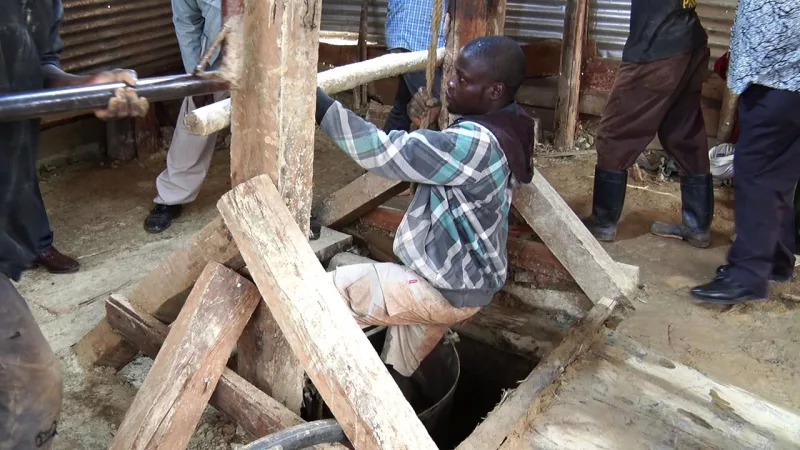
A miner at a site /FILE
Throughout history, nations that have achieved remarkable economic
transformation have done so by identifying their comparative advantages and
converting them into engines of national prosperity.
While Kenya has earned
global recognition for agriculture, tourism and financial innovation, another
strategic asset remains significantly underutilised—its vast mineral wealth.
With more than 20 commercially recognised mineral resources distributed across the country, Kenya possesses the
ingredients necessary to build a globally competitive mining industry capable
of accelerating industrialisation,
creating quality employment, expanding exports and
strengthening long-term economic resilience.
Kenya's mineral portfolio includes gold, titanium, soda ash, fluorspar, limestone,
gypsum, iron ore, copper, manganese, niobium, rare earth elements, coal, silica
sand, diatomite, gemstones such as tsavorite, ruby and sapphire, as well as
industrial minerals essential for construction and manufacturing.
Each of these
resources represents not merely a geological occurrence but an economic asset
capable of generating value across multiple sectors of the economy.
Rare earth
elements are indispensable in electric vehicles, renewable energy technologies
and advanced electronics; limestone supports cement production and
infrastructure development; titanium strengthens Kenya's export earnings; while
gemstones continue to command premium prices in international markets.
The significance of developing the mining sector extends far beyond
mineral extraction. Mining creates one of the strongest economic multiplier
effects within any economy.
Every mine stimulates demand for engineering
services, transportation, logistics, financial services, insurance, equipment
manufacturing, information technology, environmental consulting and local
supply chains.
It supports hotels, retail businesses, construction companies,
educational institutions and healthcare facilities in surrounding communities.
As wages increase, household consumption expands, businesses flourish and
government revenues rise through taxes, royalties and export earnings.
Consequently, one productive mining project generates economic activity that
reverberates across numerous sectors, multiplying its contribution to national
income.
The global experience demonstrates that mineral wealth, when managed
prudently, can become a powerful catalyst for development.
Botswana transformed
itself from one of the world's poorest countries into an upper-middle-income
economy by responsibly managing its diamond resources, investing mining
revenues in education, healthcare and infrastructure while maintaining sound
fiscal governance.
Norway utilised
petroleum revenues to establish the world's largest sovereign wealth fund,
ensuring that natural resource wealth benefits both current and future
generations.
Australia has built one of the world's most competitive mining
industries by combining investor-friendly policies, technological innovation
and value addition, making mining a cornerstone of its export economy.
Conversely, countries such as Nigeria and Libya illustrate that natural
resources alone do not guarantee prosperity.
Despite enormous oil reserves and
substantial export revenues, periods of overdependence on hydrocarbons,
governance challenges and limited economic diversification have constrained the
full developmental potential of their resource wealth.
Their experience offers
Kenya an equally valuable lesson: mineral abundance must be accompanied by
strong institutions, transparency, prudent fiscal management and deliberate
economic diversification if it is to translate into broad-based prosperity.
Kenya therefore stands at a defining moment. The country's mining sector
remains relatively underdeveloped compared to its geological potential, presenting
an extraordinary opportunity for strategic expansion.
Government should
accelerate nationwide geological surveys, modernise mining regulations, strengthen licensing transparency, formalise artisanal mining, attract responsible
domestic and foreign investment and promote value addition before export.
Rather than exporting raw minerals, Kenya should establish mineral processing
and refining industries that create higher-value products, generate skilled
employment and retain greater economic value within the country.
Investment in
transport infrastructure, reliable energy, research institutions and technical
training will further enhance the sector's competitiveness.
Equally important is ensuring that mining benefits local communities
through employment, infrastructure development, environmental stewardship and
equitable revenue-sharing mechanisms.
Sustainable mining should become a
vehicle for inclusive development, strengthening public confidence while
safeguarding natural ecosystems for future generations.
Kenya's Vision 2030 and the Bottom-Up Economic Transformation Agenda
cannot achieve their full potential without unlocking the immense value
embedded beneath the nation's soil.
Minerals are finite resources, but the
wealth they generate can finance infinite opportunities when invested wisely.
Schools, hospitals, roads, industrial parks, research institutions and
innovation ecosystems can all be built from responsible mineral revenues.
By
embracing a strategic, transparent and value-driven mining agenda, Kenya has
the opportunity to transform geological endowment into lasting national
prosperity.
The time has come to look beneath our feet, recognise the immense wealth that lies within
our borders and convert it into an enduring foundation for economic growth,
industrial competitiveness and shared prosperity for all Kenyans.
The writer is an economist and a business consultant
This is premium content
Subscribe to Continue Reading
Help us continue bringing you unbiased news, in-depth investigations, and diverse perspectives. Your subscription keeps our mission alive and empowers us to provide high-quality, trustworthy journalism. Join us today to make a difference!