
The strength of any modern economy is not measured solely by the performance of its largest corporations, but by the resilience, productivity and growth of its small and medium-sized enterprises (SMEs).
Across developed and emerging economies alike, SMEs have consistently proven to be the engines of innovation, employment creation, industrial diversification and inclusive economic growth.
In Kenya, where SMEs constitute approximately 98 per cent of all businesses, employ over 90 per cent of the non-farm labour force and contribute more than 40 per cent of the country's Gross Domestic Product (GDP), their strategic importance cannot be overstated.
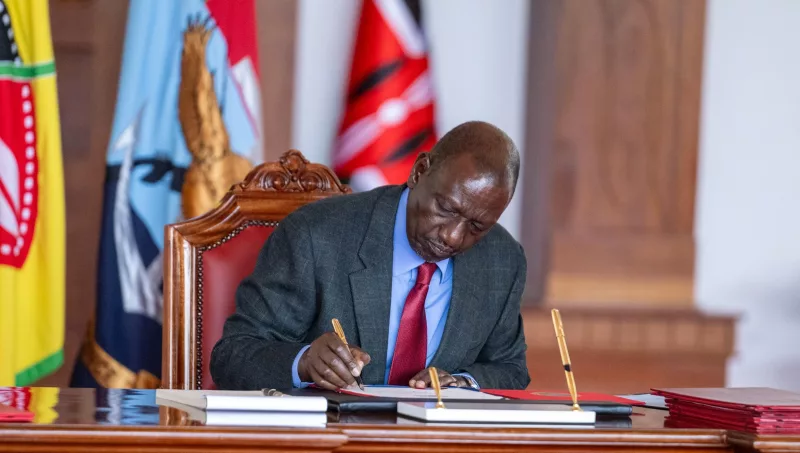
President William Ruto's address during the 2026 World MSME Day celebrations signalled a decisive policy shift towards positioning SMEs at the centre of Kenya's economic transformation agenda.
His launch of the Revised MSME Policy 2026 and renewed commitment to narrowing the estimated Sh3 trillion financing gap reflected an understanding that sustainable national prosperity cannot be achieved without empowering the country's entrepreneurial ecosystem.
The economic rationale behind supporting SMEs is compelling. Unlike large corporations, SMEs possess a remarkable capacity to absorb labour quickly, respond to changing consumer demand and stimulate economic activity across rural and urban markets simultaneously.
Every successful enterprise generates a chain of economic transactions extending far beyond its immediate operations. A furniture manufacturer purchases timber from local suppliers, employs artisans, contracts transporters, procures financial services, pays taxes and supplies retailers, each transaction creating additional income, employment and consumption throughout the economy.
This is the multiplier effect in action, where an initial investment circulates repeatedly, generating value far exceeding its original amount.
Kenya's long-term development aspirations, including industrialisation, manufacturing expansion, export growth and job creation, are intrinsically linked to the performance of its SME sector.
Large corporations rarely emerge overnight; they evolve from small enterprises that receive the appropriate combination of capital, market access, technological support and favourable regulatory conditions.
Today's microenterprise is tomorrow's regional manufacturer and potentially the multinational corporation of the future. Supporting SMEs is therefore not merely social policy—it is a strategic investment in the nation's future productive capacity.
President Ruto's emphasis on partnerships between government, financial institutions and the private sector is equally significant.
Access to affordable finance remains one of the greatest constraints facing Kenyan entrepreneurs. High borrowing costs, stringent collateral requirements and limited credit histories continue to suppress business expansion despite strong entrepreneurial potential.
By addressing these structural barriers through policy reforms, credit guarantee mechanisms and innovation-friendly financing models, Kenya can unlock thousands of productive enterprises currently operating below their full potential.
Equally important is the broader ecosystem surrounding SMEs. Infrastructure development, digital transformation, simplified taxation, skills development, value-chain integration and export facilitation collectively determine whether enterprises merely survive or genuinely scale.
The Revised MSME Policy, therefore, represents more than an administrative framework; it provides a foundation for improving competitiveness, attracting investment and strengthening Kenya's position within regional and global value chains.
The implications extend beyond macroeconomic statistics. A thriving SME sector translates into higher household incomes, greater financial inclusion, increased domestic savings, stronger county economies, reduced youth unemployment and enhanced social stability.
As businesses expand, government revenue also rises through a broader tax base rather than higher tax rates, creating additional fiscal space for investment in healthcare, education, infrastructure and social protection.
Economic growth becomes more inclusive because wealth creation is distributed across thousands of entrepreneurs instead of being concentrated within a handful of large firms.
President Ruto's commitment to placing SMEs at the heart of Kenya's development agenda reflects an appreciation that economic transformation is ultimately built from the ground up.
Policies that nurture entrepreneurship, reduce barriers to enterprise growth and encourage private-sector innovation are not expenditures but high-return national investments.
If implemented consistently and supported through effective institutional coordination, Kenya's renewed focus on SMEs has the potential to accelerate industrialisation, strengthen economic resilience and position the country as East Africa's premier hub for enterprise-driven growth.
The future of Kenya's economy will not be decided solely in boardrooms of large corporations; it will be forged daily in the workshops, farms, factories, markets and digital enterprises where SMEs continue to power the nation's ambitions.
The writer is an economist and business consultant