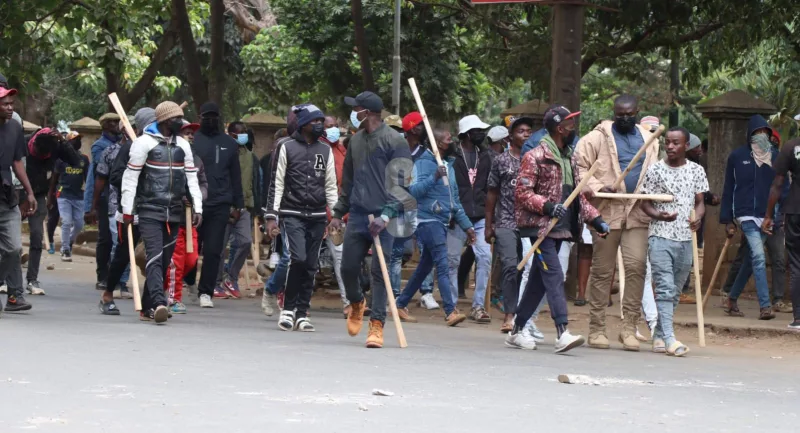
Kitengela is not a battlefield. It is a place where people go to work, to school, to hospital.
by CALEB MWAMISI
Audio By Vocalize
Kitengela is not a battlefield. It is a place where people go to work, to school, to hospital /FILE
By last Friday
evening, the familiar images we have come to associate with protest days in
Kitengela were conspicuously absent. No columns of youths marching down Namanga
Road.
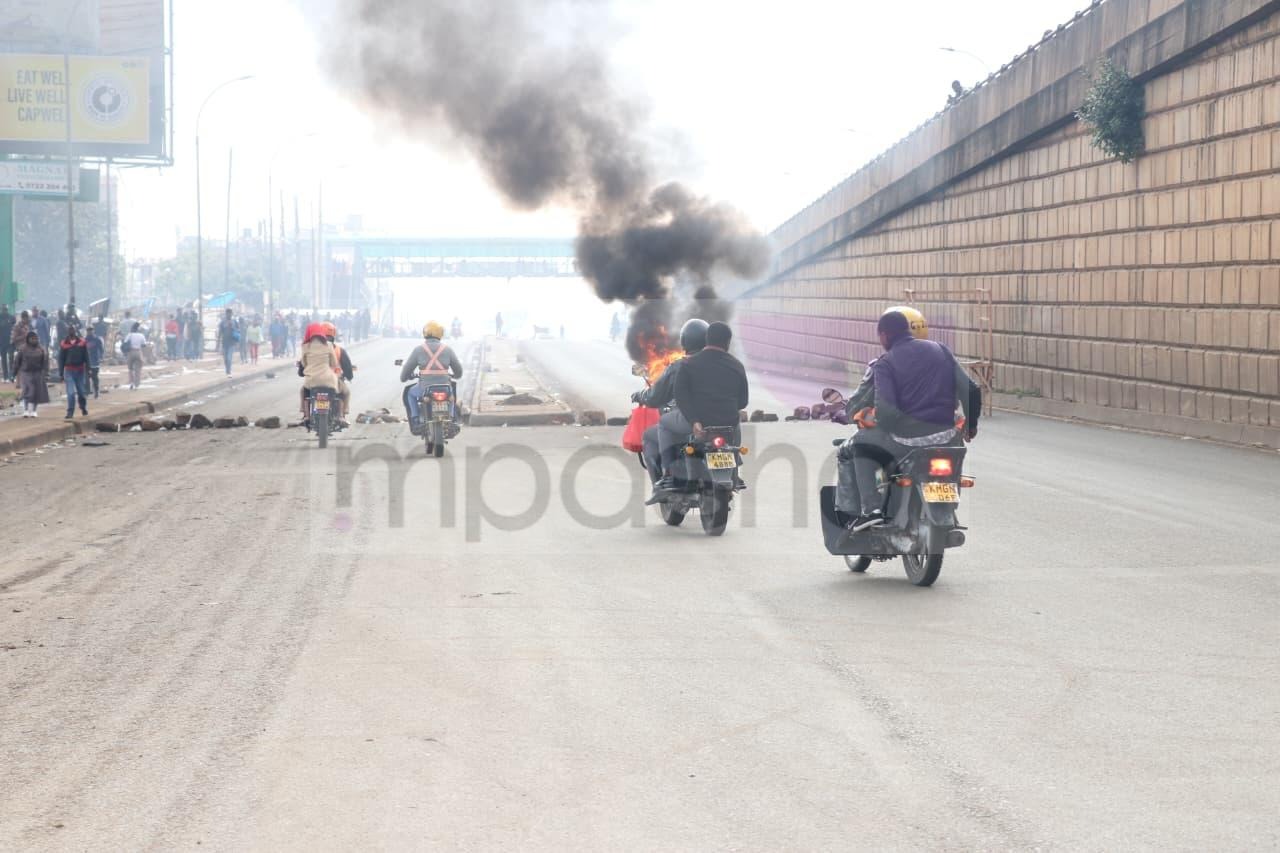
No makeshift barricades of burning tyres outside the bus park. No
shuttered shops on the Kitengela-Kajiado highway. For the first time in months,
the town conducted its business as though it were any other weekday.
The reason was not
an absence of grievance. Nor was it a sudden change of heart among those who
had, in previous outings, turned out in numbers.
The difference this time was
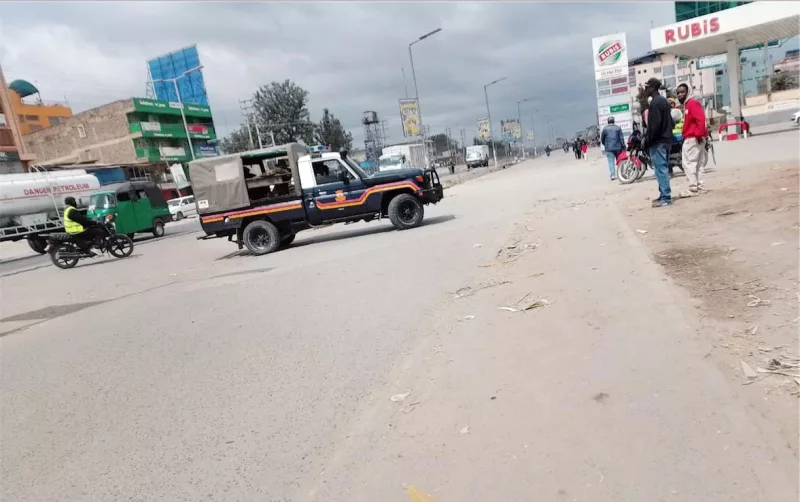
logistical: the police erected effective roadblocks on all major arteries into
Kitengela early in the morning and held them.
And with those roadblocks, the
model that had sustained the protests here — the ferrying in of youths from
Nairobi, Kajiado North and even as far as Machakos — came a cropper.
That is the story
that needs to be told plainly, because for too long we have spoken about
“Kitengela protests” as though they were a spontaneous eruption of local
sentiment. The reality on the ground has been more complicated, and more
expensive.
Roadblocks changed
arithmetic
From as early as
4am, officers were deployed at the Isinya, Kiserian junction, Athi River and
along the Southern Bypass feeder roads. Lorries were stopped and searched. Boda
bodas with more than one passenger were turned back.
Matatus from Pipeline,
Rongai and Embakasi were flagged and young men travelling in groups without
clear business in Kitengela were asked to alight.
It was not a
blanket ban. Traders with goods, patients going to hospital, and workers with
IDs were allowed through. But the pattern was clear: the conduits that had
previously been used to move crowds were sealed.
Anyone who has
watched protests in Kitengela over the last year will recognise why this
mattered. Kitengela itself is a satellite-dormitory town.
It has grievances,
yes — about cost of living, about devolution funds, about land. But it does
not, on its own, produce the 2,000 to 3,000 bodies that have, in past months,
turned up to march, to chant and to confront police.
The footage from
previous demonstrations told its own story. Youths alighting from hired vans at
the Shell junction, being handed whistles and placards and being directed
toward the town centre.
The same faces appearing in Kitengela one week, then in
Ongata Rongai the next. This was not mobilisation; it was transportation and
calculated deployment.
Once that
transportation was interrupted, the protest had no critical mass. A few local
groups did gather near the bus park around mid-morning, but without
reinforcements they dispersed within the hour. The police did not need to fire
a shot. They simply held the roads.
Economics of
shutdown
We must also speak
about cost, because the human cost of protest is not only measured in injuries
and arrests. It is masured in lost turnover, in spoiled stock, in wages not
paid.
Kitengela is a
trading hub. On a normal Friday, the town moves between Sh80 million and Sh120
million in retail alone — from the building materials yards on the highway, to
the mitumba stalls, to the eateries that serve workers from the EPZ and the
surrounding farms.
On a protest day,
that collapses. Banks close. M-Pesa agents shut. Supermarkets lock their doors
by 10 am. Boda operators,
who might make Sh2,000 on a good day, sit idle. The women selling vegetables at
the market watch their sukuma and tomatoes wilt because no one is buying.
Multiply that by
the six major protest days Kitengela has seen since January. That is
conservatively Sh500 million in direct lost commerce, and that does not count
the knock-on effects: suppliers in Nairobi who were not paid, school buses that
could not run, patients who missed appointments at the level 4 hospital.
For small business
owners, the pattern has become ruinous. A hardware store owner on Old Namanga
Road told me last month that he now keeps two sets of books: one for normal
weeks, and one for “protest weeks”, when he loses an average of Sh70,000 in
sales and still has to pay rent and his three employees. Many are quietly
relocating to Isinya or Kajiado town, where disruption has been less frequent.
The irony is that
the very people the protests claim to speak for — the casual labourer, the mama
mboga, the boda rider — are the ones who bear the heaviest burden. They do not
have savings to cushion them for a week with no income. They cannot “work from
home.” When the town shuts down, their livelihoods shut down with it.
Why Kitengela a
target
The question then
is: why Kitengela? Why not only Nairobi’s central business district?
The answer is party
geography. Kitengela is on a major highway, 35 minutes from Nairobi, and it has
wide roads and open spaces that make confrontation with police visually
dramatic. A burning tyre on the highway photographs well. It sends a signal.
Partly politics.
Kitengela is perceived, rightly or wrongly, as a bellwether for Kajiado county
and for the wider peri-urban vote. If you can “shut down” Kitengela, you can
claim to have shut down the county.
But most
importantly, logistics. Hiring five 14-seater vans to bring 70 youths from
Nairobi to Kitengela costs far less than trying to mobilise the same number in
the CBD, where the police presence is heavier and movement is more restricted.
In Kitengela, a few organisers could rent space, print placards and create the
impression of a mass uprising with relatively little money.
That model depended
on two elements: mobility and anonymity. The roadblocks removed both.
The debate we are
not having
This is where the
conversation becomes uncomfortable, because to talk about “ferried youths” is
immediately read as an attempt to delegitimise dissent. It is not. People have
a constitutional right to assemble and to petition government. That right is
not in question.
What is in question
is the industrialisation of protest. When demonstrations become a supply chain
— with transporters, with allowances, with designated photographers — then the
line between civic expression and political theatre blurs.
And when that
theatre is performed in a town like Kitengela, the audience is not Parliament
or State House. The audience is the camera.
The cost, however, is paid by the
shopkeeper who cannot open, the student who cannot sit exams because schools
were closed, and the patient who could not get to clinic.
We have to ask: is
this sustainable? Can we continue to have a form of political expression that
shuts down entire towns every few weeks, and whose effectiveness depends on
busing people across county lines?
Effective policing
The roadblocks on
Friday were criticised by some as heavy-handed. But compare the outcome to that
of previous months. No deaths. No looting. No buildings burnt. The town opened,
and by 2 pm, matatus were
moving normally.
That suggests a
different model of public order is possible. One that does not rely on teargas
and running battles, but on containment and chokepoints. Identify the entry
routes. Allow legitimate movement. Stop the convoys.
If Kitengela
residents have grievances, let Kitengela residents march. If Nairobi residents
have grievances, let them march in Nairobi. The constitution does not guarantee the
right to import a crowd.
That distinction
matters because it returns agency to communities. A protest of 200 local
residents with specific demands is politically legible. A protest of 2,000 people,
half of whom do not live in the area and will leave by 3pm, is a spectacle.
The way forward
Kitengela does not
need fewer voices. It needs more honest ones.
The business
community has already begun organising. The Kitengela Traders Association met last
week and resolved to petition the county commissioner and the Kajiado county
government to create “protest-free days” for the market, and to designate
specific routes for demonstrations away from the highway. That is a reasonable
compromise.
The police, for
their part, must be consistent and transparent. Roadblocks cannot appear only
when certain groups are marching. The rules must apply evenly to all protest
groups and marches, and they must be communicated in advance.
And political
actors must reckon with the cost. If you are mobilising people, you must also
account for what happens to the people who are not mobilised but who live in
the town you are shutting down. You cannot claim to represent “wananchi”, while
making it impossible for wananchi to earn a living.
Friday showed that
containment works. It also showed that without the ability to ferry in numbers,
the protest model that has dominated Kitengela for the past year is no longer
viable.
That is not a victory for the government, nor a defeat for the
opposition. It is a return to normalcy for a town that has paid too high a
price for being a stage.
Kitengela is not a
battlefield. It is a place where people go to work, to school, to hospital. For
one day at least, it was that workaday place again.
If we are serious
about both democracy and development, that is the standard we should hold
ourselves to going forward: protest that is free, but also protest that is
accountable — to the law, to the facts, and to the people whose shops were
closed in its name.
This is premium content
Subscribe to Continue Reading
Help us continue bringing you unbiased news, in-depth investigations, and diverse perspectives. Your subscription keeps our mission alive and empowers us to provide high-quality, trustworthy journalism. Join us today to make a difference!