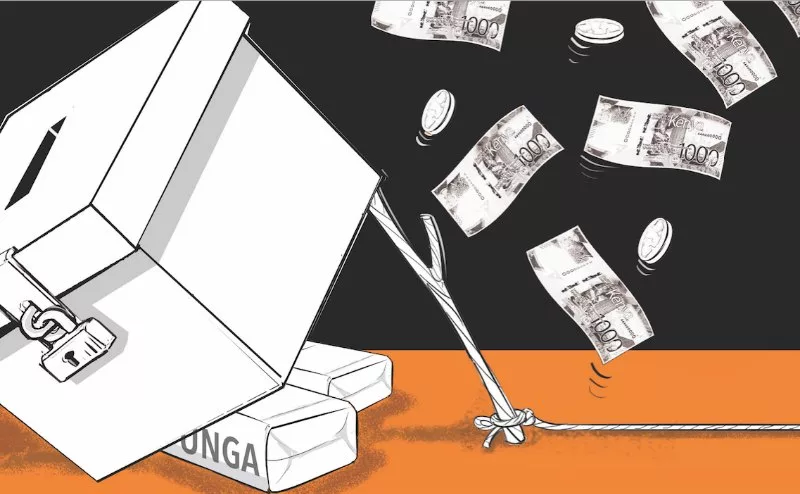
The economic trend of Kenya is on a cross-road. With
industrial power users bearing some of the highest electricity tariffs in the
region, manufacturing competitiveness and broader economic performance are
under strain.
It is against this background that there has been the recent
agitation by industrialists, spearheaded by the industrialists, manufacturers
want the state to cut power prices by at least Sh2.179 per kilowatt-hour (kWh)
and stop curtailing supply to businesses, arguing that these factors have
affected production by factories.
Any fall in power prices is not simply a
demand in the sector- but a necessity to drive the economy, growth, employment
and gross domestic product (GDP).
Currently, the electricity rates in Kenya are high when
compared to its peers in the region and the industrial consumers are said to be
paying between Sh13- Sh26 per kWh which
makes the local products uncompetitive to imports and regional exports.
Economic report statistics show a large percentage of the manufacturing input
cost is on energy, which limits the profit margins and discourages investment
into expansion and innovation.
Kenya Association of manufacturers (KAM) has urged the
government to reduce the price of the energy charge to Sh12.622 and the fuel
cost charge to Sh1.062 per kWh on the grounds that the present prices
incorporate margins, which had no connection with the actual cost of generating
power and which were transferred over to the consumer.
This cut when received
would instantly reduce unit power price to industrial consumers - an essential
short-run expense alleviation that would enhance competitiveness.
One of the basic inputs in manufacturing is electricity. The
direct impacts of lower unit costs on production economics, are that they
decrease the variable costs, enhance the profit margins and decrease the
break-even points.
In an industry that has been gripped by an almost stagnant
activity, as seen by lowered consumption of discounted electricity under the
Time of Use tariff and firms scaling down operations, any slight tariff relief
can put the industry in a predetermined course towards sustained production.
Lower power charges increase the competitiveness of Kenya.
Reduced tariffs mean lower export prices, expansion of competitiveness in the
regional markets in the African Continental Free Trade Area (AfCFTA) and
increased attractiveness to foreign and domestic investors interested in
finding a low-cost base of manufacturing.
This dynamic has the potential to
spur inflows of capital and use of technologies that trigger productivity increases
to grow domestic value chains.
The nexus between the manufacturing activity, creation of
employment and growth in GDP is not a new analysis in development economics.
The multiplier effects of manufacturing are expected to be large: a company
will increase production, it will bring more people to work, more middle
products will be obtained, and more logistics, financial and retail services
will be activated.
The lowered power rate would offset the existing penalty
against the employment or the retention of labour due to high production rates.
As the working population of Kenya has been rising and unemployed individuals
have continued to mount pressure on the government, opening up the
manufacturing industry, will have a direct effect on job creation and expanding
the tax base due to higher wages and more economical exchanges.
A more competitive manufacturing sector also contributes to
GDP through higher output and exports. Currently, manufacturing contributes a
single-digit share to GDP; a figure that falls short of the sector’s potential.
Industry bodies have contended that lowering power costs could support efforts
to raise manufacturing’s GDP contribution toward the national target of 20 per cent.
The intervention of the government in the form of tariff
adjustments and rearrangement of the pricing would show that it cares about
limitations on the development of the industry.
Policy changes of this type
would not only be beneficial to the manufacturers, but welfare-promoting
conditions in the overall economy. Lower manufactured items will be in a
position to relieve the inflationary pressures and therefore, the cost of
living becomes less burdensome to the consumers. Besides, manufacturing growth
also creates jobs thus alleviating poverty and boosting household income.
In essence, supporting the industrialists’ proposal to lower
power prices is consistent with sound economic policy; unlocking competitiveness,
stimulating employment and driving GDP growth. The potential yields of such
reforms extend beyond the factory floor to national prosperity and inclusive
development.
The writer is an economist and a business consultant


 An image of Kenya's economic trend/AI GENERATED