A recent GeoPoll survey has revealed a deeply divided public consensus on how the government should address persistent fuel shortages.
The findings underscore growing citizen anxiety over energy security, with Kenyans pointing toward a mix of immediate market intervention and long-term infrastructural overhauls to stabilise the pump.
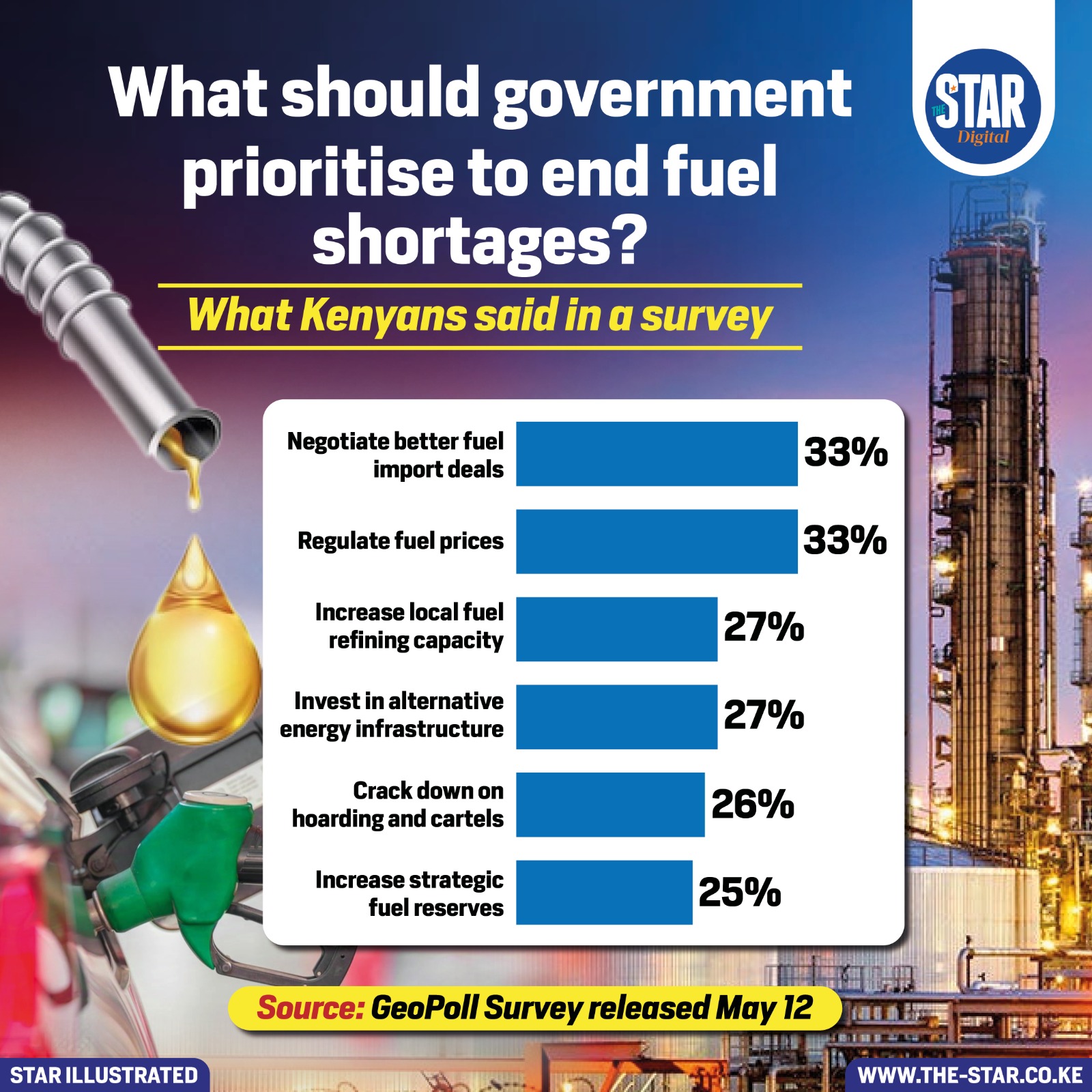
Topping the list of public demands is a dual focus on commerce and regulation. Exactly 33% of respondents want the state to negotiate better fuel import deals, securing more favorable terms on the international market to cushion consumers from external price shocks.
Mirroring this demand, an equal 33% believe tighter regulation of domestic fuel prices is the most critical step to prevent exploitation and stabilize the local economy.
Beyond immediate pricing fixes, citizens are looking at systemic structural reforms. The survey shows that 27% of Kenyans want an increase in local fuel refining capacity to reduce reliance on imported finished products, while an identical 27% urge the state to invest heavily in alternative energy infrastructure to transition away from fossil fuels entirely.
Concurrently, accountability and strategic safety nets remain central to public expectations. Twenty-six percent of those surveyed called for an aggressive crackdown on hoarding and oil cartels, which are frequently blamed for artificial shortages.
Furthermore, 25% of respondents emphasized the need to build up strategic fuel reserves to ensure the country has an adequate buffer during supply chain disruptions.


![[PHOTOS] The new Ngong –Naivasha Road viaduct](https://cdn.radioafrica.digital/image/2026/06/64d4f771-4432-4aee-ba3c-2f304c4436ec.jpg)








![[PHOTOS] 'Mr Speaker Sir' Gen Z protester in court](https://cdn.radioafrica.digital/image/2026/06/b3e62d8e-25c3-4780-90f9-4eb48b1ce8a7.jpg)