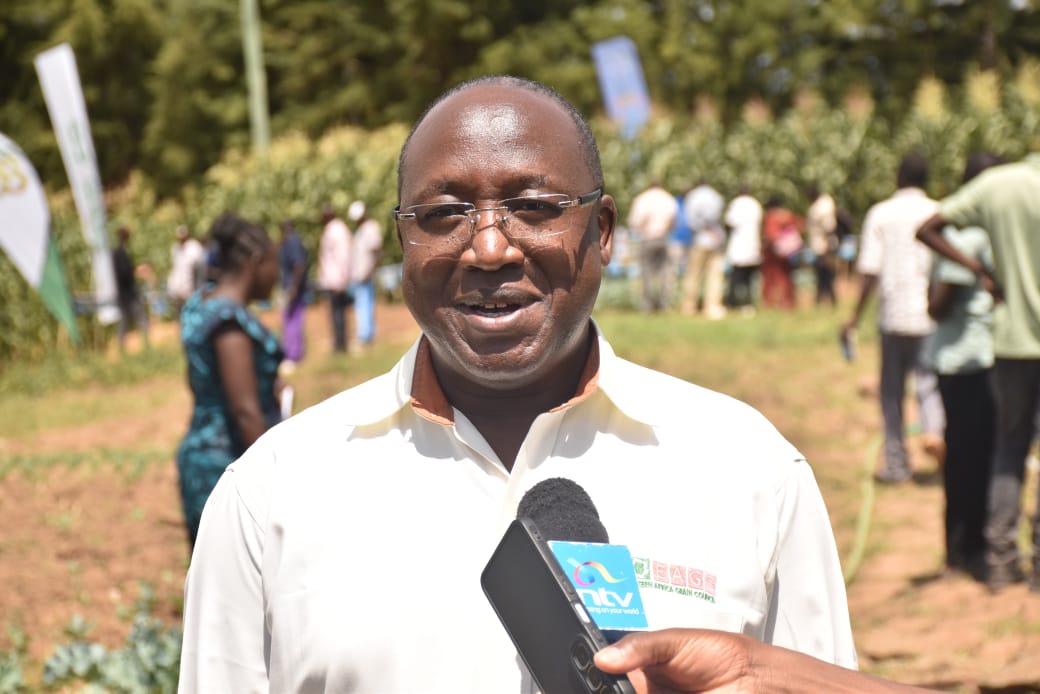
 Gerald Masila, executive director of the Eastern Africa Grains Council, addresses the media during the trade and agriculture expo at Kibabii University /FAITH MATETE
Farmers in the Western region have been urged to adopt drought resistant seeds as a strategy to combat the effects of climate change and boost yields.
Speaking at Kibabii University in Bungoma county during an agribusiness expo and trade symposium, Gerald Masila, the executive director of the Eastern Africa Grains Council, said solutions to climate change include seed varieties that are drought resilient and well adapted to climate change conditions.
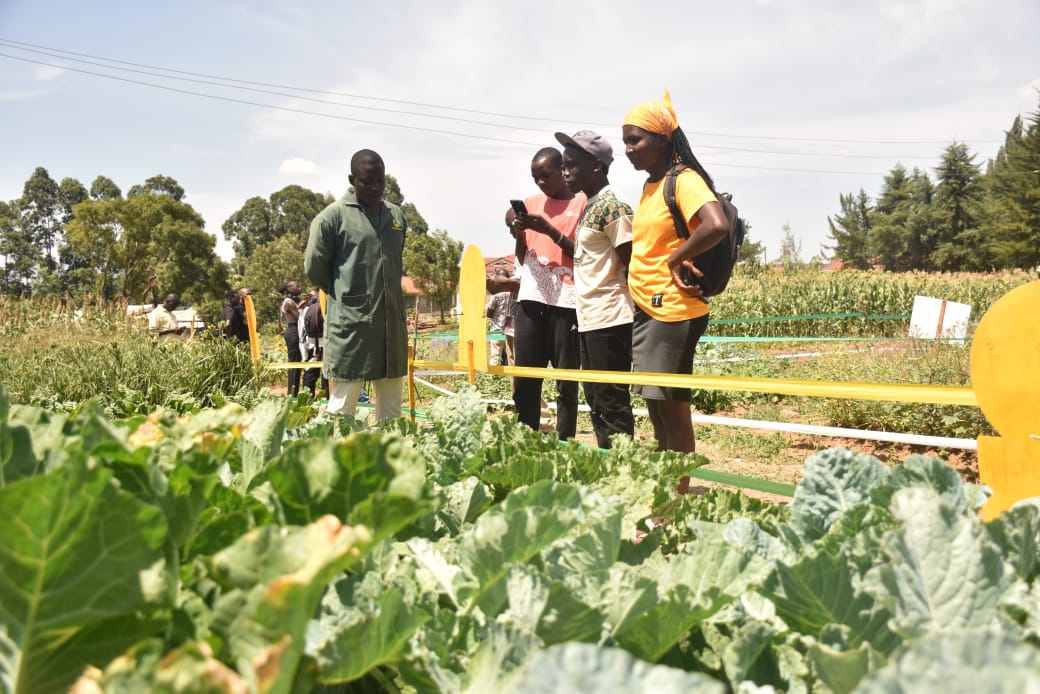
“When you walk in our demonstration plots at Kibabii University you realise that there are plots that fared well with low water supply,” he stated.
Masila also spoke about seed variety, treating of the land and crop management, minimum tillage and conservation agriculture technologies.
“We are also doing technologies that address climate change like water harvesting solutions and how to minimise evapo- transpiration through the use of technologies,” he said.
His organisation has partnered with universities to establish demonstration plots where farmers and learners taking agricultural courses can walk in and learn about the new technologies aimed at boosting farm produce.
Masila said that EAGC is a membership council of farms and organisations in the grain value chain.
“Our association has members who are grain traders, warehouses and processors who use grain as raw materials, produce other raw materials such as beverages and others,” he said.
The director also noted that the aim of the expo is to help farmers get information on the best seeds to plant, pests and diseases management and managing post- harvest losses.
“On the demonstration plots here at Kibabii University, we are showing technologies and seeds that are resistant to drought that we encourage our farmers to buy and plant,” he said.
He added that the expo opened up an opportunity for the farmers to learn about seed selection, soil preparation, fertilisation of the crop, protecting crops against pests and post- harvest management.
“With the climate change challenges, from here farmers would have known the type of seeds they can select for their agro- ecological regions and when they want to buy those seeds they are here in the exhibition arena,” Masila said.
In bid to fight the climate change effects in the region, the Eastern Africa Grains Council is partnering with the Food and Agriculture Organization to restore the Mt Elgon ecosystem.
The Kibabii University expo reached out to over 2,000 farmers.
“Our mission is that at the end of this expo, farmers would come out with good knowledge of what seeds to select and when they go out to their farms they will know the right thing to do to improve their yields,” he said.
He maintained that agriculture plays a vital role in providing livelihoods to the farmers and everyone who is in the value chain.
On the demo plots, Masila stated that they are providing all available solutions for organic and synthetic farming.
“We have some of the demonstration plots here that are demonstrating organic farming where the fertilisation is all organic fertilizer and other integrated pest management means, " he said.
“Both organic and conventional agriculture are working well that even if you do 100 per cent organic farming sometimes you may need to supplement the loss of certain nutrients by introducing some of the suitable synthetic fertilisers and micro- nutrients."
Felix Muchieka, a Kibabii University agriculture student, applauded Eastern Africa Grains Council for partnering with the university to hold the expo that helped them learn about the new farming technologies through practical lessons.
“Through this trade and agriculture expo, we have been able to learn farming technologies that can help in mitigating climate change effects,” he said.
He further encouraged young people to engage in farming, arguing that it is the only employment opportunity remaining.
Margret Juma, a farmer, said that the expo helped her learn about new farming technologies and seed selection.
“I have been able to learn a lot from this trade and agriculture expo. Before I used to harvest one sack of maize from an acre of land, but beginning now I have learnt new farming technologies and seed selection that can boost yields,” she said.
Juma revealed that she used traditional seeds that let her down.
“Before I used to select seeds from what I harvest and store for the next planting but from the knowledge I have gained here I will be buying seeds from certified companies and shops for better performance and those that are drought resistant,” she added.
The expo showcased a wide range of innovations and practical solutions for farmers and other agribusiness actors.
Highlights included crop demonstrations, post-harvest technologies, value addition innovations, agri-machinery displays, livestock technologies and interactive B2B forums where service providers and farmers connected directly.
The exhibitors presented solutions ranging from climate- smart seeds and precision agriculture tools to digital platforms for input supply, aggregation and structured grain marketing.