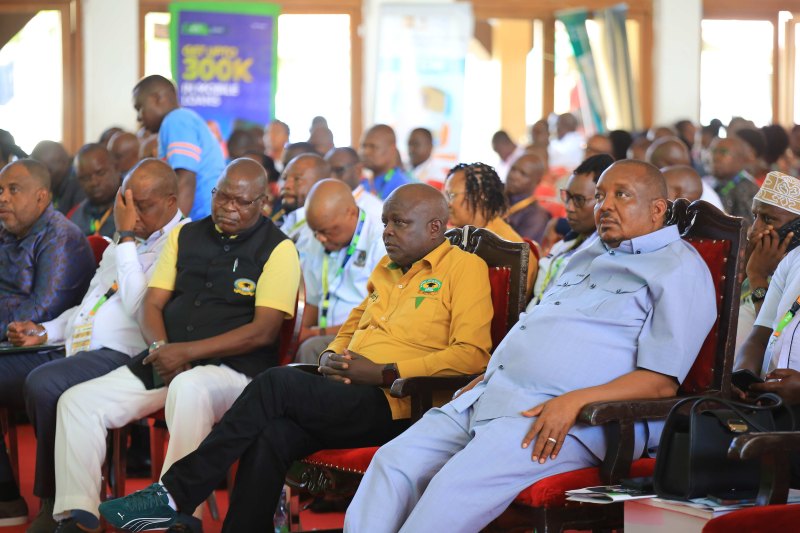
 Ngere tea factory chairperson James Githinji, also Zone Two KTDA board member, during a tea directors' meeting at Kenol town on October 29, 2025/ ALICE WAITHERA
A fresh row is brewing in the tea sector as farmers criticise rapid regulatory changes they claim risk over-regulating the crop.
The dispute follows a letter from Agriculture Principal Secretary Kiprono Rono to KTDA, directing that tea factory directors should not hold any directorial positions in companies that have business relations with their factories.
Rono cited the Tea Act, which he said prohibits directors from serving in similar positions in firms with any direct or indirect commercial relationship with the factory in which they serve.
A compliance review of smallholder tea factories managed by KTDA revealed that several directors were also serving in other firms linked to the factories, breaching the law.
The firms include Chai Trading, Kenya Tea Packers, Temec Machinery and Engineering, KTDA Power, Greenland Fedha, Majani Insurance Brokers, KTDA DMCC and Chai Logistics Centre, all KTDA subsidiaries.
The PS directed all affected directors to immediately relinquish their positions and submit amended CR12 forms within 30 days.
Farmers, however, have resisted the move, arguing that they own KTDA through their factories and should not be barred from participating in governance.
James Githinji, chairperson of Ngere Tea Factory and KTDA board member for Zone Two, said directors are elected by farmers to represent their interests.
He said the government should distinguish between ownership through shareholding and commercial interests, as the two are not the same.
“These are entities owned by the farmer. Shareholders cannot be stopped from representing their own firm. These firms do not compete,” Githinji said.
Tea factories, which are limited companies, operate under the Companies Act, with farmers making decisions through annual general meetings.
Directors have been lobbying MPs to ensure sector reforms benefit farmers and have organised a nationwide conference next week to address challenges.
Githinji also highlighted contentious aspects of the Tea Act Amendment Bill, including the proposed Direct Settlement System (DSS) for payments.
The system would consolidate farmers’ earnings in a bank account after auction, with funds disbursed to factories.
He opposed altering the current system, which allows farmers to earn extra income from converting dollars to Kenyan shillings, noting that farmers earned over Sh15 billion last year from tea exports.
Githinji criticised proposals to reduce factory directors from six to five and questioned raising the management fee paid to KTDA from 1.5 per cent of net sales to two per cent.
He also opposed the suggested increase in the tea levy from one per cent of export value to Sh3.85 per kilogramme, urging the government to fund sector programmes from the consolidated fund instead.
Agriculture Cabinet Secretary Mutahi Kagwe told the National Assembly those smallholder farmers under KTDA account for 49.9 per cent of local tea production.
He acknowledged that management agreements with KTDA already cost one per cent of gross sales, and that Tea Levy regulations aim to provide a sustainable model for funding industry programmes.
This year’s annual bonuses declined by 12.5 per cent due to lower auction prices, weak exchange rates and high production costs.
To standardise greenleaf quality and improve prices, a multi-agency committee is drafting quality guidelines for adoption by all factories.