Latest projections indicate that at
least 2.1 million people could be affected as water sources dry up,
pasture diminishes and livestock deaths rise.
Lawmakers from the hardest-hit
counties warned that the crisis is escalating faster than current interventions
can manage.
MPs from the Northern Frontier
Counties (NFC), led by Eldas MP, Adan Keynan said the short rains have failed
demanding that the Government must now find a lasting solution, once and for
all.
Keynan said the region is grappling
with severe drought conditions, saying once it is declared a national disaster,
it will be able to receive better humanitarian support.
Garissa alone has a record 30,000
families facing critical food and water shortages.
“The October-December short rains
have been notably below average, exacerbated by La Nina and a negative Indian
Ocean dipole, which have led to higher than normal temperatures and suppressed
rainfall across the region,” Keynan said.
“According to the integrated food
security phase classification, around 2.1 million people in the Asal counties
were projected to face crisis level food insecurity between October and
January, 2026.”
Intense competition over scarce
resources of water and pasture is leading to rising tensions and conflicts
within pastoral communities, the MP said.
“Vulnerable populations, especially
women and children are facing heightened risks of malnutrition and displacement
due to ongoing drought. The impact of La Nina and the negative Indian Ocean
dipole are expected to prolong the drought extending it into early 2026,”
Keynan said.
The MPs argued that declaring the
drought a national disaster would unlock additional emergency funding, streamline
humanitarian support and enable international partners to scale up
interventions.
They said the government must scale
up emergency food aid, cash transfer and livestock support to the most affected
counties to alleviate immediate suffering.
The lawmakers also demanded an
urgent need to invest in boreholes, water trucking an rehabilitation of
community water points to reduce reliance on increasingly dry riverbeds.
The MPs also said the government
must invest in climate smart infrastructure, support diversification of
livelihoods beyond pastoralism and strengthen coordination.
In addition, they called for expansion
of drought resilient agricultural practices, promoting fodder production and
integrating early warning systems into local county planning.
They at the same time demanded
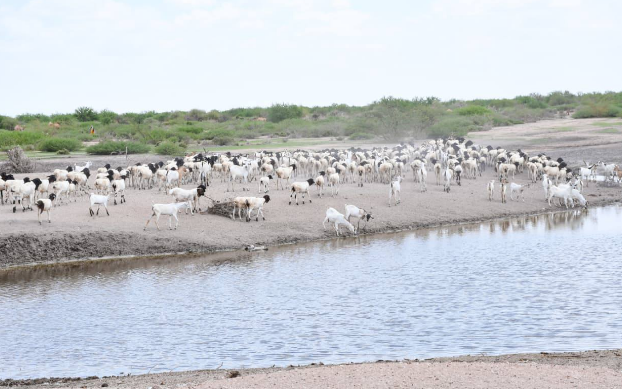
introduction of livestock offtake programme saying a goat now sells at about
Sh1,000 from Sh15,000.
Mandera West MP, Yussuf Adan said
it is unfortunate that the region continues to experience same problem each
year despite the government knowing the cycle.
“It is high time the government to
put serious attention to this problem. We have been complaining about budgets
for the Northern region but now we are talking about lives of human beings,” he
said.
“We are asking the government to
declare this a national disaster. If the government does not face it head on,
humans will die and we appeal for immediate intervention, we are staring at a
situation of mass deaths if nothing is done.”
Wajir North MP Saney Ibrahim
faulted the government for giving the region lip service while the people
suffer.
“The work of the government
is to protect lives. I do not know why we should appeal for emergency yet the
trends are known. Any serious government must apportion funds,” he said.
“Government must rightfully avail
itself, we cannot always be crying, why is the National Disaster Management
Authority not well funded? We will always have drought but it is about
preparedness. The buck stops with the Government.”