On the other side, the PNU brigade organised a Sh1 million per plate lunch
at the Safari Park hotel.
The event sold out, demonstrating that President Mwai Kibaki had the backing of
the local corporate sector as well as Kikuyu old money. It was the first time
presidential campaign fundraising became such a public spectacle in Kenya.
Given the intense rivalry between ODM and PNU
leaders, particularly their flagbearers, Raila and Kibaki, these events became platforms for flexing financial
muscle. The fundraising mirrored the style and character of campaigns in the
United States, albeit without a legal framework to regulate such activities.
Since 2007, elections have evolved into highly
competitive contests. While all electoral positions attract funding battles,
presidential elections command the highest levels of financial mobilisation.
Campaign finance includes all monetary and in-kind contributions and
expenditures incurred by candidates, political parties, or their supporters for
electioneering purposes.
Campaign finance regulation encompasses rules
on contribution and expenditure limits, disclosure obligations and enforcement
by oversight agencies.
Globally, systems vary widely, and must be analysed within broader legal,
political and cultural contexts. Interest in campaign finance has grown
significantly in recent years, and its importance continues to rise.
Many countries have introduced regulations to
promote fair competition and limit the influence of money in politics. These include
rules on contributions, expenditure limits, disclosure requirements,
enforcement mechanisms and sanctions. Broadly, they fall into three categories:
sources of financing, campaigning, and reporting, oversight, and sanctions.
Campaign financing models differ across
countries. The United States favours high-spending private donations and Super
PACs, while Canada, Germany and Britain combine strict donation limits with
public funding. While the US system has limited spending controls, countries
such as Canada and Britain enforce strict caps.
The Global Commission on Elections, Democracy
and Security has identified unregulated and opaque political financing as a
major threat to electoral integrity in both emerging and established
democracies. Citizens expect political parties to represent their interests,
yet parties often become disproportionately responsive to their donors.
When corporations and wealthy individuals gain
influence through large donations, public trust erodes and citizens feel
marginalised. This is worsened by low participation in political parties,
deepening public disengagement.
In recent years, concerns have also grown over
the infiltration of transnational organised crime into politics. In regions
such as Latin America and West Africa, opaque financing has enabled criminal
networks to influence elected officials. This undermines democracy, governance
and the rule of law, while also hindering economic development and poverty
reduction.
In Kenya, there have been concerns that some
politicians may have benefited, knowingly or unknowingly, from proceeds of
crime. The rapid growth in campaign spending reinforces the perception that
wealth buys political influence and undermines political equality. The misuse
of state resources by incumbents further distorts the playing field and limits
fair participation.
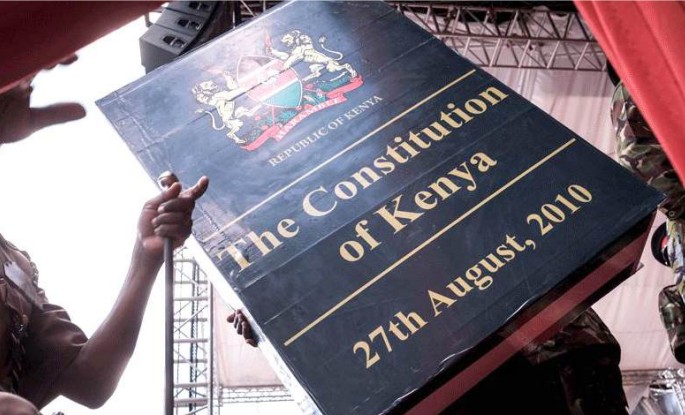
Kenya has taken steps to strengthen campaign
finance regulation, primarily through the Election Campaign Financing Act
(2013) and proposed amendments in 2024. These efforts aim to improve transparency,
establish spending caps and enforce disclosure requirements.
Court rulings in 2022 affirmed that the
Independent Electoral and Boundaries Commission can set spending limits without
parliamentary approval. This cleared the way for the agency to enforce regulations more
effectively. IEBC is currently refining these rules to simplify compliance and
enhance oversight ahead of the 2027 general election.
However, enforcement remains inconsistent,
largely due to political resistance. Many politicians prefer opaque systems,
making reform a contested process. Proposed measures include requiring
candidates to establish campaign financing committees and disclose funding
sources to avoid unregulated, “law of the jungle” financing.
Historically, campaign financing in Kenya has
been shaped by shifting economic and political power. When President Daniel Moi
came to power in 1978, he systematically dismantled the dominance of Kikuyu
economic elites who had benefited from state patronage during Jomo Kenyatta’s
presidency.
Moi weakened their financial institutions and
businesses while promoting state-supported ventures among the Asian and
Kalenjin communities. He also elevated loyalists within the civil service. By
the time multiparty democracy returned in 1992, campaign financing reflected
these realignments.
Kanu, under Moi, competed primarily with Ford Asili led by Kenneth Matiba, while Kibaki
also drew support from established economic networks within his community. The
Youth for Kanu exemplified the fusion of state patronage with emerging
economic power blocs.
The economic downturn of the mid-1990s,
followed years later by the effects of Covid-19, led to the exit of many Western multinational
corporations from Kenya. This significantly reduced external financial
influence in elections.
When Kibaki assumed power in 2003, he turned
to China for development financing. Unlike Western actors, China focused on
working with incumbent governments rather than influencing electoral outcomes.
This shift partly explains the aggressive domestic fundraising seen in the 2007
election.
The trend persisted in subsequent elections,
including the contests between Raila and Uhuru Kenyatta in 2013 and 2017. By
2022, fundraising had intensified further, with local business interests
playing a central role after sections of Kikuyu old money shifted political
allegiance.
With reduced corporate backing from
multinational firms, candidates increasingly relied on local entrepreneurs and
private businesses. This had immediate consequences. Following the 2022
election, the Kenya Kwanza government introduced measures to bring previously
untaxed enterprises into the tax net.
As the country approaches the 2027 election,
the landscape is shifting. Business cartels that once dominated political
financing are no longer as powerful. Supporting presidential candidates has
become a risky investment, with potential regulatory and financial
repercussions.
Many businesses are now reconsidering the
wisdom of mixing politics with enterprise. There is a growing preference for
advocating stable economic policies rather than backing individual candidates.
After all, economic policies affect all citizens equally.
Yet the temptation to align with potential
winners remains strong. As always, the question persists: will holders of
capital resist the urge to capture the state?


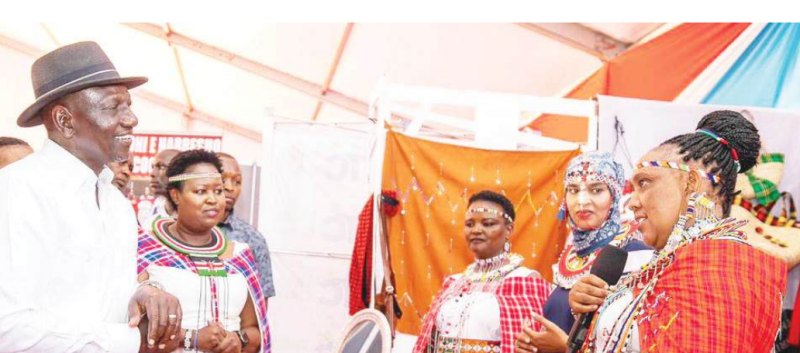
 Many businesses are now reconsidering the wisdom of mixing politics with enterprise. There is a growing preference for advocating stable economic policies rather than backing individual candidates /FILE
![[PHOTOS] The new Ngong –Naivasha Road viaduct](https://cdn.radioafrica.digital/image/2026/06/64d4f771-4432-4aee-ba3c-2f304c4436ec.jpg)



![[PHOTOS] 'Mr Speaker Sir' Gen Z protester in court](https://cdn.radioafrica.digital/image/2026/06/b3e62d8e-25c3-4780-90f9-4eb48b1ce8a7.jpg)