
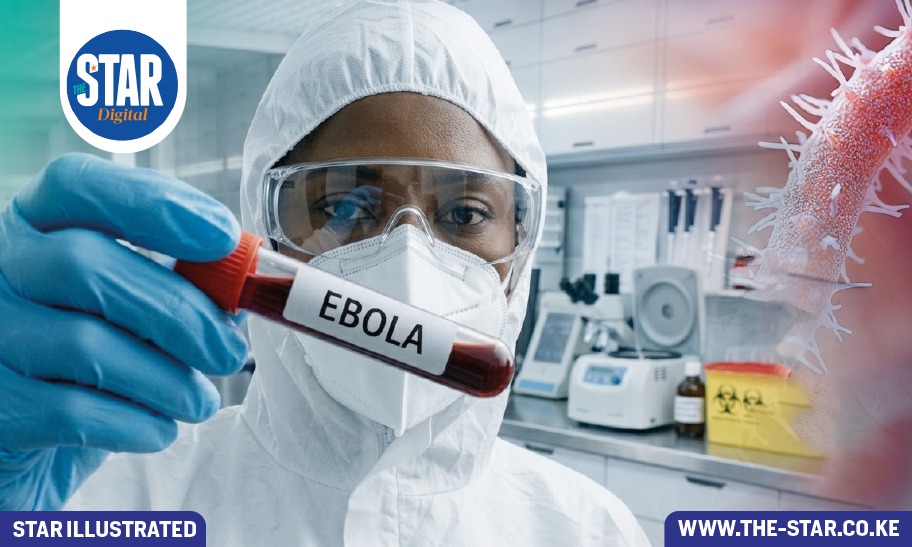
An Ebola vaccine partly tested in Kenya may be assessed to determine whether it can protect against a new variant spreading in Uganda and the Democratic Republic of Congo.
The vaccine, Ervebo, is already licensed for protection against one type of Ebola virus known as Zaire ebolavirus. It was developed through international partnerships and underwent partial testing in Kenya.
Health experts say they are now considering whether existing vaccine candidates targeting other Ebola strains could offer any protection against the current outbreak, which is caused by the Bundibugyo virus.
However, they caution that effectiveness against this strain is not yet known.
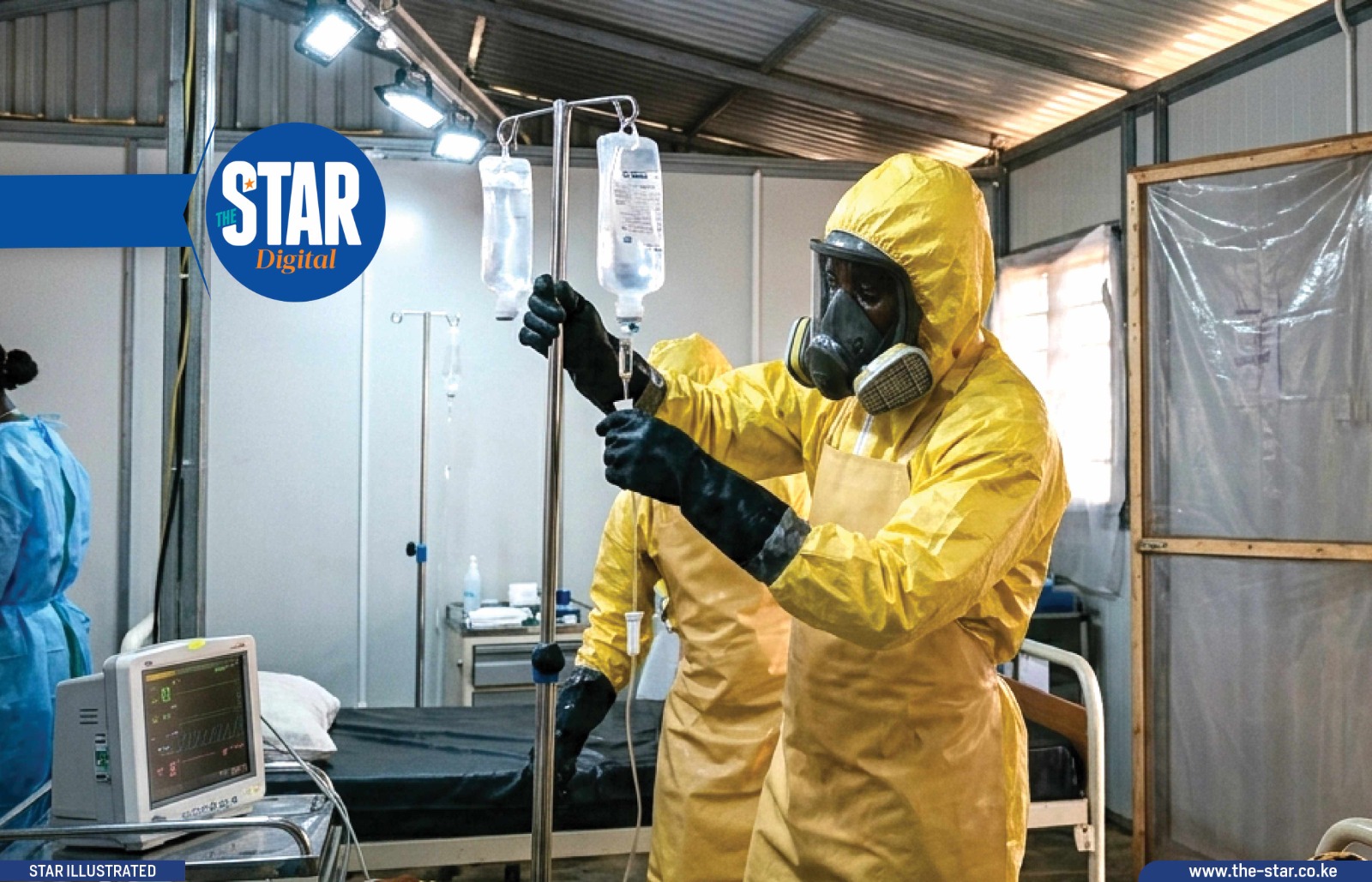
The outbreak is growing rapidly in both Uganda and the DRC, with global health agencies warning of a serious public health risk.
More than 500 suspected cases and over 130 deaths have been reported in the Congo, while Uganda has confirmed cases in Kampala.
Gavi, the Vaccine Alliance, said there are currently no licensed vaccines for Bundibugyo virus disease. It said existing Ebola vaccines in the global stockpile are only approved for Zaire ebolavirus.
“Considering the extremely limited available evidence on cross-protection against non-Zaire species, any decision to use this vaccine in the current outbreak will require further assessments and will occur in accordance with WHO guidance,” Gavi said, adding that deployment would require informed consent from affected communities.
The World Health Organization has declared the outbreak a Public Health Emergency of International Concern, while the Africa Centres for Disease Control and Prevention has classified it as a continental emergency.
Gavi warned that the outbreak is particularly concerning due to its spread in conflict-affected and hard-to-reach areas, complicating surveillance and response efforts.
The organisation is working with partners including WHO, Africa Centers for Disease Control, Unicef, the World Bank and Coalition for Epidemic Preparedness Innovations to assess vaccine needs and accelerate response measures.
It is also evaluating emergency financing through its First Response Fund, which was established after the Covid-19 pandemic to enable rapid outbreak interventions.
The fund, which has Sh64.75 billion available through 2030, was recently used during an mpox outbreak to secure 500,000 vaccine doses and support a Sh1.29 billion response operation.
Gavi said it is also reviewing vaccine candidates still in development. One uses the same platform as Ervebo but is being adapted for Bundibugyo virus, although no doses are currently available for trials, which could take six to nine months to produce.
Another candidate uses the ChAdOx platform, previously used in Covid-19 vaccines, though it has not yet undergone animal or human testing for this strain.
Experts say Ebola vaccination has previously proven highly effective in controlling outbreaks of the Zaire strain.
A 2025 BMJ Global Health study found outbreak vaccination reduced cases by 77 per cent and deaths by 76 per cent on average.
Gavi currently maintains a global stockpile of 500,000 doses of the Ervebo vaccine, which has been deployed in four outbreak responses in the Congo, including a 2025 campaign that vaccinated more than 47,000 people.
Health workers in the region have also been vaccinated preventively.
As scientists assess whether existing tools can be adapted for the new strain, health agencies stress that speed, coordination and evidence-based action will be critical to preventing further cross-border spread in East Africa.

![[PHOTOS] The new Ngong –Naivasha Road viaduct](https://cdn.radioafrica.digital/image/2026/06/64d4f771-4432-4aee-ba3c-2f304c4436ec.jpg)





![[PHOTOS] 'Mr Speaker Sir' Gen Z protester in court](https://cdn.radioafrica.digital/image/2026/06/b3e62d8e-25c3-4780-90f9-4eb48b1ce8a7.jpg)