Taxpayers could still be carrying billions of shillings in
unresolved debt, including those linked to the infamous Anglo Leasing scandal,
a new audit has revealed.
Auditor General Nancy Gathungu has flagged Sh15.4 billion in
questionable security loans amid revelations the state could be in the dark
over the debt.
In a review of Treasury books for June 30, 2025, the auditor
general raised concerns about missing records, unclear repayment status and no
proof that the projects were ever implemented.
The audit raises fresh concerns over five long-standing
security-related loans whose origins trace back to controversial contracts
signed in the early 2000s at the height of the Anglo Leasing saga.
The fresh findings reveal the scandal is not just a
historical corruption case, but a live,
unresolved financial liability for taxpayers.
According to the report obtained by the Star, the
government’s public debt records reflect Sh14.4 billion tied to the five outstanding
security contract loans.
An additional Sh997 million is in respect of two bilateral
loans, bringing the total debt in question to Sh15.4 billion.
The loans are linked to security-sector contracts under
Anglo Leasing arrangements, including a 2003 agreement for the modernisation of the passport system.
They were also sourced to fund the supply of security
equipment for border control, projects that were reportedly never implemented
after all.
“A review of the Debt Management Report of 2016 shared by the National Treasury revealed that the five security contracts related to the
Anglo Leasing security-sector contracts,” Gathungu said.
She said the debt was from the loan signed on December 4,
2003, for the modernisation of Kenya's passport system and purchase of security
equipment for use at Kenya's borders.
Gathungu said crucial documentation supporting the
loans, including the contract files and implementation records were not
provided for audit review.
She said without the documentation, the legitimacy and
current status of the obligations is cast in doubt, pointing to losses to the
taxpayer.
The loans, some of which were due for maturity between 2007
and 2022, remain unresolved years later, with only one scheduled to mature in
2040.
The prolonged existence of the debts, without clear servicing
records or closure, raises questions about whether taxpayers may still be
exposed to liabilities stemming from disputed deals.
A review of earlier findings cited in the latest report
paints an even more troubling picture of how taxpayers were given a raw deal in
the ventures.
A 2006 special audit conducted by the Office of the
Controller and Auditor General had already established flaws in the procurement
processes.
The audit found that procurement laws were violated, that
the projects were grossly overpriced, and in some cases no actual credit was
extended to the government.
The review also revealed the government paid interest on
its own money, pointing to possible structured fraud. There is also no proof
the loans were ever repaid.
The new findings create the possibility that Kenya could
still be servicing a phantom or irregular debt, especially with the lack of documentation
confirming repayment and no implementation reports.
Nearly two decades later, the latest audit indicates that
key questions raised at the time remain unanswered, with the court cases taking
inordinately long.
“Supporting documents on the status of the implementation of
the contracts were not provided for review. Further, there was no supporting
evidence provided on whether the loans were repaid,” Gathungu said.
As of late February, the Court of Appeal issued an order
that halted defence proceedings against the Kamani brothers while their appeal
is considered.
The Court of Appeal temporarily suspended the defence
hearing for businessmen Deepak Kamani and Rashmi Kamani, a stay in place until
the appellate court makes a final decision on their appeal.
The case is scheduled for a virtual mention on May 19, 2026,
to update the court on the progress of the appeal.
The Director of Public Prosecutions (DPP) opposed the delay
and urged the Court of Appeal to dismiss the application and allow the trial to
proceed without interruption.
A High Court ruling in 2024 overturned a lower court's
acquittal of the persons of interest in the long-drawn legal battle.
On the bilateral loans, it emerged the government may
not be following up on the repayment invoices for the borrowings.
The audit established that the Public Debt Management Office (PDMO) has not received debt servicing invoices from creditors for the two loans since
2007.
The auditor says it remains unclear why the office has
neither obtained the invoices nor initiated follow-up measures to regularise
the repayment process over nearly two decades.
“It was not clear why PDMO has not followed up on the invoices
for the repayment of the two loans,” the report tabled in Parliament reads.
The lapse, according to the report, points to serious
weaknesses in debt monitoring systems within the National Treasury,
particularly in relation to long-standing obligations inherited from earlier
administrations.
The audit warns that continued non-compliance may also
negatively affect the country’s creditworthiness, at a time when the country
seeks to borrow over Sh1 trillion to plug budget gaps.
“Failure by PDMO to service their obligations as and when
they arise is a breach of loan agreement terms and poses the risk of lawsuits, penalties and adverse credit ratings,” Gathungu said.
The absence of invoices, which outline repayment schedules,
interest accruals and outstanding balances, means the government may not
have a clear picture of what is owed.
It points to the government being in the dark about when
payments are due, or whether obligations have already been settled.
The findings also place the Treasury on the spot for
violating provisions of the Public Finance Management (PFM) Act, 2012.
The law sets strict guidelines on how the government should
manage borrowing and repayment.
Section 50(1) of the PFM Act requires the national
government to ensure its financing needs and payment obligations are met
at the lowest possible cost, while maintaining a prudent level of risk.
By failing to track and service the loans, auditors
conclude, Treasury officials may have acted in breach of the law.
“In the
circumstances, management was in breach of the law,” the report states.
The Anglo Leasing saga was synonymous with opaque contracts,
inflated costs and questionable financial arrangements within the security
sector.
The latest audit suggests that, beyond the initial scandal, the
financial implications may still be felt within the country’s public accounts.
INSTANT ANALYSIS
The findings come at a time when the National Treasury is
grappling with mounting public debt and increasing scrutiny over how borrowed
funds are utilised. With the country under pressure to rationalise expenditure
and improve spending discipline, the possibility of the legacy debts lingering
in official books without clarity is likely to trigger fresh debate.


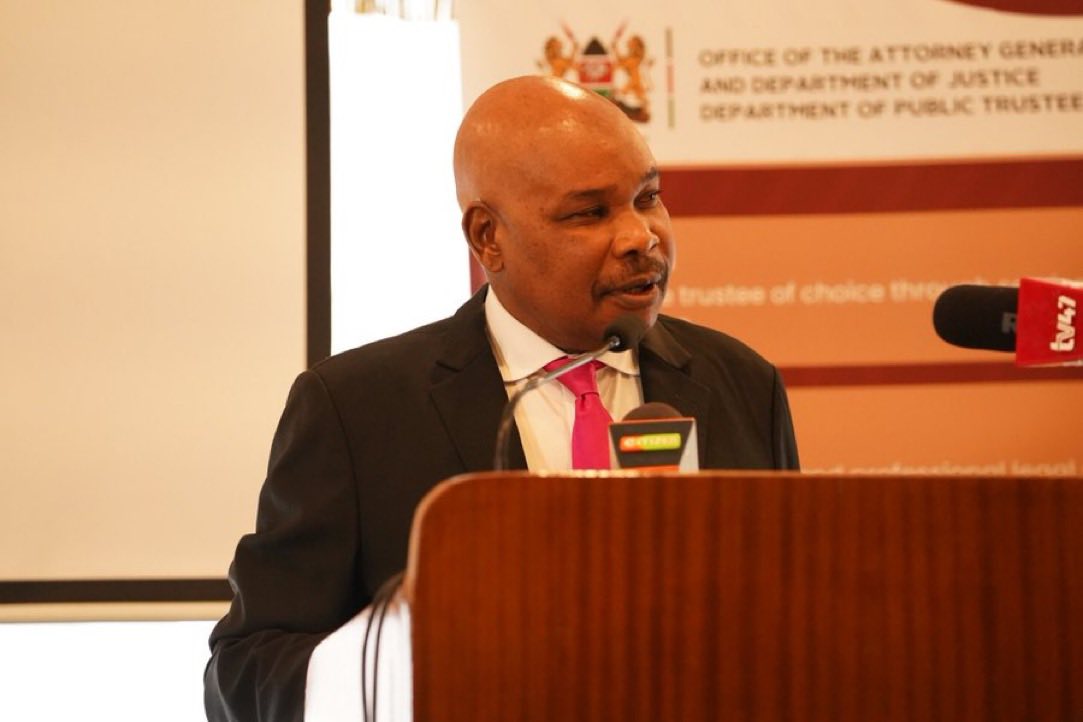
 Auditor General Nancy Gathungu/FILE





![[PHOTOS] The new Ngong –Naivasha Road viaduct](https://cdn.radioafrica.digital/image/2026/06/64d4f771-4432-4aee-ba3c-2f304c4436ec.jpg)







![[PHOTOS] 'Mr Speaker Sir' Gen Z protester in court](https://cdn.radioafrica.digital/image/2026/06/b3e62d8e-25c3-4780-90f9-4eb48b1ce8a7.jpg)