A new audit has red-flagged costly delays, mismanagement,
financial losses and illegalities that have plagued several
multibillion-shilling road projects across the country.
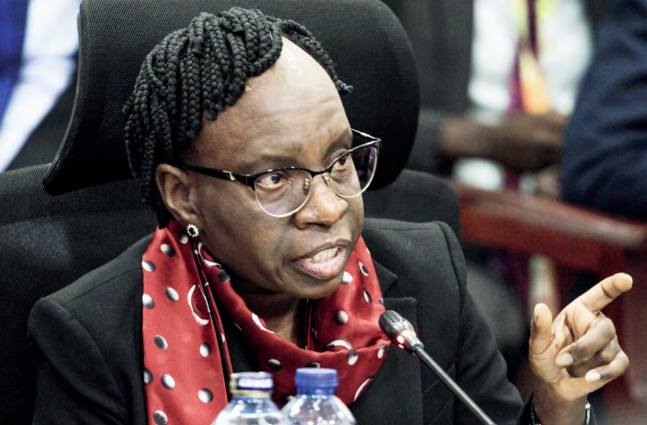
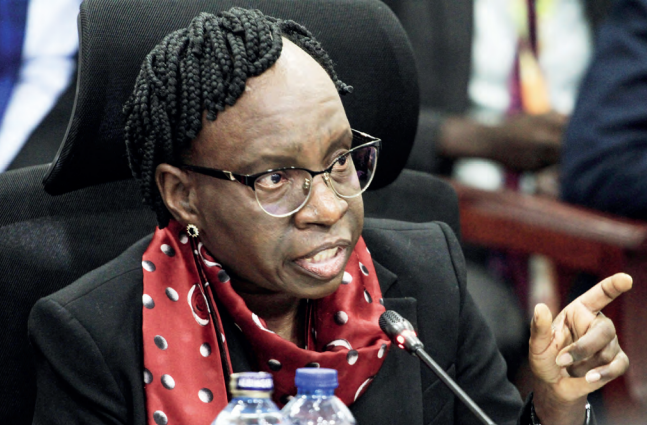
Auditor General Nancy Gathungu, in a report for the period
ending June 30, 2025, revealed that hundreds of billions of shillings have been
lost through avoidable interest payments.
She also raised concerns over stalled projects and contracts
that were illegally varied beyond legal limits, exposing taxpayers to immense
losses.
The queries cover projects undertaken by the Kenya National
Highways Authority (KeNHA) and the Kenya Urban Roads Authority (Kura).
Central to the queries is the failure by the agencies to
settle pending bills on time, leading to the accumulation of avoidable interest
payments and penalties.
Some of the dues date back more than a decade. When summed
up, the total avoidable costs exceed Sh7 billion, with interest payments alone
amounting to more than Sh2 billion.
Among the highlighted projects is the Nairobi Intelligent
Transportation System. A contractor was paid Sh1.4 billion in January 2025 but
had not mobilised to the site.
An inspection conducted in October 2025 revealed that the
project remained at the design stage.
A consulting firm managing the project, contracted in May
2022, had already been paid Sh257 million.
Although the contract period was extended by 27 months to
accommodate implementation delays, no actual construction had begun at the time
of the audit.
Auditors established that the consultant had written to the
contractor explaining that the project had delayed due to the lack of a
qualified project manager.
“The delayed project implementation has negatively impacted
service delivery to the public and value for money incurred could not be
confirmed.”
Gathungu also cited the Kenol–Sagana–Marua dualling project,
whose contract price has risen to Sh9.1 billion from the initial Sh6.1 billion.
The auditor said the variation of about 50 per cent is
irregular, considering that the law allows variations of only up to 25 per
cent. She warned that the amount could increase further due to delayed
completion.
“The delayed completion of the project denied the public the
benefits that could have accrued from it,” she said, adding that some of the
interest payments were avoidable.
A similar situation has been reported in the
Kibwezi–Mutomo–Kitui road project, which remains incomplete despite having
started in 2011, more than 15 years ago.
Works stalled in December 2021 after the contractor downed
tools over non-payment, the report tabled in Parliament last month states.
Of the outstanding Sh1.9 billion, Sh474 million accounts for
interest charged on delayed payments.
The audit shows that KeNHA negotiated a waiver on another
Sh255 million interest, but the situation did not improve.
At the time of the audit inspection in September 2025, the
contractor had only just resumed work, with no clear completion timeline.
The dualling of Magongo Road in Mombasa has also raised
concerns, including the payment of Sh212 million in interest due to delayed
payments.
Details show that the contractor lodged a prolongation cost
claim of Sh3.5 billion, representing 140 per cent of the original contract cost
of Sh2.6 billion.
Gathungu said the claim was under evaluation at the time of
the audit and warned of the risk of cost escalation and possible litigation.
“This would derail project completion and result in
substantial loss of public funds. There may be no value for money as public
resources are diverted to settle avoidable costs,” the auditor said.
The Mombasa Port Area development project faces similar
challenges. The project has pending bills amounting to Sh7.3 billion, more than
half of which relates to land compensation.
“Failure to settle pending bills on time may lead to loss of
public funds through accrued penalties, interest and other administrative
costs.”
The report shows that Sh559 million in interest has already
been charged on delayed payments, all paid to a single construction company.
Management attributed the delays to inadequate budgets.
However, the auditor general said value for money on the interest payments
could not be confirmed.
On the Mombasa–Mariakani Highway project, a contractor has
submitted a claim of Sh772 million due to delayed land acquisition and court
injunctions that halted works.
Total interest on delayed payments stood at Sh347 million.
The contractor has also filed a new claim seeking additional payments after
delays in accessing the site.
“The unsettled cost claims expose the entity to significant
financial and operational risks in the form of additional interest charges,”
Gathungu said.
She warned that the contractor may file further claims,
concluding that value for money on the amount incurred could not be confirmed.
On the Sirari Corridor accessibility project, interest
charges on two interim payment certificates alone totalled Sh584 million on
bills dating back to 2013.
Auditors also established Sh555 million in interest arising
from delayed settlements under the National Urban Transport Improvement
Project.
The project has also suffered Sh582 million in foreign
exchange losses due to years of delay, bringing the total losses to Sh1.1
billion.
Taxpayers are also expected to settle Sh10 million under the
Bagamoyo–Malindi road project, a payment Gathungu said could have been avoided.
A similar case was cited in the Gilgil Machinery road
project, where Sh20 million was spent on penalties resulting from delayed
payments.
Infractions have also been flagged in the Mombasa Special
Economic Zone project. Five years into the project timeline, the government has
drawn down only Sh74 million out of the available Sh33.8 billion.
The main construction contract was awarded to a single
bidder but remains unsigned because key officials have failed to agree on
financial clauses.
Gathungu faulted the Attorney General, the National Treasury
and donors, stating that the project has effectively stalled.
The Kapchorwa–Suam–Kitale project also faces recurring
challenges, including unsettled pending bills. The amount involved was not
specified.
An audit inspection conducted in October 2025 revealed
several incomplete activities.
Worse still, the project period had expired and no evidence
of an extension was provided for review.
Compensation for affected persons remained pending,
alongside civil works such as road markings, pedestrian walkways and
guardrails.
Accountability lobbyists are now calling for the prosecution
of the responsible officers, arguing that some delays are deliberate.
Community Initiative Action Group–Kenya executive director
Chris Owalla said the amounts spent on interest payments could help address
budget deficits in other priority areas.
“We see a pattern of officers deliberately delaying projects
in collusion with some contractors and consultants for individual benefits,”
Owalla told the Star.
At the Nairobi Western Bypass project, the project closed
with an undrawn amount of Sh3.8 billion.
“The credit lapsed without being fully utilised,” the report
states.
It also revealed that affected persons are yet to be paid
Sh561 million.
The audit further flagged the Mombasa Gate Bridge project,
where KeNHA spent Sh1 billion on a consultant despite little progress.
“Despite the payments, the project has remained in the
preparation phase for over four years,” the report states, concluding that
there was no value for money.
INSTANT ANALYSIS
The figures for avoidable payments in these projects are
likely higher, as the same problems have been flagged year after year with
little change. The key question remains: Is anyone being held responsible? The
Public Finance Management Act requires accounting officers to resolve audit
issues. Yet management appears to treat audit queries as paperwork to be
acknowledged, rather than problems to be solved.

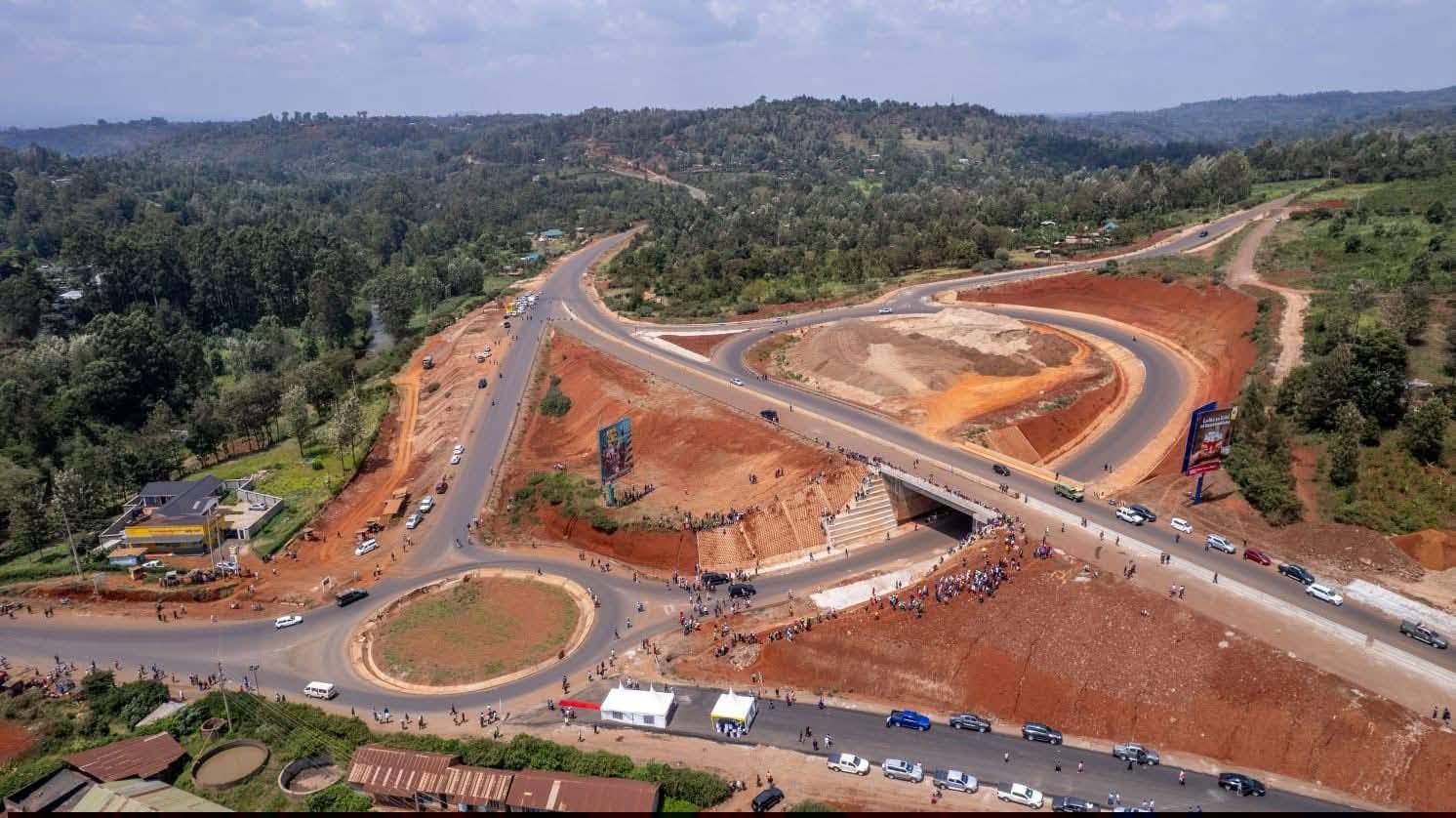 Kenol-Marua road interchange.


![[PHOTOS] The new Ngong –Naivasha Road viaduct](https://cdn.radioafrica.digital/image/2026/06/64d4f771-4432-4aee-ba3c-2f304c4436ec.jpg)










![[PHOTOS] 'Mr Speaker Sir' Gen Z protester in court](https://cdn.radioafrica.digital/image/2026/06/b3e62d8e-25c3-4780-90f9-4eb48b1ce8a7.jpg)