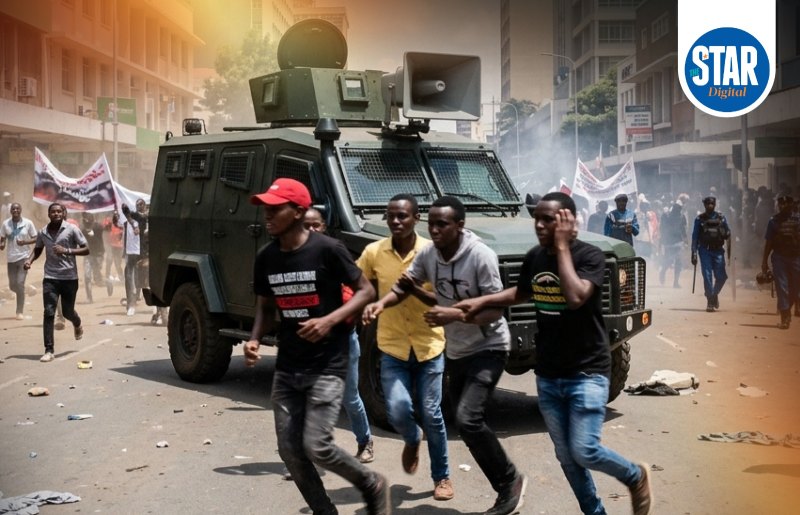
Kenya is not short
of problems. From youth unemployment, hunger, poverty, floods, insecurity to a
choking public debt, the country is weighed down by urgent, existential and
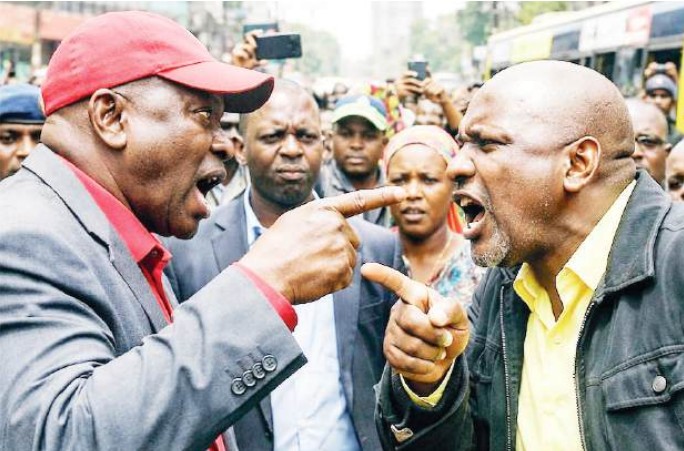
complex challenges. Yet, if one were to judge by the conduct of our political
elite, you would think the greatest national priority is trading insults in
public rallies and, increasingly, in spaces that once commanded reverence.
The now-familiar
public spats between President William Ruto
and his former deputy Rigathi Gachagua
have reduced political discourse to a contest of egos. This is no longer
politics as we know it—it is politics as theatre, and a dangerously corrosive
one at that.
Let us be blunt:
Kenya is being held hostage by the tongues of its politicians.
Civil society and
the Kenya Conference of Catholic Bishops
have called out this behaviour for what it is - an embarrassment and a betrayal
of public trust. But embarrassment is too mild a word. What we are witnessing
is a systematic erosion of the moral and institutional foundations of
leadership.
To understand this
moment, we must move beyond outrage and into analysis. As C. Wright Mills argued, personal troubles are
often public issues in disguise.
The insults, the chest
thumping, the thinly veiled threats - these are not random outbursts. They are
symptoms of a political system that rewards noise over substance and conflict
over competence.
In such a system,
silence is political death. Measured speech is weakness. Outrage is currency.
This is where the
logic of performance comes in. Erving Goffman
would remind us that public life is a stage, and our politicians are seasoned
actors. The rally is their theatre, the microphone their weapon, and the crowd
their judge. Every insult is calculated. Every jab is rehearsed. Every outburst
is designed to produce applause, headlines, and ultimately, political survival.
But there is a
cost to this performance - one that the country is now paying in full.
When leaders
normalise abuse, they lower the threshold of acceptable behaviour across
society. Politics becomes a blood sport, not a marketplace of ideas. Citizens
retreat into hardened camps. Dialogue gives way to shouting. Disagreement
morphs into hatred.
We are not just
witnessing incivility; we are witnessing the slow normalisation of contempt.
From a conflict
theory lens, this is hardly surprising. Politics is about power, and power is
rarely pursued politely. Language becomes a weapon, used to intimidate,
delegitimise, and dominate. But when this logic becomes absolute, it consumes
the very system it seeks to control. Institutions weaken. Trust evaporates.
Governance becomes secondary to spectacle.
And so, the bar
keeps falling. Yet at its core, this is not just a political failure—it is a
moral collapse.
Leadership is,
fundamentally, an ethical enterprise. It demands restraint, responsibility, and
respect for the dignity of others. Whether one draws from classical ethical
traditions or African communitarian philosophy, the message is the same: power
must be exercised with a sense of duty to the collective.
What we are seeing
today is the abandonment of that ethic.
And the
consequences are not abstract. They are deeply psychological and profoundly
social. Language shapes perception. When citizens are routinely exposed to
hostile rhetoric, they internalise it. It spills over into social media,
workplaces, and communities. It breeds cynicism, fuels polarisation, and in
extreme cases, lays the groundwork for open conflict. This is how nations unravel
- not always through dramatic, but through the steady corrosion of norms.
So, what is to be
done?
First, we must
confront an uncomfortable truth: our political culture reflects, in part, what
we tolerate. Leaders speak the language that wins them applause. If insults
draw cheers, insults will multiply. If dignity is demanded, dignity will
emerge.
Second,
institutions must rediscover their spine. Political parties cannot continue to
look the other way as their members drag public discourse into the gutter.
Codes of conduct must mean something. Accountability must be real.
Third, the media
must make a choice. It can continue to amplify conflict for ratings, or it can
elevate substance and restore balance to public debate. What it chooses will
shape the political incentives of tomorrow.
Fourth, the law
must be applied without fear or favour. Hate speech and incitement are not
theoretical concerns; they are real threats to national cohesion. Enforcement
must be consistent, not selective.
Finally, and most
importantly, leadership itself must be reimagined. The country does not need
louder leaders; it needs wiser ones. It does not need sharper insults; it needs
sharper ideas.
Kenya stands at a
dangerous crossroads. We can continue down this path, where politics is reduced
to a shouting match and leadership to performance art. Or we can demand a
return to civility, substance, and moral responsibility.
The choice is ours but so are the consequences. For if we allow our leaders' tongues to run wild, we may soon find that it is now just our politics that has lost its way but our nation itslef.




![[PHOTOS] The new Ngong –Naivasha Road viaduct](https://cdn.radioafrica.digital/image/2026/06/64d4f771-4432-4aee-ba3c-2f304c4436ec.jpg)


![[PHOTOS] 'Mr Speaker Sir' Gen Z protester in court](https://cdn.radioafrica.digital/image/2026/06/b3e62d8e-25c3-4780-90f9-4eb48b1ce8a7.jpg)