Africa has been here before.
The maps are no longer spread across mahogany tables in European capitals and
the language is no longer overtly imperial.
Yet the underlying logic feels
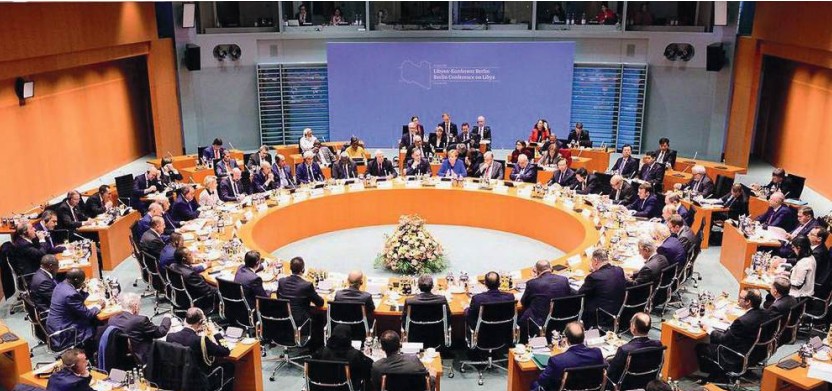
unsettlingly familiar. The first Berlin Conference or West African Conference (1884-1885)
partitioned Africa’s land under the pretext of order and protection. Today, a quieter
conference is unfolding¾one without flags or gunboats, but with grant
calls, mobility schemes, collaborative networks, and memoranda of
understanding.
If Berlin I scrambled for territory, Berlin II
is scrambling for knowledge and legitimacy.
In the late 19th Century,
African traditional leaders were coerced into signing documents drafted in
foreign languages, surrendering land and sovereignty they scarcely imagined
could be taken so completely.
For years, historians dismissed them as naïve or
complicit. More honest scholarship has since corrected this view, recognising
that they were victims of deeply asymmetrical power relations. The tragedy was
not ignorance; it was structural vulnerability.
Today, Africa’s sovereigns wear
different crowns. They are professors, researchers, directors, deans and
principal investigators–highly educated, globally connected and
intellectually accomplished. Yet they operate within systems that constrain
their autonomy.
African universities remain
chronically underfunded. Research infrastructure is fragile, laboratories are
under-equipped and scholars are stretched thin between teaching, administration
and survival.
In such an environment, research funding is not merely desirable–it is
existential. And scarcity, whether of food or research capital, has always been
an effective tool of persuasion.
This reality helps explain the
renewed global enthusiasm for Africa. Universities and research institutions
from the Global North are increasingly turning their gaze toward the continent.
The language is appealing: partnerships, collaboration, mutual benefit and co-creation.
Staff exchanges, joint publications and capacity-building programmes dominate
the discourse.
On the surface, this appears
progressive¾an
overdue recognition of Africa’s intellectual potential. But beneath this
vocabulary lies a persistent imbalance and question: who defines the research
agenda and who ultimately claims legitimacy over the knowledge produced?
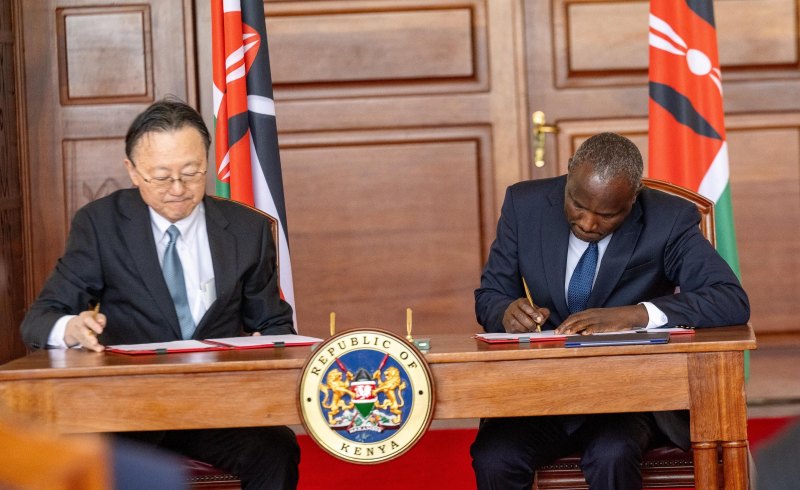
Today’s treaties are not signed
with ink or thumbprints, but with institutional logos on MoUs. Anyone familiar
with proposal writing in African universities recognises the unspoken rule.
When a funding call is released, the first instinct is rarely to ask what
African communities’ need. Instead, it is to interpret donor priorities. A
familiar phrase often emerges in these discussions: “Write what they want.” It
is said casually, but it marks a critical moment—the quiet retreat of
intellectual sovereignty.
“What they want” shapes
everything: the questions posed, the methods employed, the timelines enforced
and the indicators of success.
African scholars frequently undertake the
fieldwork, navigate complex local realities, and generate rich, contextually
grounded data. Yet ownership of that data, control over analysis and authority
over publication often lie elsewhere.
Research outputs appear in
prestigious journals, with African scholars included—but rarely as
agenda-setters. Communities are studied repeatedly, yet seldom transformed by
the knowledge extracted from them.
This is not collaboration in its
emancipatory sense. It is epistemic extraction, refined and legitimised through
academic norms.
Perhaps the most insidious
feature of this new ‘conference’ is how thoroughly it has been normalised and
even rewarded. In many African universities, academic prestige is increasingly
tied to the ability to attract foreign funding rather than to build resilient
institutions or produce locally grounded knowledge.
Scholars who secure large
grants are celebrated, even when their research agendas are externally driven.
Meanwhile, those who pursue independent, locally relevant inquiry often
struggle for recognition within the same systems.
This reality raises several
uncomfortable but necessary questions.
Why is Africa endlessly
researched, yet rarely acknowledged as a site of theory production? Why do
African scholars spend decades explaining African poverty, governance
challenges and social inequalities to external audiences, while crises in the
Global North remain largely unexplored from African intellectual perspectives?
Who owns African data, and
where is it stored? Why are datasets generated through African labour and
communities frequently archived abroad, analysed abroad and converted into
intellectual capital that remains inaccessible to African institutions?
And perhaps most critically,
why have African states retreated from their responsibility to fund research?
Public disinvestment has created a vacuum, one that external funders have
readily filled. In doing so, donor priorities are often presented as neutral
academic interests, while African universities are compelled to align with
external logics rather than national or continental visions.
This is not a call for
intellectual isolation. Knowledge thrives through exchange, and global
collaboration remains essential. But collaboration without equity is domination
in polite disguise. Partnership without agenda-setting power is dependency by
another name.
The vindication of African
academia will not emerge by default. It requires deliberate action: scholars
willing to name these dynamics honestly; universities investing in South-South
collaborations; states committing meaningful resources to research; and
academic systems that reward intellectual courage alongside grant acquisition.
If knowledge is power and
Africa continues to export its questions, data, and intellectual labour without
owning the answers, then Berlin II is no longer a metaphor. It is a reality
already in motion. The question that remains is stark: are we willing
participants, or reluctant prisoners, in our own intellectual recolonisation?
Edwin Wanjawa is….[email protected]