The
idea of electing political influencers, especially political social media
influencers, just doesn’t sit well. I’m sure many would agree that political
influencers spin and paint a very perfect picture of those that pay them, to
the point that they buy into the hearts of the electorate to vote in their
bosses.
Many
times, these same social media political influencers get trapped into the kind
of pomp, colour, influence and money that those they work for receive. More
often than not, these influencers then vie for political seats.
Political
influencers are good at marketing, propaganda and spin. What would stop these
influencers from using the same campaign gimmicks, and if they eventually win,
govern with the same tricks they used for their bosses? In this case, some bad
politicians are born out of the bad politicians they emulate, and the cycle
continues.
Social
media influencers turned politicians and others are some of the moral questions
we Kenyans should ask ourselves when we see these popular individuals on the
ballot box.
The fundamental question by the electorate should be, if the
influencers turned candidates have the necessary leadership qualities, and the
potential to deliver once elected. Their potential to deliver should be the
bare minimum.
Case in point, one well-known influencer on the social media
streets, is popularly known to be a well-researched key-board warrior, but she
cannot articulate herself well and persuade when given a serious forum.
Another
influencer turned politician from the 2022 general election is still known for
being very good on written insults on social media but very low delivery. Many
other current examples still exist of influencers turned politicians and barely
have what it takes to deliver.
So what
should electorates do in such a moment, where popularity risks replacing
competence? Since we are now in campaign mode for the 2027 general elections,
first, Kenyans must become more deliberate and critical in how they assess
leadership.
Beyond
the usual viral posts and trending hashtags, we the voters must interrogate
real substance, with lessons from countries that have it right. Even if it’s an
influencer vying, what is her or his track record? Have they demonstrated
leadership beyond the screen in any capacity, from community level to the world
stage? Have they engaged in community work, policy discussions, or initiatives
that show a commitment to public service? For the upcoming elections, by all
means, popularity should never be mistaken for a candidates preparedness.
Secondly,
there is a need to separate good communication skills from leadership ability.
While it is true that good leaders must communicate effectively, not all
effective communicators make good leaders.
Real
governance, especially in developing contexts, requires patience, negotiation,
technical understanding, and the ability to make difficult decisions that may
not always be popular. These are qualities that cannot be filtered, edited,
rehearsed and get well curated and timed like a simple social media post.
Third,
elections related institutions such as political parties and electoral bodies
must also take responsibility. They should enforce stricter vetting processes
to ensure that those seeking office meet certain thresholds of integrity,
competence, and experience.
Leaving this burden of knowing which influencer is
genuine entirely to the electorate, in this day and age of misinformation,
disinformation and manipulation, might
risk lowering the quality of leadership that we get come 2027.
Finally,
civic education just has to be strengthened. Citizens, especially the youth who
are the present and future of our country need continuous awareness on their
role as voters and as custodians of democracy.
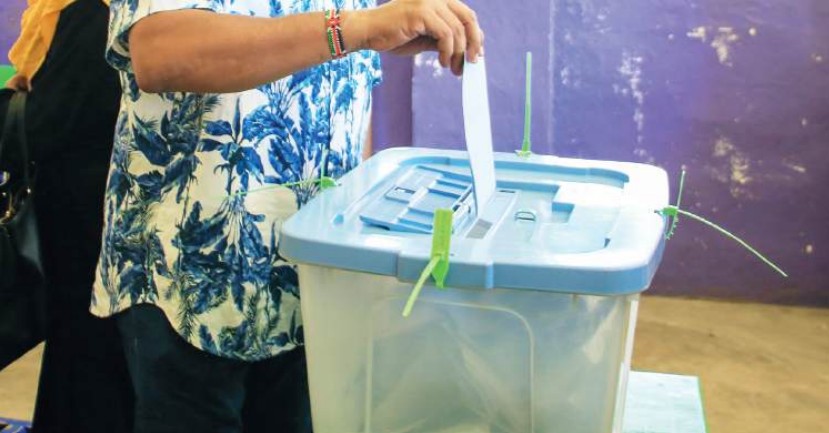
Most in Kenya at the moment can
agree that the choices we make at the ballot box have long-term consequences
that extend far beyond election cycles.
In the
end, democracy is only as strong as the decisions of we the people. If we
Kenyans reward propaganda, influencer performative deceptive politics over real
performance, then we inadvertently sustain the very cycle we constantly
complain about.
Breaking this cycle just needs vigilance, accountability during
this campaign period and ultimately the commitment to choosing leaders not for
how well they trend, where they travel to, who they hang out with and look, but
for how well they can truly lead.
In
2027, let us vote for individuals with proven integrity, public service record,
policy understanding, community engagement, accountability, and the pure
courage to lead beyond popularity.
All things considered, this ideal candidate
should be able to eradicate poverty and all forms of development deficits in
key areas like education, infrastructure, healthcare and economic opportunities
that lead to poor living standards and inequality.




![[PHOTOS] The new Ngong –Naivasha Road viaduct](https://cdn.radioafrica.digital/image/2026/06/64d4f771-4432-4aee-ba3c-2f304c4436ec.jpg)








![[PHOTOS] 'Mr Speaker Sir' Gen Z protester in court](https://cdn.radioafrica.digital/image/2026/06/b3e62d8e-25c3-4780-90f9-4eb48b1ce8a7.jpg)