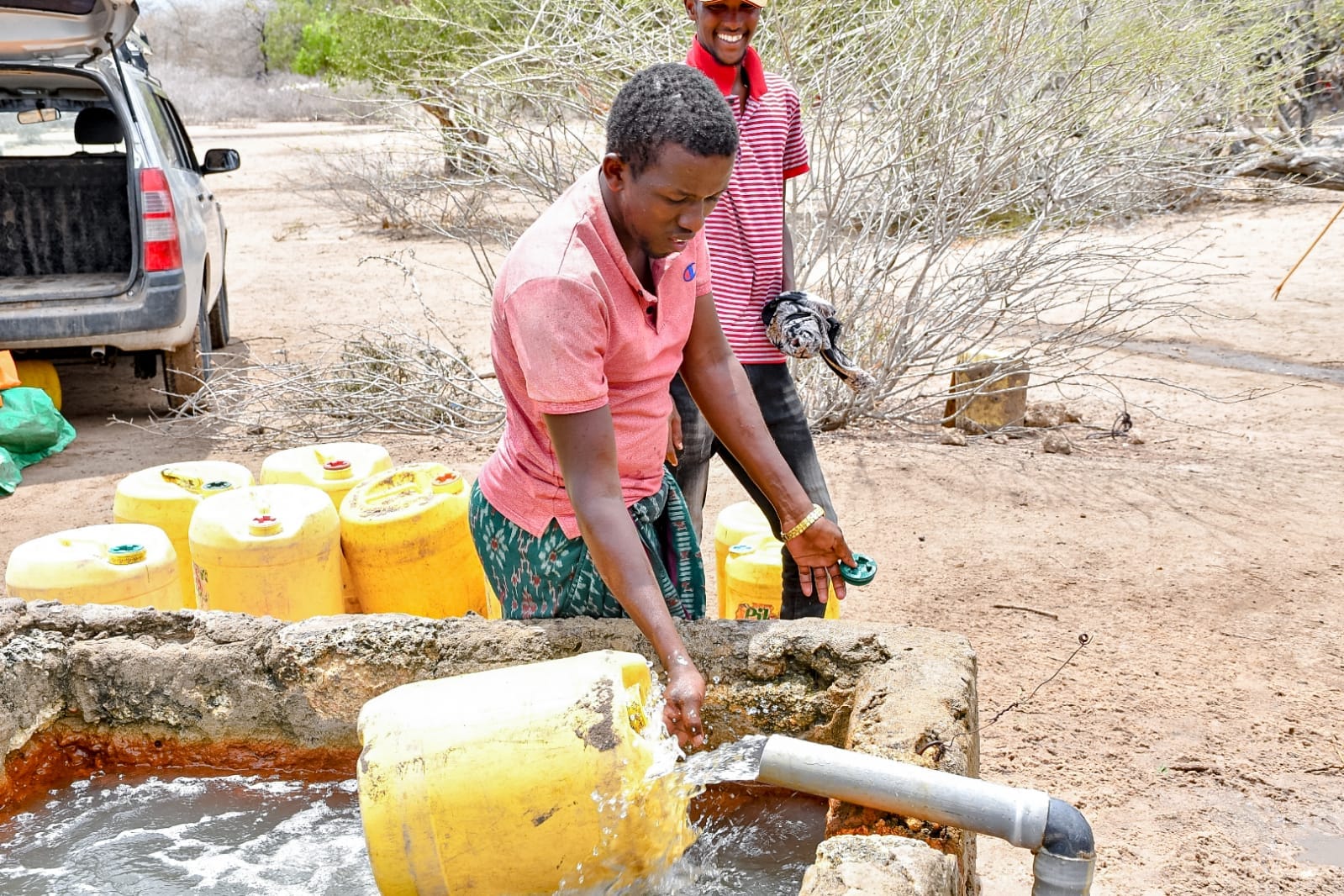
 A herder fetches water from a broken borehole pipe in Dertu
village, Garissa. Drought and famine have taken a toll on the residents of the
region after two years without rain./Stephen Astariko.
A herder fetches water from a broken borehole pipe in Dertu
village, Garissa. Drought and famine have taken a toll on the residents of the
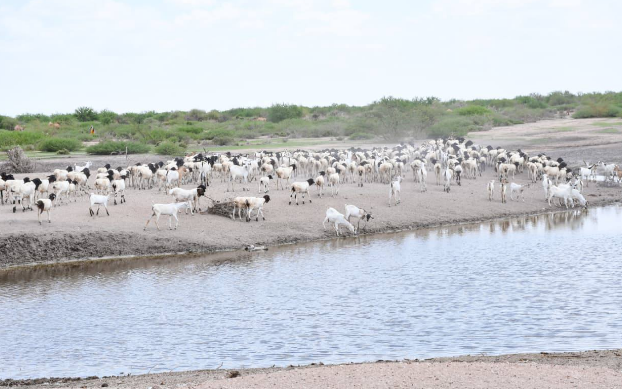
region after two years without rain./Stephen Astariko.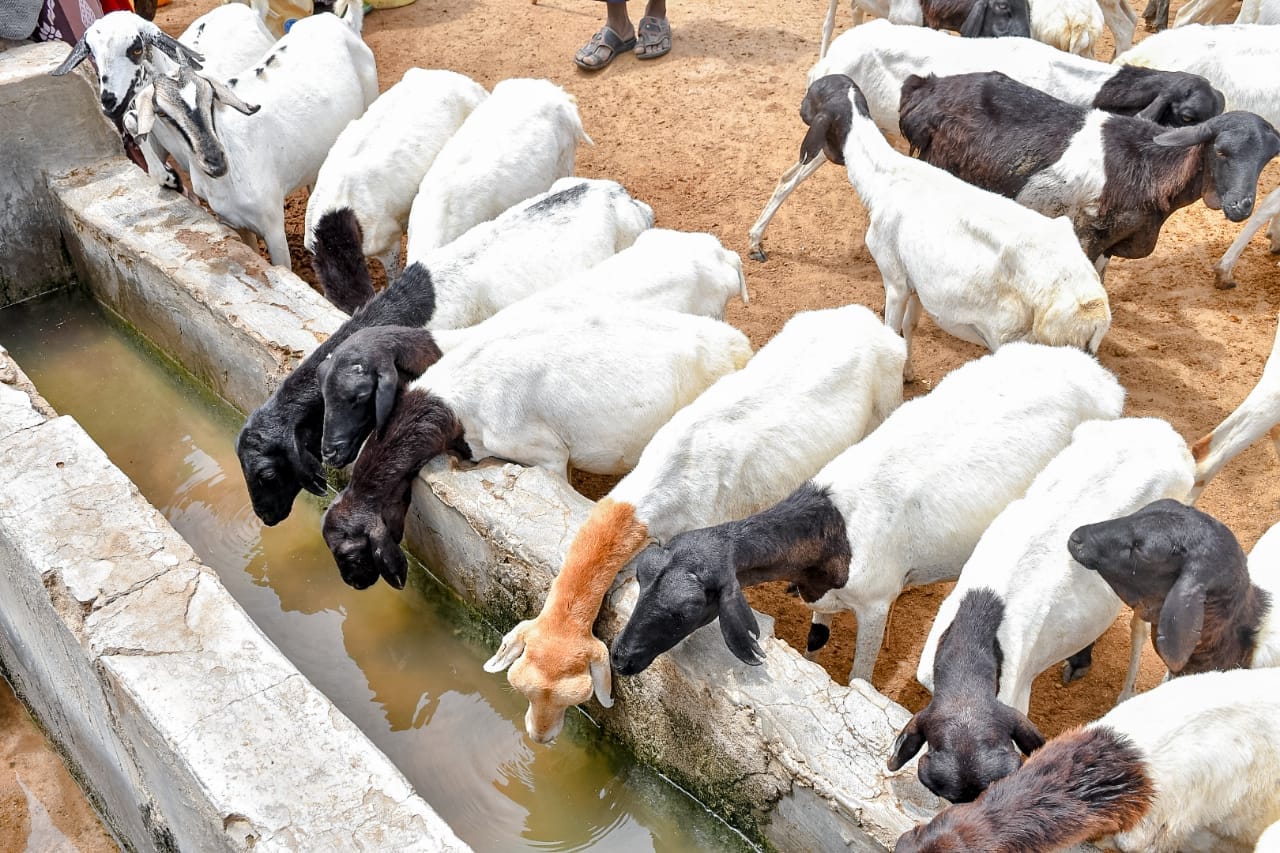 Goats and sheep at a water pan in Eldas, as drought
and famine hit the region after successive seasons without rain, mostly affecting livestock /Stephen Astariko
Goats and sheep at a water pan in Eldas, as drought
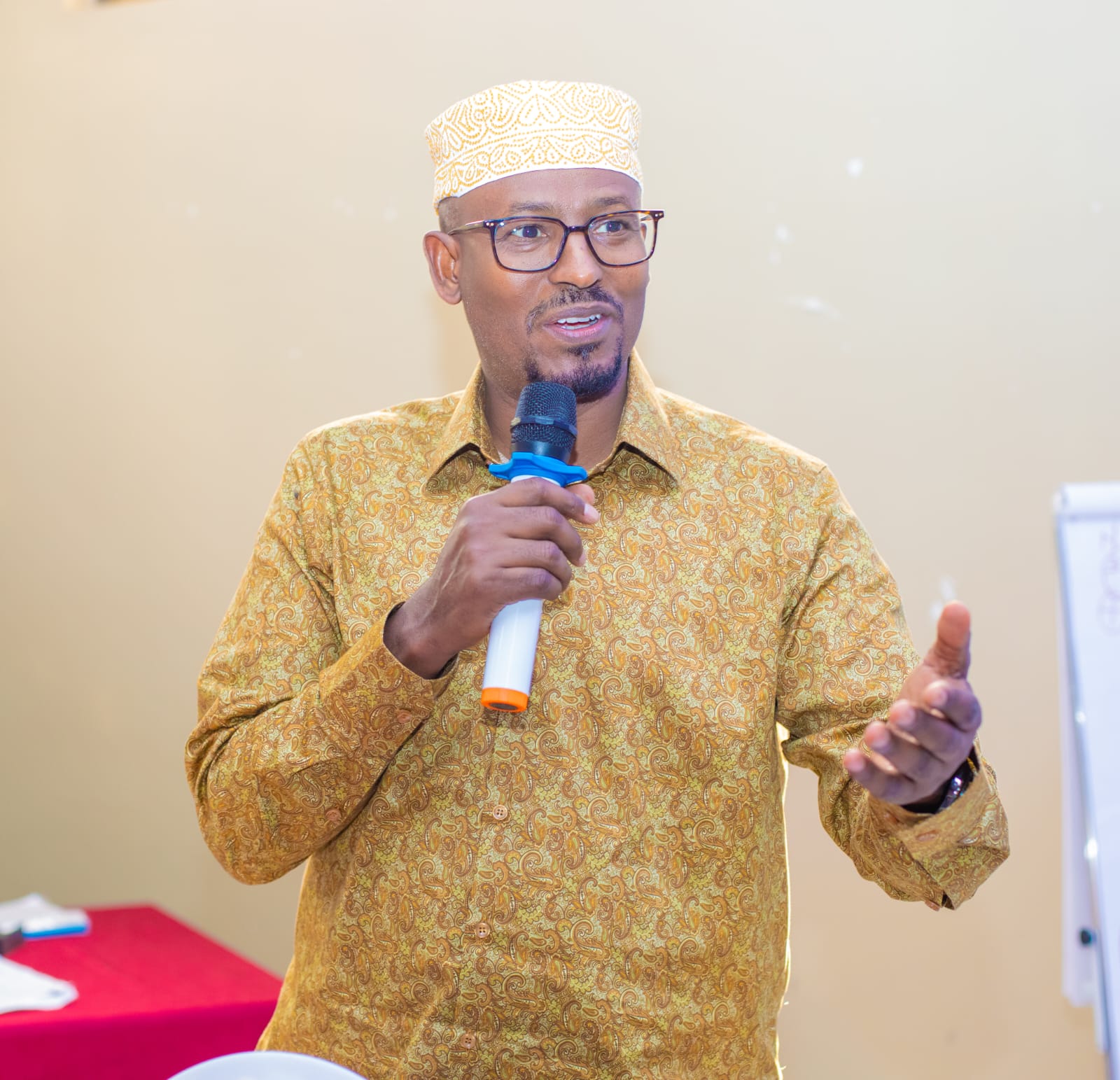
and famine hit the region after successive seasons without rain, mostly affecting livestock /Stephen AstarikoEldas MP Adan Keynan has said political leaders from Northeastern Kenya are intensifying efforts in search of sustainable, long-term solutions to the region’s deepening drought crisis.
Keynan, who chairs the Northern Kenya Parliamentary group, said the lawmakers are working with the President’s Economic Transformation Secretariat on National Food Security to advance interventions aimed at moving from dependency on emergency relief.
“This marks a deliberate shift from relief to resilience—building systems that prevent crises, safeguard lives and support recovery beyond the emergency phase,” Keynan said.
He spoke after leading a delegation of MPs to a meeting with Principal Secretary for ASALs and Regional Development Kello Harsama and Special Programmes PS Ismail Maalim.
The talks focused on the escalating drought and the urgent need for coordinated, people-centred responses across affected counties.
Harsama, who chaired the high-level briefing on drought and food security, reaffirmed the government’s commitment to protecting lives, safeguarding livelihoods and building resilience across ASALs.
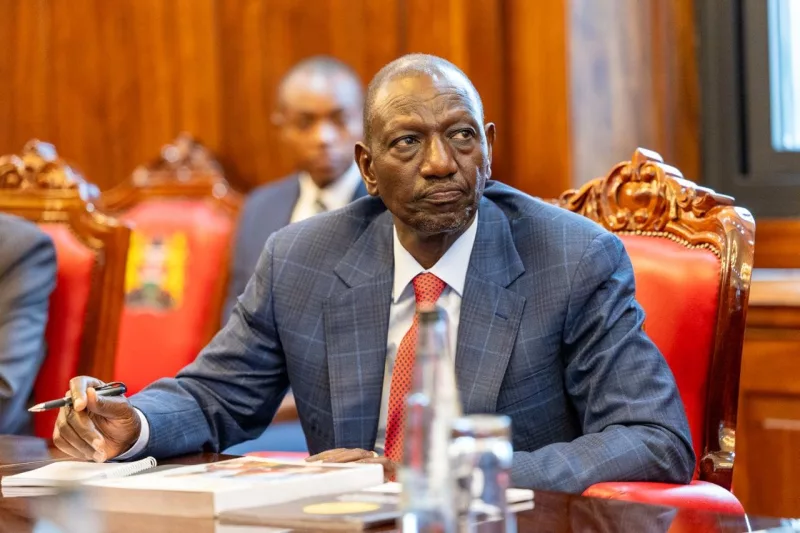
Discussions covered urgent actions including fast-tracking borehole repairs, expanding water trucking, managing increased livestock migration, and strengthening peace and security responses in hotspot areas.
Leaders also deliberated on distributing government relief food and mobilising national crop residues to support livestock and prevent losses.
Lagdera MP Abdikadir Hussein underscored the importance of coordinated interventions to protect livelihoods, uphold human dignity and strengthen community resilience across Lagdera and the wider region.
According to the National Drought Management Authority’s latest early-warning report, Mandera has now entered the alarm drought phase. Nine counties—Wajir, Garissa, Kilifi, Kitui, Marsabit, Kwale, Kajiado, Isiolo and Tana River—remain on alert, while thirteen others continue to experience a steady decline.
The crisis has been worsened by three consecutive failed rainy seasons—October–December 2024, followed by the total failure of both the March–May 2025 and October–December 2025 rains.
Below-average short rains, compounded by La Niña conditions and a negative Indian Ocean Dipole, have produced unusually high temperatures and suppressed rainfall across the region.
The cumulative impact has left water sources depleted, livelihoods disrupted and thousands of families struggling, particularly in the ASAL counties.
Last week, the MPs urged the national government to declare the drought a national disaster, citing rising distress among pastoralist communities.
“Declaring drought a national disaster would unlock additional emergency funding, streamline humanitarian support and enable international partners to scale up interventions,” Keynan said.
The legislators reiterated their call for swift, coordinated action, stressing that lives and livelihoods in the region hinge on immediate and sustained attention from both national authorities and development partners.
Present at the meeting were MPs Bashir Abdullahi (Mandera North), Abdul Haro (Mandera South), Mohamed Daud (Wajir East), Yussuf Farah (Wajir West), Abdikadir Hussein (Lagdera), and Adan Yussuf (Mandera West), among other leaders.