

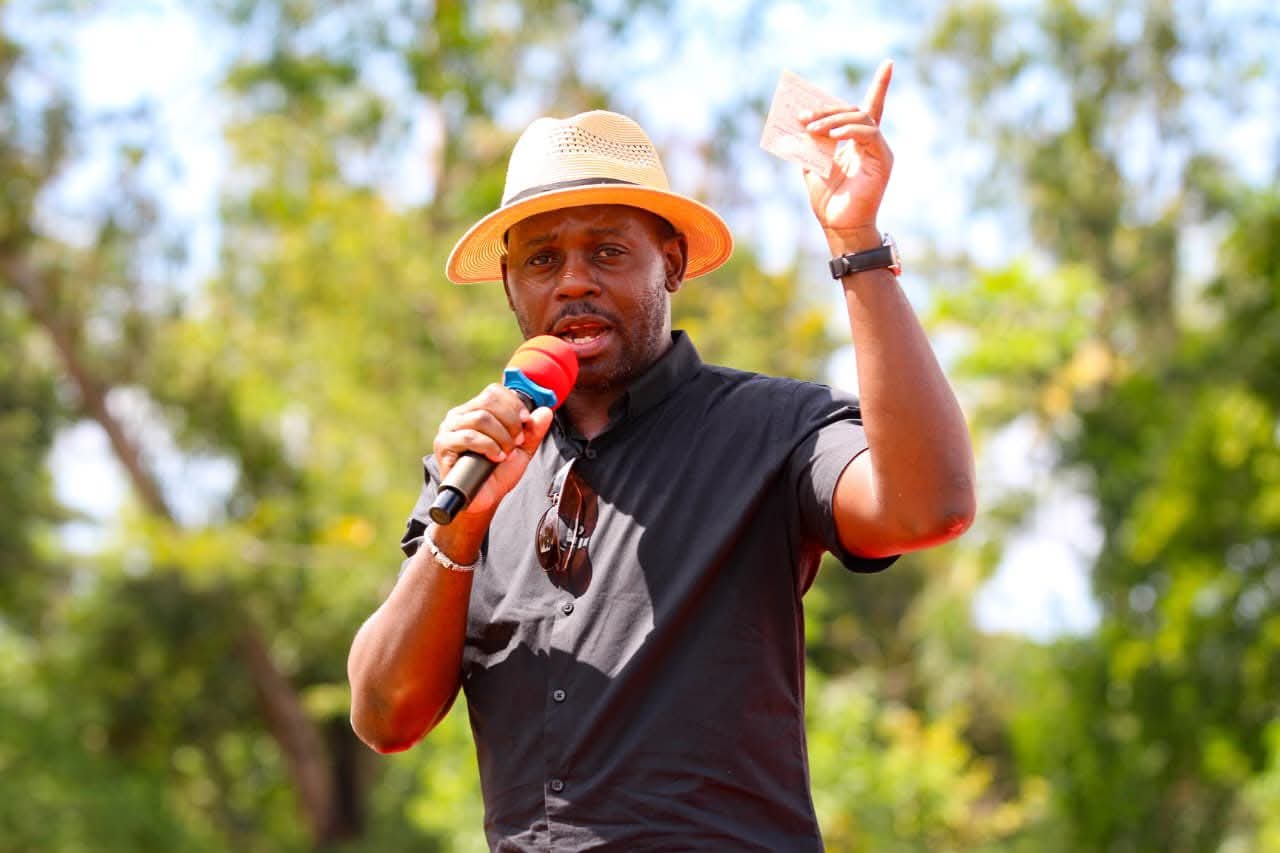
Homa Bay Senator Moses Kajwang’ has for the first time publicly suggested that the ODM party may not field a presidential candidate in the 2027 General Election.
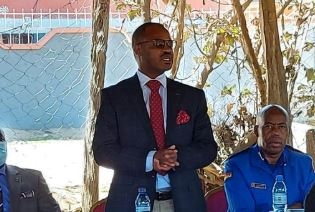
Speaking in Homa Bay town, Kajwang’ urged residents to consider the possibility that the political landscape is changing, noting that for the past 35 years, the community has consistently presented a presidential candidate.
“For the last 35 years, our community has always had a presidential candidate. From 1992, with Jaramogi, all the way to the last election. This could be the first time our community does not have a candidate,” he said.
“I am not saying it is going to be. I am saying it could be.”
Kajwang’ referenced the 2002 election, when Raila Odinga endorsed Mwai Kibaki, as the only instance in recent history when the community did not field its own candidate.
He argued that the community’s late alignment that year partly influenced subsequent frustrations.
“The other time was in 2002 when Raila supported Kibaki, and our support came late,” Kajwang’ recalled.
He described political negotiations at the time, including Raila’s party collaboration with KANU for national unity, and noted that many community members were later appointed to cabinet positions.
Kajwang’ said there had been expectations that former President Daniel Moi would either endorse Raila or keep the option open for him, but that did not happen.
“We were hopeful Moi could either guide us or hand over power to Raila, but he gave the leadership to somebody else,” he said.
He further recounted that by the time Raila engaged in discussions with Simeon Nyachae and the “Kibaki Tosha” declaration in October 2002, senior government positions had largely been allocated.
This, Kajwang’ said, affected the community’s anticipated influence in the new administration.
“By then, senior positions had already been allocated. We came late and were told our contribution to the victory was limited. That is why the Prime Minister’s position we expected was not created,” he said.
Looking ahead, Kajwang’ emphasised that ODM must avoid the indecision that characterised 2002, urging the party to define its strategy well before 2027.
“Those of us in ODM cannot wait until 2027 to make up our minds. We must make decisions early,” he said.
Kajwang’s remarks could signal a strategic shift for a party and community long accustomed to producing presidential contenders, though reactions within ODM are likely to vary.
Party Secretary-General Edwin Sifuna has previously rejected the idea of supporting President William Ruto’s re-election in 2027, stating that he would not personally support such a decision.
He has affirmed that ODM intends to field a candidate to challenge Ruto.
Raila Odinga, the late party leader, contested the presidential seat five times—in 1997, 2007, 2013, 2017, and 2022.