Kenya’s education
system enters a defining phase this month as the first group of
Competency-Based Curriculum (CBC) learners prepares to transition to
senior school.
According to a
detailed schedule released by the Ministry of Education, learners who
sat this year’s Kenya Junior School Education Assessment (KJSEA)
will know their senior school placements before Christmas.
The early placement
is part of the government’s strategy to ensure parents and
guardians have enough time to prepare for the reopening on January
12, 2026, when the first cohort under the new Senior School structure
officially reports.
The ministry is
expected to begin the placement exercise this week, immediately after
the KJSEA results are published.
Education Cabinet
Secretary Julius Ogamba recently assured that his team is working
“continuously and with urgency” to meet the Thursday deadline for
releasing the results.
The placement and
admission process will be fully digitised, with all letters issued
through the National Education Management Information System (NEMIS).
Accessing the KJSEA
results
More than 1.1
million learners sat for the KJSEA, marking one of the largest
national assessments under CBC.
Once the results are
released, parents will be able to access them through the Kenya
National Examinations Council (KNEC) portal using each learner’s
unique assessment number.
For the first time,
KNEC will apply a new eight-level scoring model to present learners’
performance.
This marks a
departure from the four achievement levels, exceeding expectations,
meeting expectations, approaching expectations, and below
expectations, used since the rollout of the CBC.
Each of the four
levels is now divided into two distinct bands, creating an
eight-point scale intended to give families a clearer picture of the
learner’s performance.
Under the new
structure, a child rated as “exceeding expectations” in a subject
will receive either a 7 or 8, while one who performed “below
expectations” will receive a 1 or 2.
This change, KNEC
says, aligns with international assessment standards and reduces
anxiety around percentage-based grades.
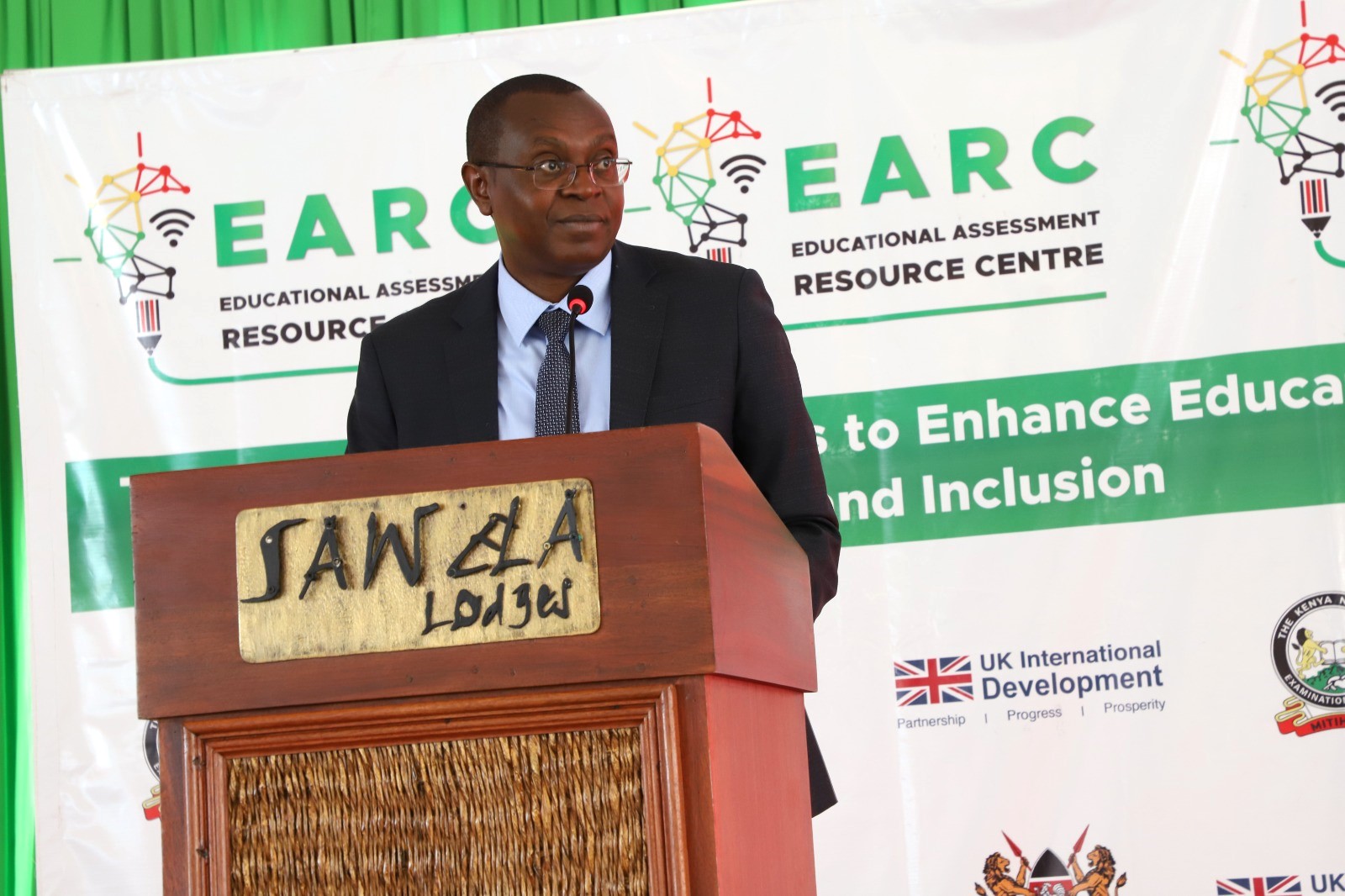
KNEC CEO David
Njeng’ere explained that the shift is designed to give parents and
teachers finer insights into areas where a learner excels or needs
support.
“We are not
reporting percentages. Each learning area will have a score from one
to eight,” he said. Njengere said parents will now be able to tell
if a learner is strong in mathematics or English, or if they need
reinforcement in subjects like creative arts or science.
The final score
reported for each learner will combine several components: 20 percent
from KPSEA results, another 20 percent from school-based formative
assessments conducted in Grades 7 and 8, and 60 percent from the
KJSEA administered last month.
Njeng’ere
emphasised that this system prevents learners from being judged
solely on one exam.
“We want to
capture growth over time. A child’s ability should not be
determined by a single assessment,” he said.
How senior school
placement will work
The Ministry of
Education has published detailed guidelines outlining how learners
will be placed in senior schools offering the three pathways, STEM,
social sciences, and arts and sports sciences.
Placement will be
done electronically, and the ministry has introduced
performance-based priority slots at boarding schools.
According to the
placement framework:
In every sub-county,
the top six boys and six girls in each STEM track will automatically
secure their preferred boarding schools.
For the social
sciences track, the top three boys and three girls per sub-county
will be placed in the boarding schools they selected.
In the arts and
sports science track, the top two learners per gender in each
sub-county will also gain entry into their school of choice.
Beyond these
priority categories, the rest of the learners will be placed based on
their performance, available spaces, and the choices they made
earlier in the year.
Cluster 1 boarding
schools, formerly the national schools under the 8-4-4 system, will
offer all three pathways. Most day schools, however, will offer only
two pathways depending on staffing and infrastructure.
During selection,
each learner chose 12 senior schools: nine boarding schools (three
within their home county and six from outside the county) and three
day schools within their sub-county.
Some institutions,
such as Starehe Boys Centre, will continue using their own
pre-selection procedures, and the ministry will incorporate their
admissions into NEMIS.
Admission and
transfers strictly controlled
To improve
accountability, all Grade 10 admissions will now go through NEMIS.
Principals will not
be allowed to register a learner before they have physically reported
to school. The ministry will monitor daily reporting across all
public and private institutions to ensure accurate enrolment records.
Requests for
transfers will be tightly controlled. Any learner wishing to change
their placement must channel the request through their junior school
at least two weeks before the reporting date. Priority will be given
to candidates who had earlier selected the school they are seeking to
transfer to.
Approval will depend
entirely on the senior school’s available capacity.
If a transfer is
approved, joining instructions will be accessed online.
Schools will not
issue printed letters for replacement cases, and transfer decisions
will be final and irreversible.
Parents have been
urged to guide learners on career pathways.
They have been told
to use KJSEA results as a basis for deeper conversations about career
pathways.









![[PHOTOS] Calm prevails in Kisumu, Homa Bay](https://cdn.radioafrica.digital/image/2026/06/dff8923b-c99a-4f40-a4be-cc996653e4e0.jpg)