Millions of shillings allocated for county bursaries
to support needy students may be vanishing into the pockets of
unscrupulous officials, newly released audit reports reveal.
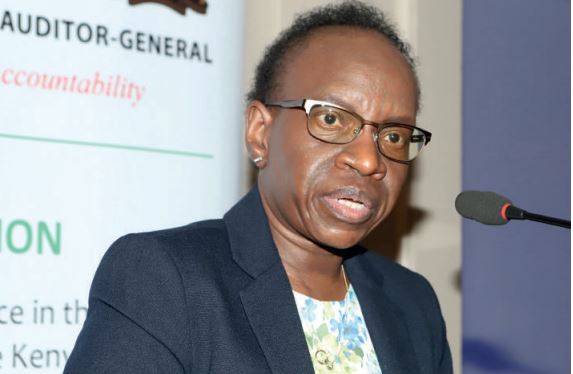
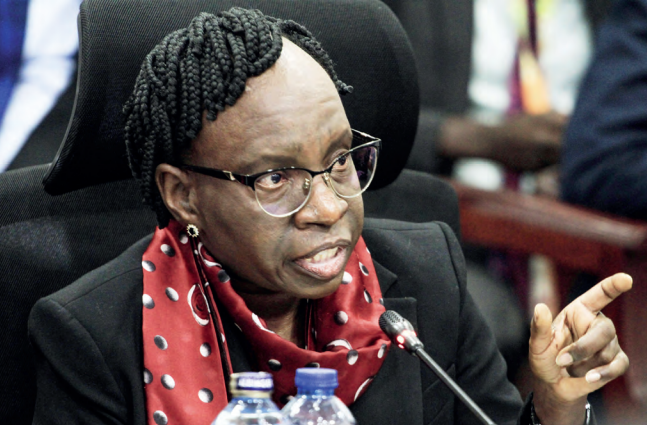
The reports by Auditor General Nancy Gathungu expose
widespread manipulation of bursary schemes across several counties, including
inflated beneficiary lists, duplicated admission numbers, undocumented
disbursements and extensive flouting of bursary laws and procedures.
The findings raise fresh concerns about graft within
the devolved units and cast doubt on whether bursary funds—established to keep
vulnerable learners in school—are reaching the intended beneficiaries.
The reports for the financial year ending June 30, 2025,
were tabled in the Senate last week before Parliament went on recess.
Counties created bursary funds to complement allocations
under the National Government Constituency Development Fund and cushion
thousands of students at risk of dropping out.
But the Auditor General’s latest assessment shows systemic
weaknesses, poor oversight and in some cases deliberate manipulation
possibly to siphon public funds.
In Trans Nzoia, the County Elimu Bursary Fund was singled
out for serious irregularities.
The auditor found that the fund disbursed Sh35.92 million to
secondary schools during a period when the bursary board did not sit at all.
Even more troubling was the revelation that the board had
not been gazetted, contrary to Section 12(4) of the Trans Nzoia County Elimu
Bursary Act, 2014, which requires the county executive member for education to
publish board members' names in the county gazette.
The county also failed to provide priority lists submitted
from villages to ward bursary committees, raising doubts about the transparency
of the selection process.
Additionally, the fund ignored its own guidelines requiring
that five per cent of bursary allocations go to learners with
disabilities and at least 30 per cent to students in vocational training
institutions.
Samburu county recorded some of the most glaring anomalies.
In addition to unsupported bursary transfers and irregular
allocations, the auditor flagged unsupported withdrawals, questionable
scholarship grants and excessive administrative spending.
Many discrepancies highlighted in the previous year’s audit
remain unresolved.
During the year under review, Samburu irregularly disbursed
Sh25.68 million.
The auditor found no minutes from county or ward bursary
committee meetings, undermining the legitimacy of the disbursement process.
Several students with identical admission numbers and names
received duplicate bursary allocations, leading to irregular double payments
amounting to Sh1.81 million.
Further, bursaries totaling Sh517,700 were paid to 107
students who shared admission numbers but appeared as different individuals
within the same institutions.
Another Sh105,000 disbursed to 11 students could not be
authenticated because the applications lacked admission letters or student
numbers.
The audit also noted that the county lacks a comprehensive
database of beneficiaries and does not follow up on the academic progress of
funded students.
In West Pokot, hundreds of needy students missed out after
the county failed to release 97 per cent of the bursary money allocated for the
year.
The auditor warned that such underutilisation undermines the fund’s core objective and results in poor service delivery.
Further irregularities dating back to 2021 were also cited,
including unsupported or irregular cash withdrawals, missing accountability
documents and bursary payments made without supporting records.
Tharaka Nithi county was also faulted for violating its
bursary legislation.
The auditor found that the county bursary board awarded
Sh2.26 million to students in 25 learning institutions without recommendations
from ward bursary committees, contrary to Section 16(b) of the Tharaka Nithi
County Bursary Fund Act, 2014.
Siaya county’s bursary system was flagged for unsupported
committee allowances, irregular disbursements to universities, inflated
administrative costs, and the absence of an internal audit unit to monitor
compliance.
In Laikipia, the bursary fund continued operating despite
the expiry of the board’s mandate, with the county failing to renew or
reconstitute the fund’s leadership.
In Wajir, thousands of learners may have been locked out
after the county utilised only Sh85.48 million of the Sh211.48 million
allocated for bursaries, a shortfall the auditor warned may have negatively
affected needy students.
The auditor flagged irregularities in the disbursement of
bursaries in Nandi, where the county could not account for Sh50.24 million
disbursed to TVETs, VTCs, secondary schools, and special needs education.
The county had disbursed Sh79.57 million to the institutions,
but only Sh29.33 million were supported by acknowledgment receipts.
“In the circumstances, the accuracy and completeness of the bursary
transfer amount of Sh79.57 million could not be confirmed,” the report states.
Further, the bursary fund was not subjected to internal audit
to establish how the funds were utilised as required by law.
In Mombasa, several needy students could have been denied
bursary after the county reported acute under-expenditure of the bursary budget.
The management spent Sh221.33 million out of the total
receipts of Sh342.17 million, resulting to under-absorption of Sh120.84 million.
“The underfunding and under-absorption affected implementation
of planned activities and impacted negatively on service delivery to the citizens,”
the report states.
In addition, the report states that the county has failed to
account for issues flagged in the previous years.
They include irregular procurement, unconfirmed bursary awards
and disbursements, and unsupported cash transactions.
The auditor also fingered the funds administrator for failing
to register it with the office of the Data Protection Commissioner to safeguard
the personal data of students and parents.
In Turkana, the auditor faulted the county for failing to
put in place risk management strategies to safeguard the funds.
“The management has not implemented effective, efficient and
transparent financial management and internal control systems due to lack of a management policy, disaster recovery plan or business
continuity plan and ICT strategic plan,” the report states.
In Bungoma, the report reveals that the bursary scheme committee
issued "excess" bursary awards to some 948 students contrary to its own
resolution.
The committee had resolved to issue bursaries to national schools
and other learning institutions at the rate of Sh19,000 and Sh13,000 per
beneficiary.
“In the circumstances, management was in breach of the bursary’s
distribution criteria,” the report reads.
“This irregularity undermines the scheme’s ability to foster
fairness, equity, and equal opportunity in access to basic education."
In Kakamega, the auditor questioned the legality of the county
education fund after she established that it was created without an
enabling act or primary legislation.
The fund has also been operating without a proper or substantive
county education fund committee as required in law.
In Muranga, Gathungu flagged opaqueness in the issuance of
bursary funds.
The audit revealed that the list of successful applicants
for the bursary was not publicised on the public notice board. Further, successful applicants
were not notified in writing.
This is contrary to section 7 (g) of the Murang’a County
Education Scholarship Fund Act, 2014, which states that the functions of the committee
shall be to display all public notice boards particulars of the successful
applicants, including amounts awarded to them.
In addition, Section 9(5) of the Act states that if the committee
rejects the application, it shall notify the applicant of such rejection in
writing and the reasons thereof.
INSTANT ANALYSIS
Across the counties, the audit paints a troubling picture of
bursary programmes plagued by weak oversight, mismanagement and in some cases
outright fraud. With repeated findings of duplicated beneficiaries, unsupported
payments, lack of documentation, expired boards, and massive underutilisation of
funds, the reports raise questions about whether county bursary schemes are
serving the poor or enriching a select few at their expense.