The government's mandatory local Marine Cargo Insurance (MCI) policy has taken effect, shifting billions of shillings in insurance premiums from foreign underwriters to Kenyan insurers and transforming import cargo insurance.
Starting Wednesday, all imports entering Kenya will be insured through locally licensed insurance companies before customs clearance.
The new requirement is supported by a fully integrated digital verification system linking the Insurance Regulatory Authority (IRA), Kenya Revenue Authority (KRA), eCitizen and participating insurers.
The policy marks one of the biggest reforms in Kenya's insurance sector in years, ending a long-standing practice where importers purchased marine cargo insurance from overseas insurers, leaving local firms with only a fraction of the business.
Government estimates indicate that Kenya imports goods worth more than Sh2.5 trillion annually, creating a marine cargo insurance market valued at between Sh8 billion and Sh15 billion each year, depending on prevailing premium rates.
For years, industry players estimate that more than 85 per cent of these premiums flowed to foreign insurance companies, denying Kenyan insurers billions of shillings in annual revenue while also reducing opportunities for local investment, employment and tax generation.
Under the new framework, importers must obtain a Digital Marine Cargo Insurance Certificate (DMIC) instead of presenting paper insurance certificates.
The certificate is issued electronically, verified automatically and transmitted directly into the Kenya Revenue Authority's Integrated Customs Management System (ICMS), eliminating manual verification.
Importers are required to obtain a valid Import Declaration Form (IDF), which is later used to generate the digital insurance certificate before cargo clearance.
The government says the reforms will retain insurance premiums within Kenya, deepen local underwriting capacity, strengthen capital formation in the insurance industry and support broader economic growth.
The digitisation of the process is expected to reduce fraud, improve compliance and accelerate cargo clearance by allowing customs officers to verify insurance cover in real time.
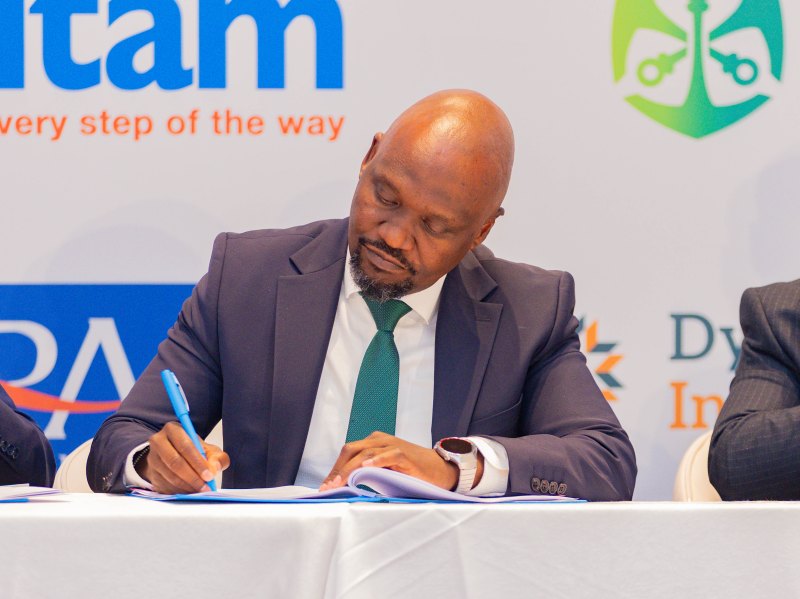
Ahead of implementation, the Kenya International Freight and Warehousing Association (KIFWA), working with leading insurance companies and technology partners, officially rolled out the Digital Marine Cargo Insurance Platform to support importers and clearing agents.
The platform brings together APA General Insurance Company, Britam General Insurance, CIC General Insurance, Old Mutual General Insurance, Pacis Insurance and Dynamique Insurance, alongside eCitizen, into a single digital ecosystem integrated with KRA's ICMS.
It also connects with eCitizen payment services, M-Pesa, participating banks, Pesaflow and other government verification systems to enable seamless premium payments and instant issuance of digital insurance certificates.
According to KIFWA, the platform is designed to simplify compliance while improving efficiency, transparency and service delivery across the import logistics chain.
Users can obtain marine cargo insurance certificates instantly, complete premium payments electronically, receive real-time verification and enjoy faster cargo clearance through automated processing.
The association has also embarked on a nationwide sensitisation programme to prepare stakeholders for the transition.
Training sessions are conducted in Nairobi, Mombasa, Malaba, Busia, Namanga and Isebania for clearing and forwarding agents, importers and other industry players.
The programme will continue over the next 12 months, focusing on platform access, certificate issuance, payment processes, customs integration, claims handling and customer support.
KIFWA said it will continue working closely with its insurance partners to provide technical support and ensure smooth implementation of the mandatory marine cargo insurance framework.