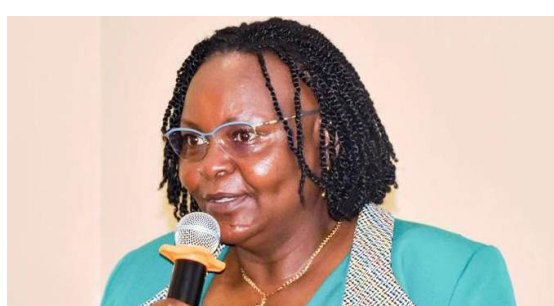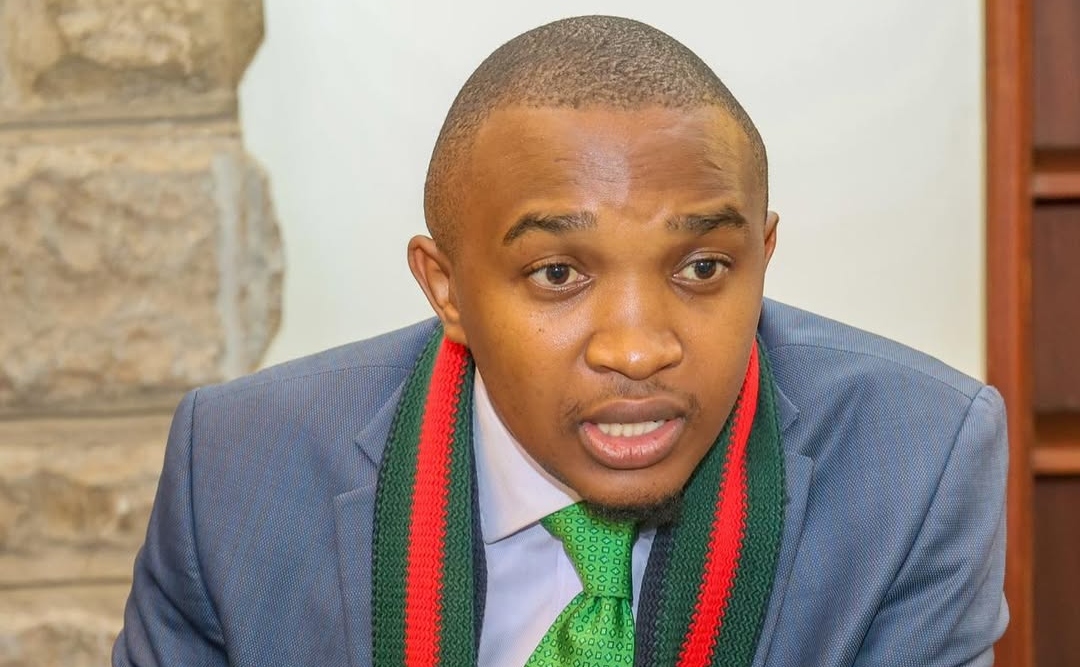
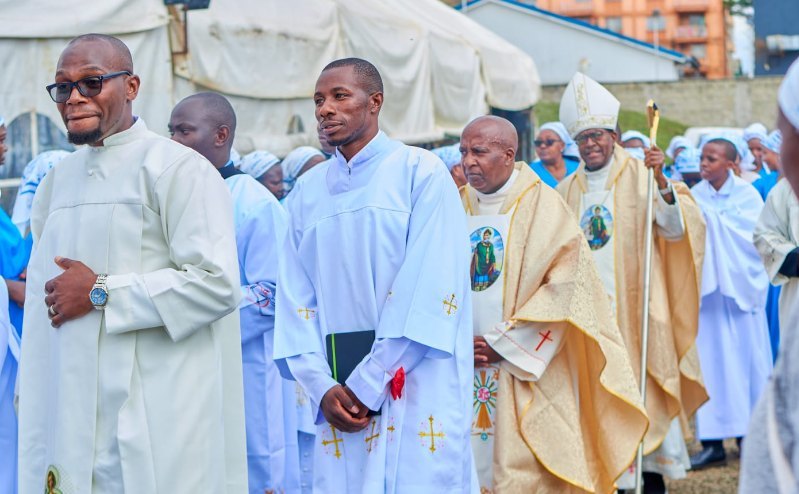
 Joseph Macharia (in glasses) during the Sacrament of Confirmation at St Patrick's Parish, St Peter the Rock Grounds, on May 10 / HANDOUT
At the tender age of 10, Joseph Macharia’s life quietly split into two. One moment, he was a schoolboy, playing like any other child in his village in Murang'a county. The next, he was spending months in hospital after breaking his right hand while playing.
For a young boy who had known nothing but an ordinary childhood, life changed in an instant.
"I was 10. A young boy who did not know much about life. I was in hospital for months. This moment changed life as I knew it."
Today, Macharia stands before children, adults and inmates as a catechist, teaching lessons of faith, hope and purpose. His voice is calm. His smile is easy. Yet behind that quiet confidence lies a journey shaped by loss, resilience and an unwavering belief that difficult seasons do not have to define a person's future.
"I felt I had lost my value," he recalls of the years after losing his hand.
That moment, however, did not become the end of his story. It became the beginning of another.
Macharia, now in his mid-30s, was born and raised in Muchagara, Maragua Ridge location, Maragua constituency. His childhood was simple, much like that of many children growing up in rural Kenya.
"I remember doing house chores, fetching water, going to the shamba and playing around with my cousins."
He grew up in what he describes as a normal middle-income family. As the firstborn and only son among four sisters, responsibility came early.
"I am a firstborn, the only son, raised with four girls. This made me responsible and gain independence at an early age."
Long before he understood what purpose meant, faith had quietly found its place in his life.
GRANDMA’S INFLUENCE
The family's home stood next to his grandparents'. Among them was the woman who would become the greatest influence in his life, his late paternal grandmother.
She was, in his words, "the most prayerful person I know to date".
She ensured he learnt Catholic doctrine, accompanied him to church every Sunday and nurtured his spiritual life from childhood.
"She taught me her faith; the Catholic faith. I picked from her."
Her influence extended beyond church
attendance. It became the foundation upon which his life would later be
rebuilt.
As he grew older, Macharia became an altar server before rising through church leadership to become a youth leader in both his local church and later Maragua Parish.
"Church was a major component of who I was. It was the only place I could not compromise."
That said, becoming a catechist was never part of his childhood ambitions.
"I did not have any dreams. I lacked a figure I could look up to. Life was just to be lived a day at a time."
It was only after completing secondary school and venturing into business that he realised life held possibilities he had never imagined.
The decisive turning point came much later.
"Interestingly, it was not until my first semester in college that I realised it was what I should have pursued."
His journey was made possible by two Catholic priests who recognised something in him before he recognised it himself.
"The late Fr Peter Ngochi saw my life. He nurtured my faith and called out the person I was to become. Fr Nathaniel Ndambiri held the vision and they both brought it to existence. I am because they were."
Fr Ndambiri sponsored his studies at St Augustine Catechists' Training College in Nyeri, where he pursued a two-year diploma. After graduation, Macharia was employed as a catechist at Maragua Parish.
His career later took him into public service as a senior clerk in the Office of the Presidency in Murang'a county before he joined the Kenya Prisons Service in 2022 as a catechist.
COMING TO TERMS
Long before those milestones, however, came the painful reality of learning to live without his right hand.
"I was right-handed before the amputation. I had to learn to use my left hand."
The physical adjustment was only part of the struggle. "I was independent before, but now I was dependent on my caregivers."
Emotionally, the loss shook him deeply. "I questioned God. I searched for answers."
There were moments when he could not see beyond his circumstances.
"Oh yes, I didn't see my life beyond that moment. I felt I had lost my value."
Once again, it was his grandmother who refused to let despair have the final word.
"She held my hand through it all. She taught me self-acceptance. She encouraged me through the process. She led me to facing life differently and seeing myself valuable again. She cultivated independence."
Alongside his family's practical care and
emotional support, faith became the anchor that kept him moving.
"I had learnt of faith. I knew it does not disappoint. I leaned on to hope and that kept me encouraged."
Looking back today, he sees that painful chapter differently.
"I would probably not have been who I am today if I had the hand. I always joke and say I lost the hand to gain God's favour and to be a source of encouragement to the people out here."
His experience has also shaped the way he understands suffering.
"Life does not stop. It continues regardless of the challenges we go through. Self-Pity brings no gain. Self-acceptance and independence is a personal choice."
FIGHTING DISCRIMINATION
Even after becoming a catechist, Macharia encountered discrimination.
"People saw the disability, not the capability."
Rather than allowing whispers and
assumptions to define him, he chose openness.
"They failed to see me as whom I am. It was not until I openly talked about it that the whispers faded."
Although some people still assume he depends on others, he responds with grace. "I smile and make light about the situation."
Today, Macharia's ministry revolves
around listening, teaching, mentoring and mediation. He says nothing gives him
greater fulfilment than working with children and catechumens.
"I love children. I love being with them. Our classes have shaped the most influential people. That in itself gives me fulfilment."
His work in the Kenya Prisons Service has also left a lasting impression.
"The interaction with the inmates. This has made me realise the importance of freedom and how fast life can change."
Despite all he has overcome, one loss still weighs heavily on his heart.
"The death of my grandma. There is no pain I have known as such," he says.
Yet even that grief became another source of strength.
"It, however, pushed me. The pain only made me realise what I could handle."
Her words still echo through his life: "You are destined for greatness."
Those simple words remain his greatest source of motivation.
"She believed in me. She affirmed me and I know she is proud of how I turned out. If I overcame the loss of my hand, there is nothing I cannot overcome."
His advice to anyone facing a difficult season reflects the journey he has lived.
"There is a God who sees what people do not; a God who listens to our silent prayers and a God who lifts us up from the deepest pits for His glory. Hang on there, don't give up, the best is yet to come."
Reflecting on how he hopes people will remember him, Macharia does not mention the hand he lost. Instead, he speaks about the life he chose to build.
"The man who crawled, walked and then ran to his purpose. The man who served with a purpose."
For a boy whose future once seemed uncertain, perhaps no sentence captures his story better than the one he now lives by every day:
"Everyday striving to be the best; keep moving."
![[PHOTOS] The new Ngong –Naivasha Road viaduct](https://cdn.radioafrica.digital/image/2026/06/64d4f771-4432-4aee-ba3c-2f304c4436ec.jpg)