Central to this progress is the recognition that democracy does not
sustain itself; it must be supported by strong institutions, among them, political parties
and the frameworks that enable their effective functioning.
The transition to
multiparty politics was a watershed moment. It expanded political space, allowed for ideological diversity and
entrenched the principle that leadership must be contested.
Yet, in its early years,
the system revealed structural weaknesses. Chief among them was the uneven capacity of
political parties to organise and compete.
Without a fair and predictable system of financing, many
parties, particularly those outside government, were constrained in their ability to
mobilise, communicate and present coherent alternatives to the electorate.
It is in response to
this historical imbalance that public funding for political parties was institutionalised. The Political
Parties Fund was designed not as a discretionary benefit, but as a constitutional instrument to
safeguard pluralism.
By providing resources based on electoral performance, it sought to
level the playing field, reduce dependence on opaque funding sources and ensure that
political competition is anchored in ideas rather than financial asymmetry.
This vision was
championed by reform leaders who understood that democracy must be both accessible and sustainable. Our founding leader, Raila Odinga, consistently emphasised that the right to form
political parties must be matched by the means to sustain them.
The objective was clear: to
entrench a system where parties are stable institutions capable of engaging citizens, shaping
policy and holding government to account.
Importantly, this
reform ethos is shared across Kenya’s political leadership. President William Ruto, as a founding member of
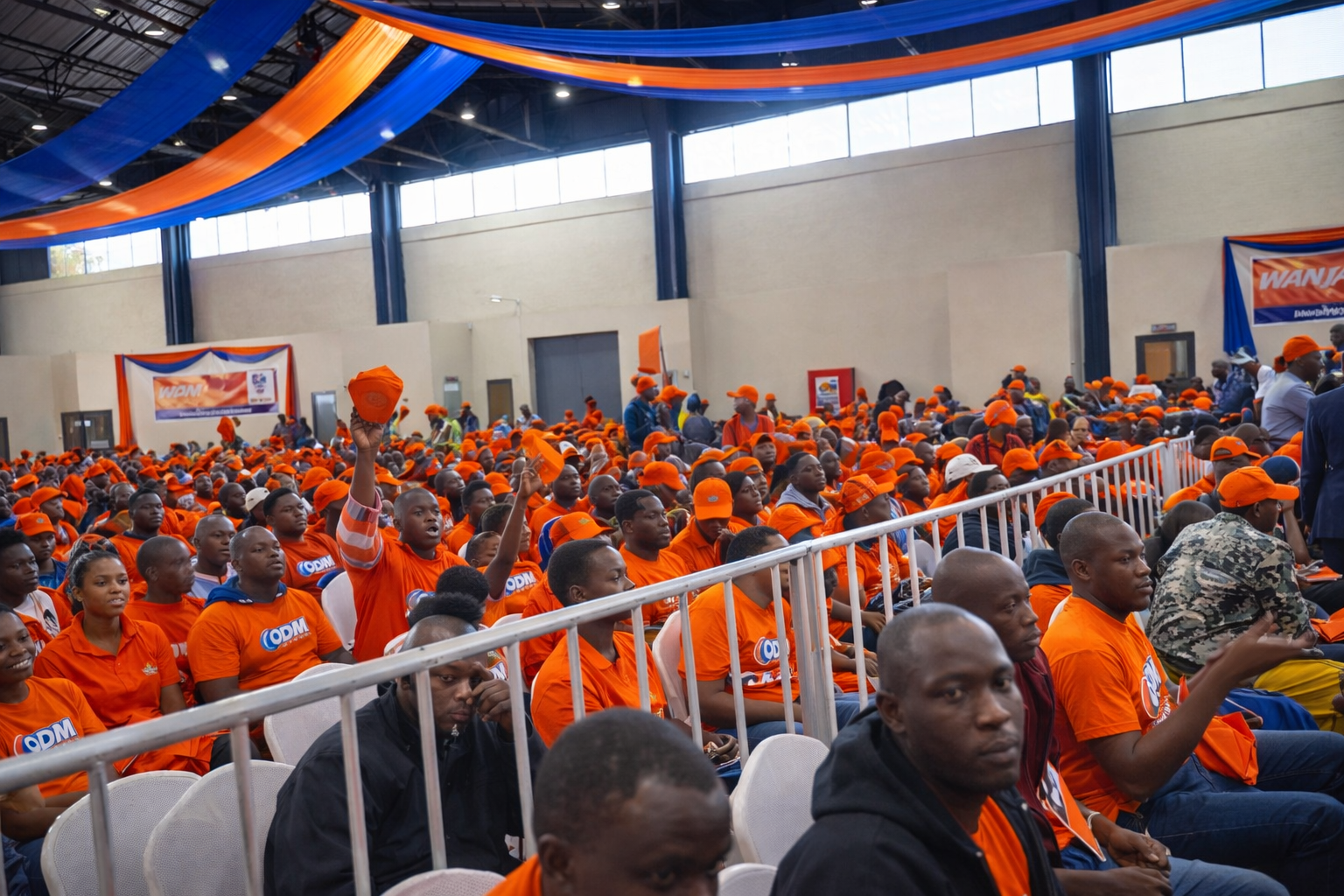
ODM and a participant in the broader reform movement, is well versed in the
rationale underpinning equitable political party funding.
His own political journey has been shaped
within a system that increasingly recognised the need for fairness in competition and
institutional support for parties.
In this regard, the
current moment should be approached with clarity. The commitment to political party funding is already
established in law and policy.
The role of leadership at the highest level has been to affirm and
uphold these principles, ensuring that the democratic framework remains intact. The focus,
therefore, must shift to the operational level whereby implementation is executed and where
timelines, allocations and disbursements are determined.
This is where the
National Treasury assumes critical responsibility. As the custodian of public finances, the Treasury is
charged with translating policy commitments into actual resource flows.
It is within its
mandate to ensure that the Political Parties Fund is disbursed in a timely, transparent and
predictable manner, consistent with both the law and the broader objectives of democratic governance.
Supporting the
President’s commitment to strengthening institutions requires that the Treasury fully aligns its execution
with this mandate. The Finance Cabinet Secretary, with prior experience as
national chairman of ODM, is uniquely positioned to appreciate the strategic importance of this issue,
not only from a fiscal perspective, but from a governance standpoint.
This dual perspective
should inform a proactive approach that prioritises the integrity of party funding as a
cornerstone of democratic stability.
The benefits of
effective implementation are clear. Properly funded political parties are better equipped to develop policy
platforms, maintain organisational structures and engage meaningfully with citizens.
They
contribute to a more informed electorate and a more substantive political discourse. In
turn, this enhances the overall quality of governance by ensuring that competition is grounded
in ideas, performance and accountability. Conversely, delays or inconsistencies
in disbursement undermine these gains.
They weaken party capacity, constrain outreach
and risk shifting political financing toward less transparent channels. Such outcomes
do not serve the interests of democracy, nor do they reflect the intent of the legal
framework that Kenya has painstakingly developed over the years.
Kenya has reached a
stage in its democratic evolution where the emphasis must be on fidelity to implementation. The laws are in
place, the principles are well established and the leadership commitment is evident.
What remains is the consistent execution of these commitments by the institutions
mandated to do so.
In this context,
the National Treasury is called upon to play its full part in supporting the President Ruto’s broader democratic
agenda. By ensuring the timely and complete disbursement of political party
funds, it will be reinforcing the institutional foundations upon which Kenya’s democracy rests. This
is not merely a technical obligation but a strategic contribution to national stability,
inclusivity, and progress.
Ultimately, the
strength of Kenya’s democracy will be measured not only by its laws, but by how faithfully they are implemented.
By aligning policy intent with administrative action, and by ensuring that institutions
function as designed, the country can continue to build a political system that is fair,
resilient, and reflective of the aspirations of its people.
The writer is the Mombasa governor and ODM deputy leader









![[PHOTOS] The new Ngong –Naivasha Road viaduct](https://cdn.radioafrica.digital/image/2026/06/64d4f771-4432-4aee-ba3c-2f304c4436ec.jpg)








![[PHOTOS] 'Mr Speaker Sir' Gen Z protester in court](https://cdn.radioafrica.digital/image/2026/06/b3e62d8e-25c3-4780-90f9-4eb48b1ce8a7.jpg)