As
Kenya continues to engage in a robust national conversation on urban financing
- highlighted most recently by the cooperation framework between the national
government and Nairobi county
- it is both timely and necessary to bring clarity to one of the most
consequential, yet often underappreciated, revenue streams available to county
governments: Contribution in Lieu of Rates (Cilor).
At
its core, Cilor
refers to payments made by the national government to county governments in
respect of public land and properties that are otherwise exempt from standard
property rates.
These include government offices, institutions and other public
assets that occupy prime urban land but do not fall within the conventional
rating framework applicable to private property owners.
This
mechanism is not merely technical; it is foundational. For counties such as
Mombasa, where a significant proportion of land is held or utilised by national entities, Cilor represents a critical pillar in the
architecture of own-source revenue.
Without it, the fiscal base of devolved
units is materially constrained, undermining both service delivery and
long-term financial sustainability.
The
principle underpinning Cilor
is straightforward: public land still benefits from county services. Roads are
maintained, drainage systems are constructed and managed, solid waste is
collected, public health standards are enforced and urban planning frameworks
are implemented.
These services are not selective; they are universal.
Therefore, it is both equitable and logical that national assets contribute to
the cost of maintaining the urban ecosystem in which they operate.
In
practice, however, the realisation
of this revenue stream has not been achieved
for county governments. Obfuscation, under-assessments and the absence of a
clear and enforceable regulatory framework have limited the effectiveness of Cilor across the country.
This has had tangible
consequences. Counties are compelled to stretch limited resources, often
prioritising essential services
at the expense of long-term investments in infrastructure, resilience and
economic growth.
For
Mombasa, the implications are particularly pronounced. As a strategic port city
and a hub of national and regional significance, we host a substantial
footprint of national government institutions and infrastructure. While we are
proud to play this role, it comes with a fiscal responsibility that must be
equitably shared.
Honouring
Cilor obligations would
not only enhance our capacity to deliver services but also strengthen the
broader objective of balanced urban development across the country.
This
is why the current national focus on urban financing must go beyond frameworks
and partnerships to address the fundamentals. Sustainable cities cannot be
built on uncertain revenue streams. Devolution, as envisioned in our constitution, is predicated on both
functional and fiscal autonomy. Counties must have access to predictable,
adequate and legally grounded sources of revenue to discharge their mandates
effectively.
In
this regard, the implementation of the National Rating Act that was recently
assented to by the President presents a pivotal opportunity.
The Act provides a
modernised legal framework for
property rating in Kenya, with the potential to harmonise practices, enhance transparency and
expand the revenue base for counties.
However, legislation alone is not sufficient.
Its success will depend on the timely development of clear, practical and
enforceable regulations.
It
is here that the role of the National Land Commission becomes central. I wish
to take this opportunity to congratulate the newly empanelled Ccmmissioners.
Their mandate comes at a
critical juncture in our country’s urban and fiscal evolution. The expectations
are high, but so too is the opportunity to make a lasting impact.
I
urge the commission to prioritise the development of regulations that will
give full effect to the National Rating Act, including clear provisions on Cilor. Such regulations must address valuation
methodologies, payment frameworks, timelines and enforcement mechanisms.
They
must also be developed in close consultation with county governments, the
National Treasury and other relevant stakeholders to ensure practicality and
buy-in.
Equally
important is the need for collective support. The success of these reforms will
not rest on the commission
alone. All stakeholders, national and county governments, oversight
institutions and the public—must play their part.
This is not a zero-sum
exercise. Strengthening county revenue systems ultimately strengthens the
entire country. When counties are financially stable, they are better able to
invest in infrastructure, support local economies and improve the quality of
life for citizens.
For
Mombasa, and indeed for all counties, the message is clear: honouring fundamental revenue streams such as Cilor is not optional, it is essential. It is a
matter of fairness, of constitutional fidelity and of practical necessity.
It
is also a decisive step towards achieving the sustainability of devolved units,
which remains one of the most transformative aspirations of our governance
system.
As
we move forward, let us align policy with practice, law with implementation and
ambition with accountability. The future of our cities and the success of
devolution itself depends on it.
The writer is the Mombasa governor




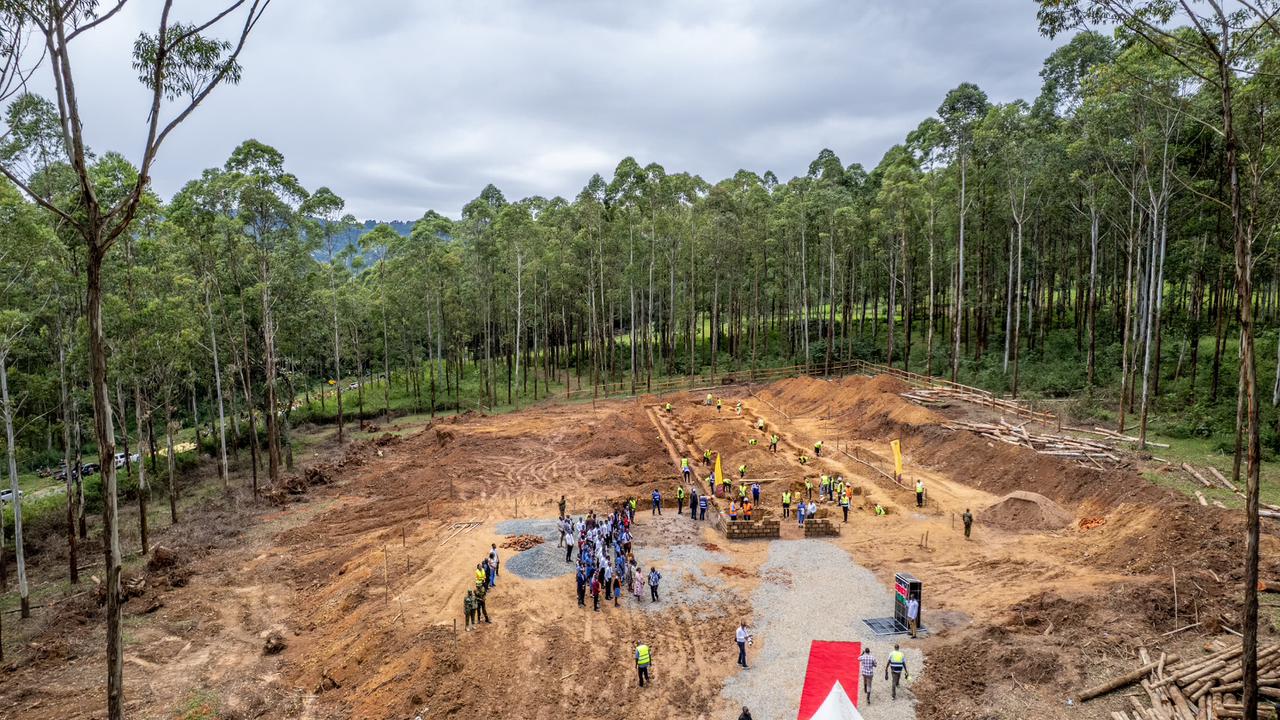 Sustainable cities cannot be built on uncertain revenue streams /FILE


![[PHOTOS] The new Ngong –Naivasha Road viaduct](https://cdn.radioafrica.digital/image/2026/06/64d4f771-4432-4aee-ba3c-2f304c4436ec.jpg)











![[PHOTOS] 'Mr Speaker Sir' Gen Z protester in court](https://cdn.radioafrica.digital/image/2026/06/b3e62d8e-25c3-4780-90f9-4eb48b1ce8a7.jpg)