OMWENGA: Ignore the noise, Mt Kenya will hold and determine 2027
Mountain region, despite current tremours and splits, will get it together to determine who occupies State House as it has in the past.
by SAM OMWENGA
Audio By Vocalize
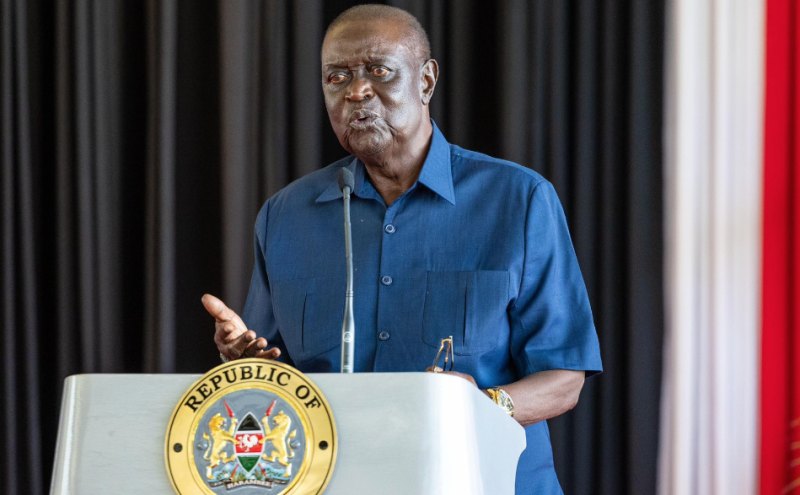
former Deputy President Rigathi Gachagua
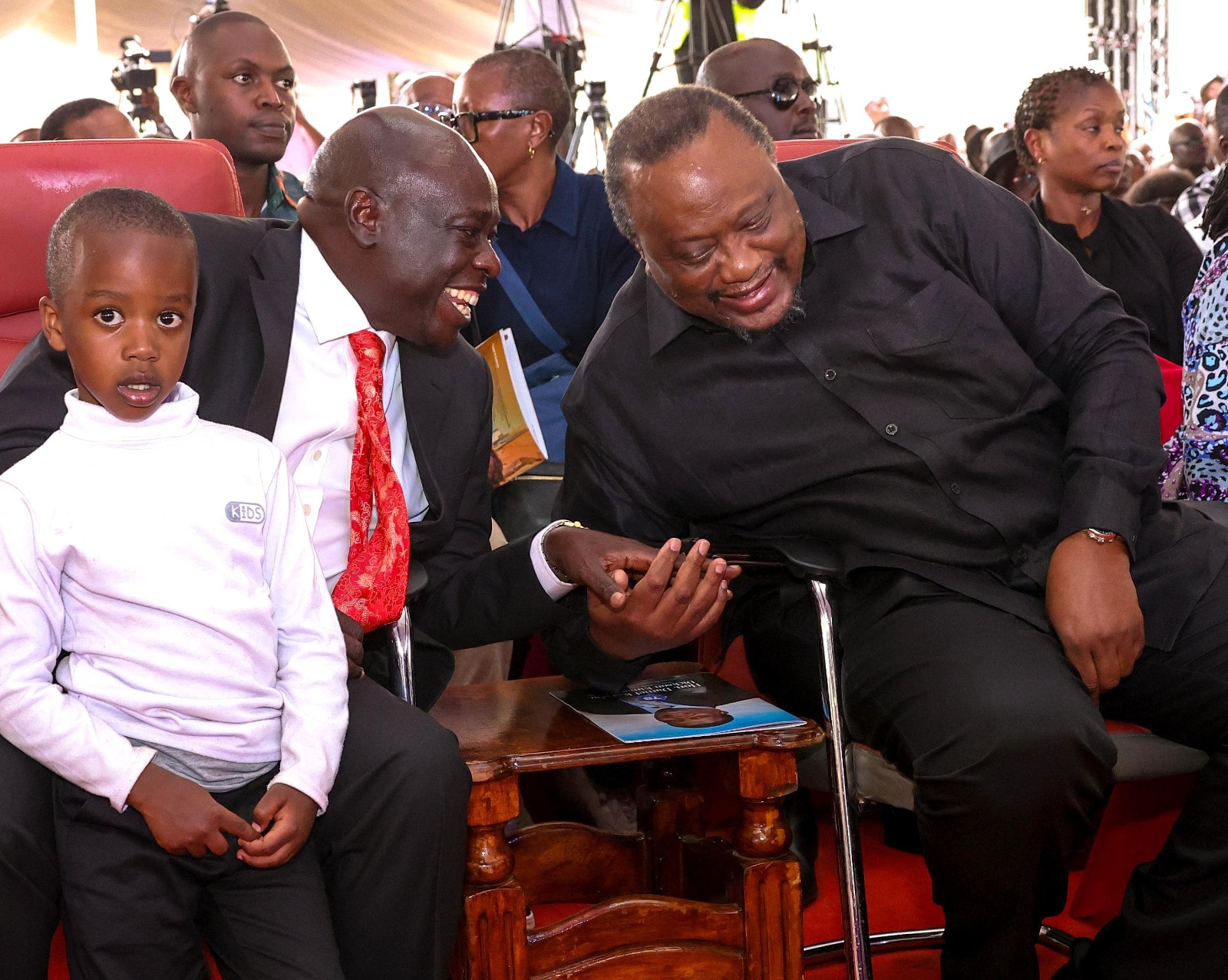
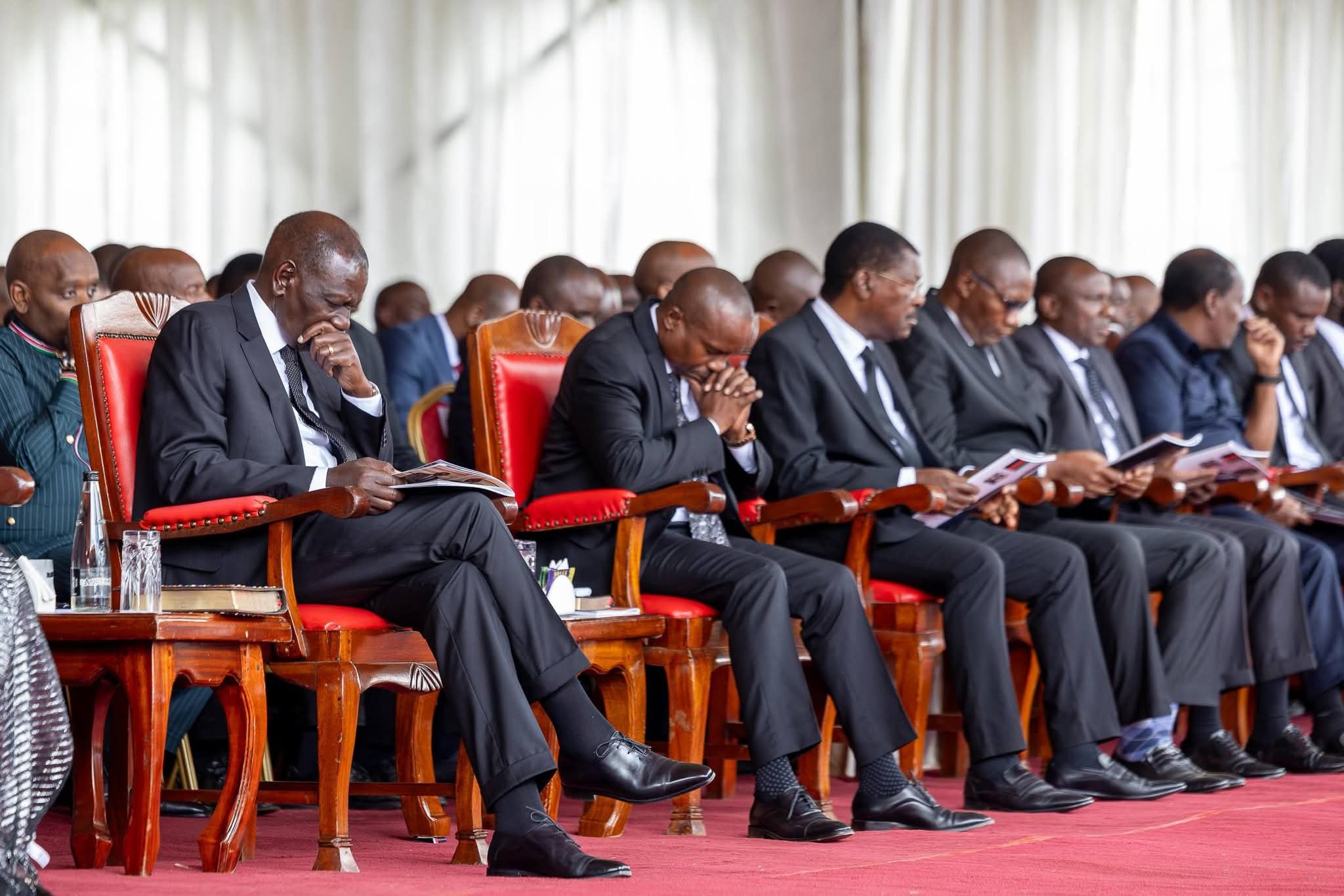
Former Deputy President Rigathi Gachagua and former President Uhuru Kenyatta during the funeral service of former Kirinyaga Senator Daniel Karaba on April 1, 2026 /DENISH OCHIENG
Some of us have been closely
following Kenyan politics for decades but one would be fibbing if we spoke with
certainty what will happen in 2027. Yes, ask leaders of the United Alternative
Government and their followers, and you’ll get an unequivocal ‘Wantam’. On the
other hand, ask the incumbent and his supporters and they’ll shout at you loudly
‘Twotam’. They don’t offer reasons why, but that’s their response.
Of course, both can’t be right.
I leave it for another day to explore
all the dynamics at play and how they may shape the 2027 election. For now, let
me focus on what will no doubt determine the upcoming
polls, no different than
it has in the past - and that is
the voting bloc of Mt Kenya.
To be sure, Mt Kenya’s political
landscape is undergoing one of its most fluid and shaky periods since
Independence. This phenomenon emerged at the seeding, planting and cultivation
at the hands of the incumbent and his running mate in 2022 as they sought and
succeeded in rendering a sitting president helpless to stop their freight
train.
It cannot be said enough that the
incumbent pulled off the impossible to be sworn as our fifth president and how
this is something many of us congratulated him on, even before the ink dried on
the Supreme Court’s affirmation of his election.
But this did not happen in a vacuum.
Other factors came into play to produce this outcome, mostly at the
incumbent’s (President William Ruto’s) instigation for sure, but also others even
more critical served by history.
It was therefore quite surprising how
the incumbent lost all that goodwill in Mt Kenya region and turned former
Deputy President Rigathi Gachagua into the thorn in the flesh he is,
notwithstanding the Band-Aid he threw at the incumbent during the funeral of Ol Kalou MP David.
It was the first
time since their split in 2024 that President Ruto and estranged former DP
shared the stage. Gachagua calmly lectured “brother” Ruto about residents’
needs and problems.
Prior to the DCP
leader bursting onto the
public stage, the unquestionable kingpin of the Mt Kenya region he specifically
targeted to politically finish and neuter before the 2022 election wasformer President Uhuru Kenyatta.
Few saw that coming, especially given
Uhuru’s roots, background and stature that combined made him a lame duck
president still enjoying enormous political and institutional influence.
Uhuru’s influence was built over decades through business networks, church
relationships and county‑level patronage systems. This is the kind of
structural capital — influence rooted in long‑standing institutions rather than
immediate political conditions that is almost impossible to beat, but Ruto beat
it.
By contrast, the man from Wamunyoro
shocked the nation by showing how easy it could be to defeat someone with such
background and influence — and a former boss to boot. Gachagua is riding on
what can be more accurately described as situational influence.
His rise was
shaped by the 2022 election cycle in which he largely trashed Uhuru and his
family in a manner that endeared him to many in the region and also his boss,
Ruto, who had unleashed him to politically finish Uhuru, and vicariously Raila.
It worked.
Given the fallout between the
incumbent and Gachagua, however, Mt Kenya today is more fragmented than in
previous decades. Its influence is distributed across governors, MPs, business
elites and emerging youth‑aligned figures.
This fragmentation has created a
situation where no single figure automatically commands the region’s cohesion.
Instead, there are at least two spheres of influence that have yet to be tested
and cannot be tested to determine which weightier in time to make decisions
ahead of 2027.
When Uhuru and Gachagua publicly met
for the first time since the 2022 election circle and showed signs of good old
friendship and camaraderie at former Kirinyaga Senator Daniel Karaba’s funeral, many saw that as
the long-anticipated handshake between the two leaders from Mt Kenya.
That being the case, this is the
million-dollar question now: would the two leaders work together alongside the
rest of the United Alternative Government to select the coalition’s flagbearer
in 2027?
If the mission is truly Wantam for
both, it’ll be an easy ‘yes’ answer.
This is premium content
Subscribe to Continue Reading
Help us continue bringing you unbiased news, in-depth investigations, and diverse perspectives. Your subscription keeps our mission alive and empowers us to provide high-quality, trustworthy journalism. Join us today to make a difference!