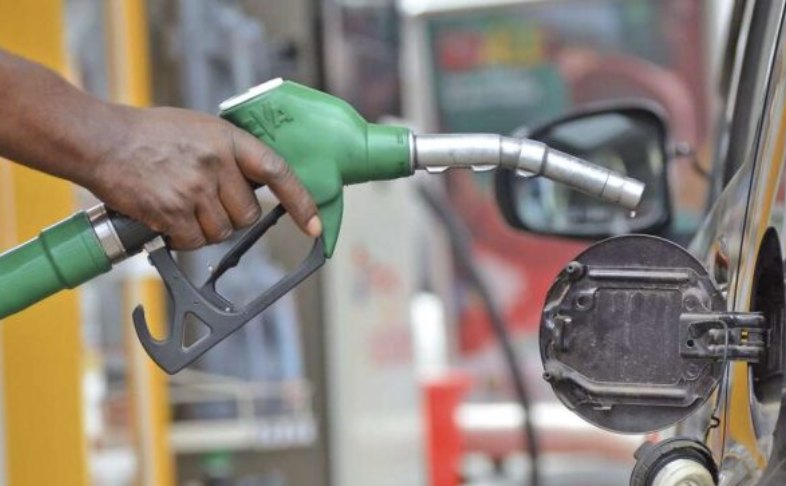
 A pump attendant fueling a car.
A peace deal brokered by Pakistan between the United States and Iran has raised fresh hopes of lower fuel prices in Kenya, with global oil markets already reacting positively ahead of the formal signing of the agreement scheduled for June 19 in Switzerland.
The breakthrough has fuelled expectations that international crude oil prices could gradually return to pre-war levels, potentially easing pressure on consumers who have endured months of rising fuel costs and inflation.
Brent crude, the global benchmark for oil prices, fell by 4.8 per cent to $83.18 per barrel immediately after Pakistan announced that a deal had been reached and US President Donald Trump declared the reopening of the strategic Strait of Hormuz shipping route.
"Let the oil flow!" Trump posted on his Truth Social platform, signalling what could be the end of months of disruption that began when the US and Israel launched attacks on Iran on February 28.
The conflict triggered repeated ceasefires that quickly collapsed amid accusations of violations by both sides, keeping energy markets on edge and driving fuel prices higher across the world.
In Kenya, the impact was immediate and severe. Diesel prices rose by an unprecedented Sh46.29 per litre during the May-June pricing cycle, pushing the pump price to a record Sh242.92 per litre.
Super petrol increased by Sh16.65 to Sh214.25 per litre, while kerosene remained unchanged at Sh152.78.
The sharp increase sparked nationwide protests and a transport operators' strike that disrupted travel and business activities.
The government responded by deploying subsidies through the Petroleum Development Levy and reducing Value Added Tax on petroleum products from 16 per cent to 8 per cent.
To cushion consumers further, the Energy and Petroleum Regulatory Authority (Epra) later reduced diesel prices by Sh10 per litre while increasing kerosene prices to discourage fuel adulteration.
A further Sh10 reduction in diesel prices was implemented in the June-July review following a presidential directive. As a result, Super Petrol, Diesel and Kerosene are currently retailing in Nairobi at Sh214.03, Sh222.86 and Sh191.38 per litre, respectively, until July 14.
Market analysts say the peace agreement could support further declines in oil prices if it holds, although the benefits may not be immediate.
Experts caution that oil flows through the Strait of Hormuz may take time to normalise. Iran is believed to have laid mines in the waterway, and clearing them could take months.
In addition, hundreds of tankers remain queued for passage, while oil production and export operations across the region will require time to return to normal levels.
Even so, a sustained peace deal would remove a major source of uncertainty that has driven oil prices higher since the outbreak of the conflict.
The Strait of Hormuz handles roughly 20 per cent of global oil and liquefied natural gas shipments. Its closure sent Brent crude prices soaring from about $70 per barrel before the war to peaks of around $120 during the conflict.
The resulting supply shock more than doubled the landed cost of some imported petroleum products in Kenya and contributed to the steepest monthly diesel price increase recorded in more than two decades.
In the April-May pricing cycle, diesel rose by Sh40.30 to Sh206.84 per litre in Nairobi, while petrol increased by Sh28.69 to Sh206.97.
The National Treasury subsequently reduced VAT on fuel products, lowering the cost of petrol and diesel and providing temporary relief to consumers.
If the ceasefire holds and oil markets stabilise further, analysts expect global crude prices to continue easing.
Combined with the government's decision to retain the reduced VAT rate, this could create room for lower pump prices in coming months.
Cheaper fuel would also help reduce inflationary pressures across the economy.
In the latest feul price review, Epra said the average landed cost of imported Super petrol decreased by 0.56 per cent from US$906.23 per cubic metre in April 2026 to US$901.16 per cubic metre in May 2026.
Diesel increased by 0.21 per cent from US$1291.98 per cubic metre to $1294.71 per cubic metre while Kerosene decreased by 0.33 per cent from $1332.73 per cubic metre to $1328.36 per cubic metre over the same period.
The Central Bank of Kenya's Monetary Policy Committee has in its most recent evaluation warned that higher fuel costs and global supply disruptions have pushed up transportation and production expenses, contributing to rising consumer prices.
With headline inflation currently standing at 6.7 per cent, any sustained decline in fuel costs would provide welcome relief for households and businesses struggling with the high cost of living.