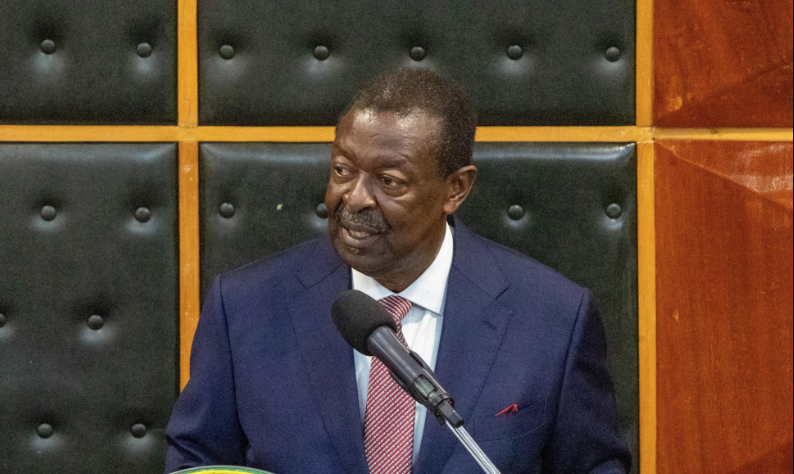
 International tax lawyer and University of Nairobi lecturer Lyla Latif /Handout
Kenya may need to rethink its tax system, as artificial intelligence and workplace automation threaten to erode one of the government's largest and most reliable revenue sources, the employee income taxes.
Tax experts are warning that the rapid adoption of AI-powered systems, robots and automated business processes could significantly reduce Pay As You Earn (PAYE) collections over the coming decades, forcing governments to explore new ways of taxing economic activity.
Speaking at a tax justice and domestic revenue mobilisation forum, international tax lawyer and University of Nairobi lecturer Lyla Latif said policymakers need to begin preparing for a future in which machines increasingly replace human workers across sectors of the economy.
"Today, imagine you go into a coffee shop and there is a barista making coffee for you. Ten years from now, you may go into that same coffee shop and a robot will make the coffee for you," she said.
"If you had a human being there, you would pay that human being a salary, and that salary would be taxable. When you have a robot, there is no salary being paid, which means the state is losing revenue from salary income."
The warning comes at a time when governments globally are exploring the implications of AI on labour markets, productivity and public finances.
PAYE remains one of Kenya's biggest tax heads, generating hundreds of billions of shillings annually for the exchequer.
The tax is deducted directly from workers' salaries and forms a critical component of domestic revenue mobilisation efforts.
However, advances in AI are expected to transform industries ranging from customer service and retail to manufacturing, logistics, financial services and professional services, potentially reducing demand for human labour in many routine tasks.
The shift could create a new challenge for tax authorities. While businesses may become more productive and profitable through automation, fewer employees could translate into lower payroll tax collections.
Latif said governments must begin considering alternative tax models to compensate for the possible erosion of traditional tax bases.
One option could involve introducing levies on automated systems or AI-powered production processes.
"Because the company would not be paying the robot a salary, perhaps it could be paying the state a robot levy tax so that the PAYE tax base is not eroded completely," she said.
The idea of a robot tax has gained attention in several jurisdictions over recent years, with policymakers and economists debating whether firms that replace workers with machines should contribute additional taxes to offset lost public revenues.
According to Lyla, the debate is becoming increasingly relevant as businesses accelerate investment in AI technologies to improve efficiency and reduce operating costs.
Beyond employment taxes, Latif argued that governments must also rethink how value is created and taxed in the digital economy.
Traditional tax systems were built around physical assets, factories and workers. However, AI-driven business models increasingly derive value from data, algorithms and user participation, areas that remain difficult to tax under existing frameworks.
She said policymakers risk being caught off guard if tax systems continue to rely heavily on labour income while economic activity shifts toward automated and digital platforms.
"We are moving into a world where automation is becoming normal. The question is whether our tax policies are being designed for that future," she said.