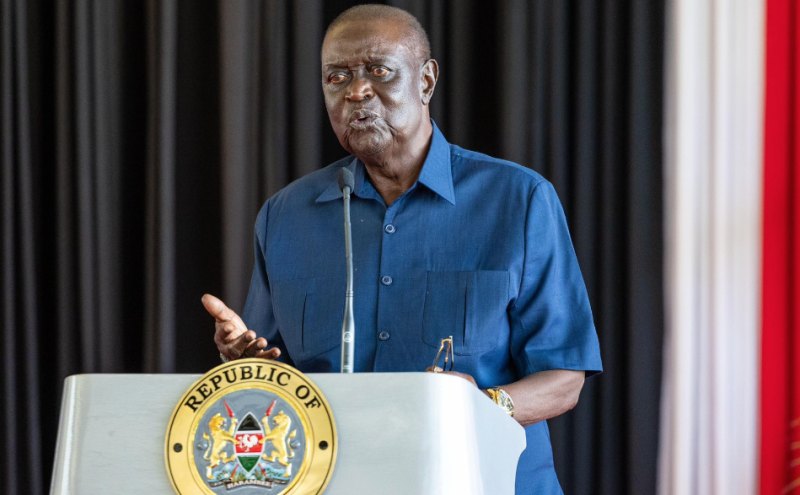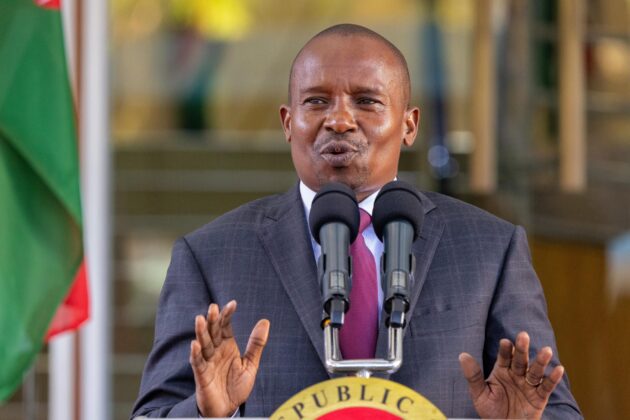
Deputy President Kithure Kindiki has called for reforms in the management of political demonstrations, saying Kenya must protect constitutional freedoms while addressing challenges that have emerged around political protests.
Speaking at State House, Nairobi, during the launch of a framework for reparations for victims of human rights violations, Kindiki said the country should focus on healing and reconciliation rather than viewing reparations as compensation for lives lost.
“Today we are not talking compensation, we are talking reparation because we cannot compensate death,” he said.
The Deputy President said periods of unrest had left deep scars on both citizens and state institutions, making it necessary to pursue a process that restores relationships damaged by conflict.
“We have hurt one another, law enforcement agencies and ourselves as citizens,” he said.
Kindiki also pointed to what he described as gaps in the legal framework surrounding Article 37 of the Constitution, which guarantees the rights to assemble, demonstrate, picket and petition public authorities.
He said public discourse has largely centred on demonstrations while overlooking the other constitutional rights protected under the same provision.
According to the Deputy President, some of the biggest challenges have arisen around political demonstrations.
However, he cautioned against painting all demonstrations with the same brush, noting that many groups have exercised their rights peacefully and lawfully.
He cited professional bodies, trade unions and other organisations that have successfully held demonstrations without major incidents.
Kindiki said future reforms should focus on addressing specific challenges associated with political protests while safeguarding the constitutional freedoms enjoyed by Kenyans.
He further described the reparations agenda as part of a broader transitional justice process aimed at addressing historical grievances, strengthening accountability and promoting national cohesion.
The Deputy President acknowledged that restorative justice is often a long and complex process, noting that many countries continue to grapple with unresolved historical issues decades after attaining independence.
“Many democracies today who have been independent for over 200 years are still pending issues around restorative justice,” he said.
Even so, he said Kenya had already taken an important first step by openly confronting difficult conversations around justice, accountability and national healing.
Kindiki said the journey towards reconciliation would take time but stressed that the country must remain committed to promoting unity and repairing divisions created by past conflicts.