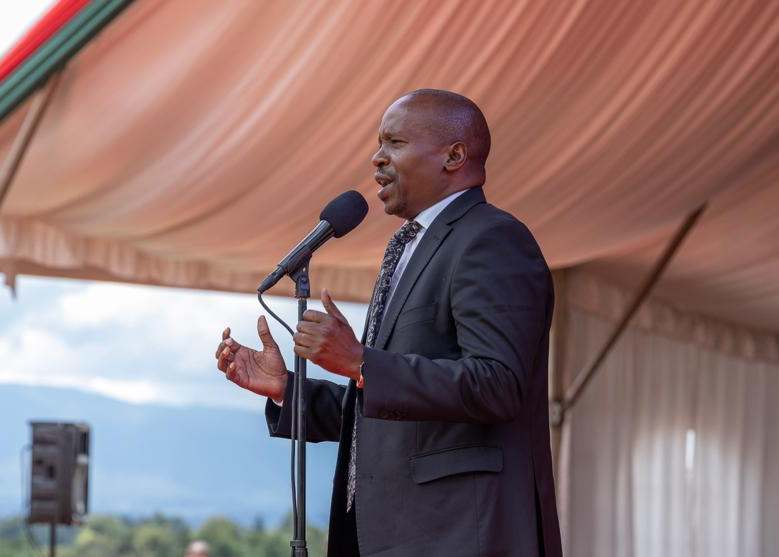
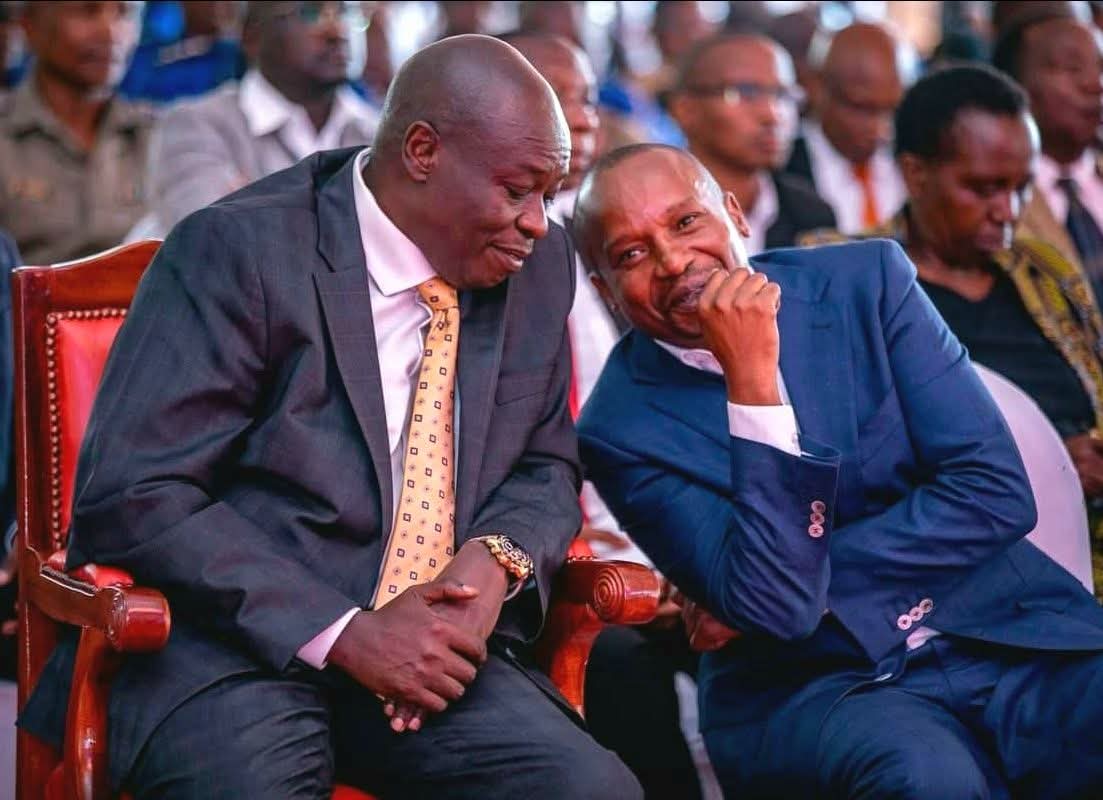
On one side, Deputy President Kithure Kindiki and his allies
are rallying residents that re-electing President William Ruto is the region’s
fastest route to State House.
On the other hand, former Deputy President Rigathi Gachagua
is rallying the same vote-rich bloc to hurtle towards the opposition.
Amid the push and shove, the grand question is whether Mt
Kenya will stay loyal to Ruto or gamble its numbers as a swing vote.
For Kindiki’s camp, the message is that the community needs
to exercise patience and allow Ruto to serve his second term.
The central call in their rallies and closed-door meetings
is that backing Ruto in 2027 guarantees the region a clear shot at the
presidency in 2032.
The DP said recently at his Irunduni residence that he was
confident President Ruto would not drop him.
“Next year, as the people of Mt Kenya Region, we have no
option but to re-elect President Ruto. A cow that is heavy with a calf cannot
be slaughtered.”
“After the re-election of President William Ruto next year,
we will only wait for five years. Then in 2032, the calf will be born,” Kindiki
said.
The DP dismissed politicians, led by his predecessor Rigathi
Gachagua, who are telling the region’s voters to kick out Ruto next year.
“Is it not easier and more strategic for our people to wait
for five years than to wait for 10 years? We are sharp people and know how to
make political calculations,” the DP quipped.
Ruto allies frame the current administration as already
embedding Mt Kenya technocrats in key decision-making roles, giving the region
a sense of belonging.
To abandon that arrangement midway, they warn, would be to
forfeit their influence.
But Gachagua is offering a sharply different path, which is
one rooted in sending the current regime packing.
Since his impeachment, he has recast himself as the defender
of Mt Kenya’s bargaining power.
In his campaigns in the region, he has warned politicians,
especially Ruto allies, that blind loyalty risks reducing the region to a
junior partner.
For Gachagua and camp, the promise of a future handover is
neither guaranteed nor enforceable.
Kenyan politics, he argues, is fraught with broken
succession pacts and as such, waiting until 2032 could leave Mt Kenya in the
cold.
Gachagua’s counter-strategy is to reposition the region as
the decisive swing constituency from which one can negotiate from a position of
strength.
In this regard, he is aligning with opposition forces, a
team that has seen him work together with Wiper leader Kalonzo Musyoka.
Recent events have brought the rivalry between the two camps
into the spotlight.
At a memorial service for the late Ol Kalou MP David Kiaraho
in Nyandarua county, the two leaders clashed in their tone.
Gachagua launched a scathing attack on Kindiki, accusing him
of breaching Mt Kenya cultural norms.
He claimed the Deputy President had discussed a potential
by-election before the late legislator had even been buried.
Gachagua said, "We don’t discuss inheriting somebody
until he is buried. Hapo professor umeanguka kidogo, utarekebisha."
Kindiki, however, struck a conciliatory tone and did not
respond directly to the criticism but instead called for restraint.
"I want to encourage that going forward as a community,
as a nation, let us learn how to respect one another, families and communities
alike," Kindiki said.
"Let us put down political temperatures to allow
mourning because we have a lot of opportunities to do politics outside the
church."
Of late, the Deputy President has employed a strategic shift
and appears to have ditched his hardline rhetoric against rivals.
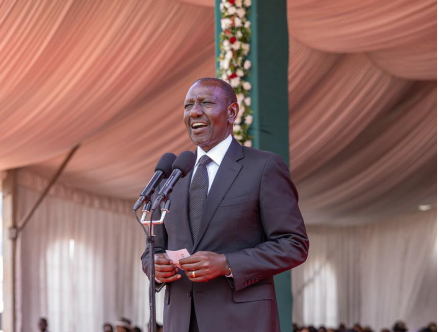
Ruto, for his part, has dismissed claims that he is losing
support in the region.
Speaking in Nyeri recently, thePresident insisted his bond
with Mt Kenya is longstanding.
Political pundits note that Kindiki’s biggest gamble is
trust, noting that his entire pitch assumes that the future transition will
honour present-day loyalties.
Analysts who spoke to the Star noted that his influence is
fragile and would only be more pronounced if UDA takes the Ol Kalou MP seat.
They argue that the November 2025 Mbeere North by-election,
where Leo Wamuthende won by 46 per cent amid a low turnout, showed an erosion
of support.
"Actuarial analysis suggests these numbers indicate a
more than 60 per cent dip in President Ruto’s popularity," Prof Peter
Kagwanja said.
Other observers hold that there is also the challenge of
selling patience to a restless electorate.
Prof Macharia Munene says, “Kindiki was chosen as a test to
see if he could replicate Gachagua’s influence.”
The pundits hold that Gachagua, on the other hand, faces the
uphill task of building a credible alternative coalition.
Prof Gitile Naituli, a former NCIC commissioner, says the
united opposition, though politically potent, requires structure, unity and a
clear presidential contender.
“Without that, it is a high-stakes gamble. In Mt Kenya,
leaders follow the people. When the time comes for voting, they will be able to
judge who has delivered to them,” the don said.
Since not all leaders are willing to abandon the benefits of
incumbency, a split vote would weaken the region's bargaining power.
For now, the region stands at a familiar crossroads, with
every side courting it and calculating.
![[PHOTOS] The new Ngong –Naivasha Road viaduct](https://cdn.radioafrica.digital/image/2026/06/64d4f771-4432-4aee-ba3c-2f304c4436ec.jpg)





![[PHOTOS] 'Mr Speaker Sir' Gen Z protester in court](https://cdn.radioafrica.digital/image/2026/06/b3e62d8e-25c3-4780-90f9-4eb48b1ce8a7.jpg)