Kenya’s development trajectory has perennially been
constrained by a persistent state of political mobilisation and haggling. The
country always operates in what is effectively a continuous campaign cycle,
where the discipline of governance is repeatedly overshadowed by the immediacy
of political positioning.
Kenyan politicians are essentially insensitive to the dire need
for national development and the improvement of the amount and quality of
services for the ordinary mwananchi. All they care is that the government of
the day fails so that they would have clout going into the next electioneering
period.
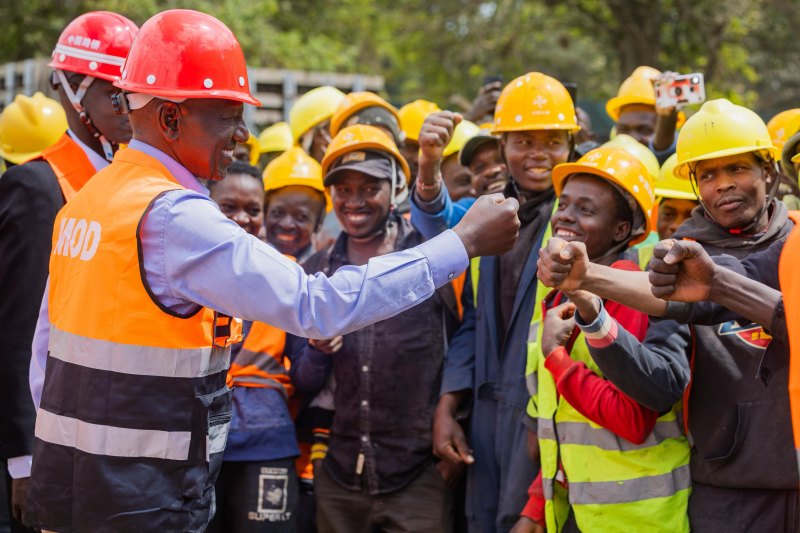
No wonder President William Ruto has remained unequivocal
that his administration will not be distracted from its main focus of availing
tangible development to Kenyans.
That position speaks to a deeper institutional
reality: development requires consistency, technical focus and the ability to
sustain momentum beyond political noise.
Across the national landscape, there is no shortage of
programmes designed to unlock economic potential and improve livelihoods.
Investments in strategic road corridors linking production zones to markets,
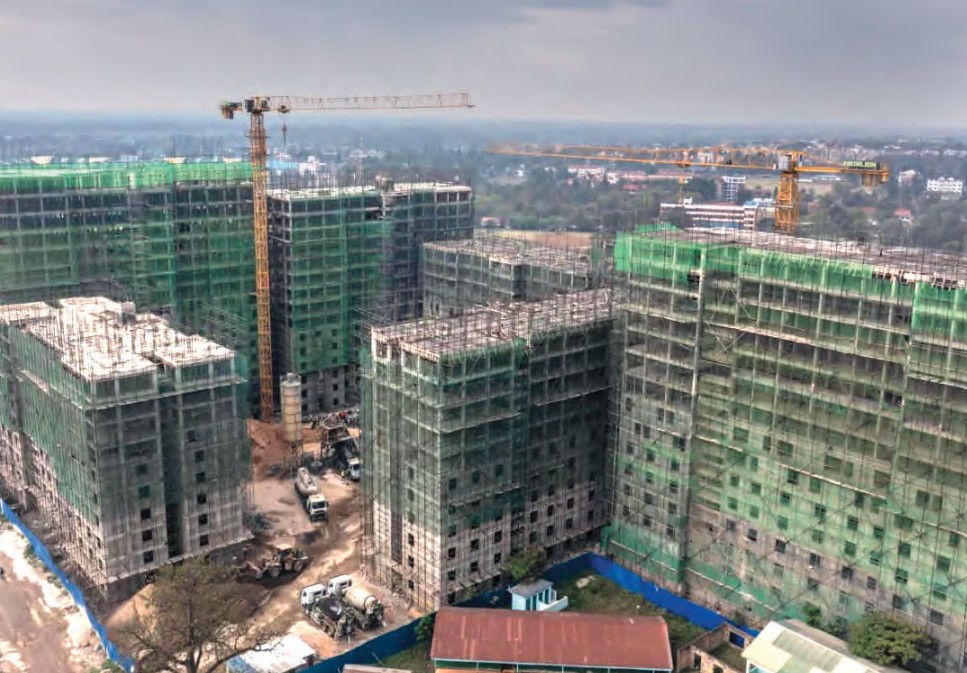
the ongoing expansion of affordable housing in urban centres, the revitalisation
of irrigation schemes such as Galana Kulalu and the consolidation of rail and
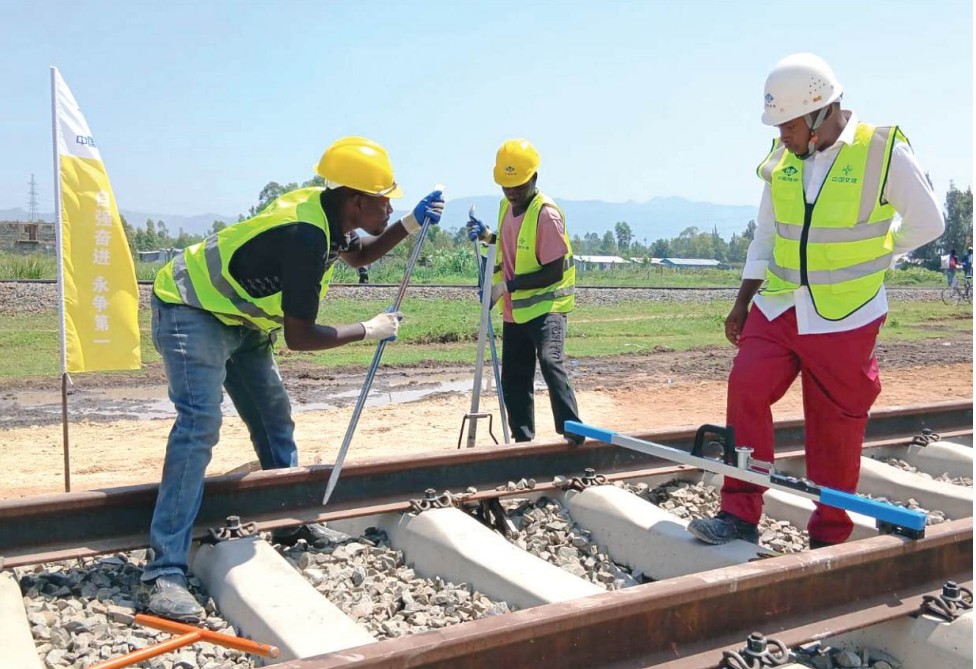
logistics networks including the Standard Gauge Railway extension to Uganda,
all signal a deliberate effort to build long term productive capacity.
These are critical projects that all and sundry should rally
to support. Equally significant are the reforms in universal health coverage,
the digitisation of government services and the broader bottom up economic
transformation agenda aimed at integrating those historically excluded from
formal economic systems.
Yet, these initiatives demand sustained administrative
attention. They cannot thrive in an environment where national discourse is
continually diverted towards political spectacle and episodic declarations. The
opposition, for instance, pokes holes into every development initiative that
appears to be happening.
The reality is that development is neither instantaneous nor
performative. It is cumulative, often technical, and in many instances,
invisible in its early stages. It requires feasibility assessments, structured
financing, procurement discipline and careful implementation. This is why it is
critical for citizens to rally around government, particularly during the
implementation phase of major programmes.
This is not a call for uncritical support, but rather for
informed engagement that enables delivery while holding institutions to
account. A mature democracy must be capable of distinguishing between necessary
scrutiny and counterproductive disruption.
At the county level, the imperative for accountability
becomes even sharper. Since 2022, county governments have received substantial
allocations from the Consolidated Fund, complemented by own source revenues and
conditional grants.
These resources were intended to translate into tangible
development outcomes at the local level. Citizens must therefore move beyond
political allegiance and undertake a more rigorous evaluation of performance.
What has been achieved in terms of road infrastructure, water access,
healthcare delivery, agricultural support, and local enterprise development?
How effectively have counties managed public procurement
processes and safeguarded public assets? To what extent have development plans
been aligned with actual expenditure? These are the questions that should
define civic engagement. However, Kenya’s political culture continues to
exhibit a susceptibility to sensationalism.
Public attention is often captured
by the anticipation of the next political announcement, the next perceived
realignment, or the next moment of political theatre.
Crowds gather not necessarily to interrogate policy, but to
witness alignment. This cyclical anticipation creates a form of national
distraction, where long-term development priorities are repeatedly subordinated
to short term political excitement. The consequence is a dilution of civic
focus and a weakening of accountability mechanisms.
A shift towards a more development minded citizenry is
therefore essential. This entails prioritising outcomes over rhetoric,
continuity over disruption and substance over spectacle.
It also requires a
recalibration of expectations, particularly among the youth. Government, by its
very structure, cannot absorb the scale of labour entering the economy each
year. The future of employment lies in enterprise, innovation and the expansion
of productive sectors.
Young people must
increasingly position themselves not only as job seekers, but as creators of economic
value, capable of leveraging opportunities in agriculture, manufacturing,
digital services and the creative economy.
This transition places a
corresponding obligation on the private sector. No economy has achieved sustained
growth without a vibrant and expanding private sector. Businesses must
therefore take a more proactive role in job creation, skills development and
investment in value chains that generate employment at scale.
At the same time, government must more deliberately place
the private sector under obligation to deliver on employment outcomes. Through
a combination of incentives, regulatory clarity and structured partnerships,
the state can catalyse private sector expansion while ensuring growth
translates into opportunities for the youth.
Beyond production and employment, there
is also the question of financial discipline at both household and national
levels. The global economic environment remains uncertain, with geopolitical
tensions, including the risk of escalation involving the United States and
Iran, posing significant implications for the petroleum sector.
Any disruption in
global oil supply would inevitably trigger increases in fuel prices, with
cascading effects across transport, manufacturing, food systems, and the
overall cost of living. Kenya, as a net importer of petroleum products, remains
particularly exposed to such external shocks.
In this context, prudence is not optional. Households must
cultivate a stronger culture of saving and moderated consumption, while
institutions must exercise discipline in expenditure and investment decisions.
Economic resilience is built not only through large scale infrastructure, but also
through the everyday financial choices of citizens and enterprises.
Ultimately, Kenya stands at a critical juncture. The
foundations for transformation are present, but their realisation depends on a
collective shift in orientation.
Moving from perpetual political mobilisation
to purposeful development will require leadership that remains focused,
institutions that are disciplined, a private sector that is dynamic and a
citizenry that is informed, demanding and firmly anchored in the pursuit of
long term national progress.





![[PHOTOS] The new Ngong –Naivasha Road viaduct](https://cdn.radioafrica.digital/image/2026/06/64d4f771-4432-4aee-ba3c-2f304c4436ec.jpg)








![[PHOTOS] 'Mr Speaker Sir' Gen Z protester in court](https://cdn.radioafrica.digital/image/2026/06/b3e62d8e-25c3-4780-90f9-4eb48b1ce8a7.jpg)