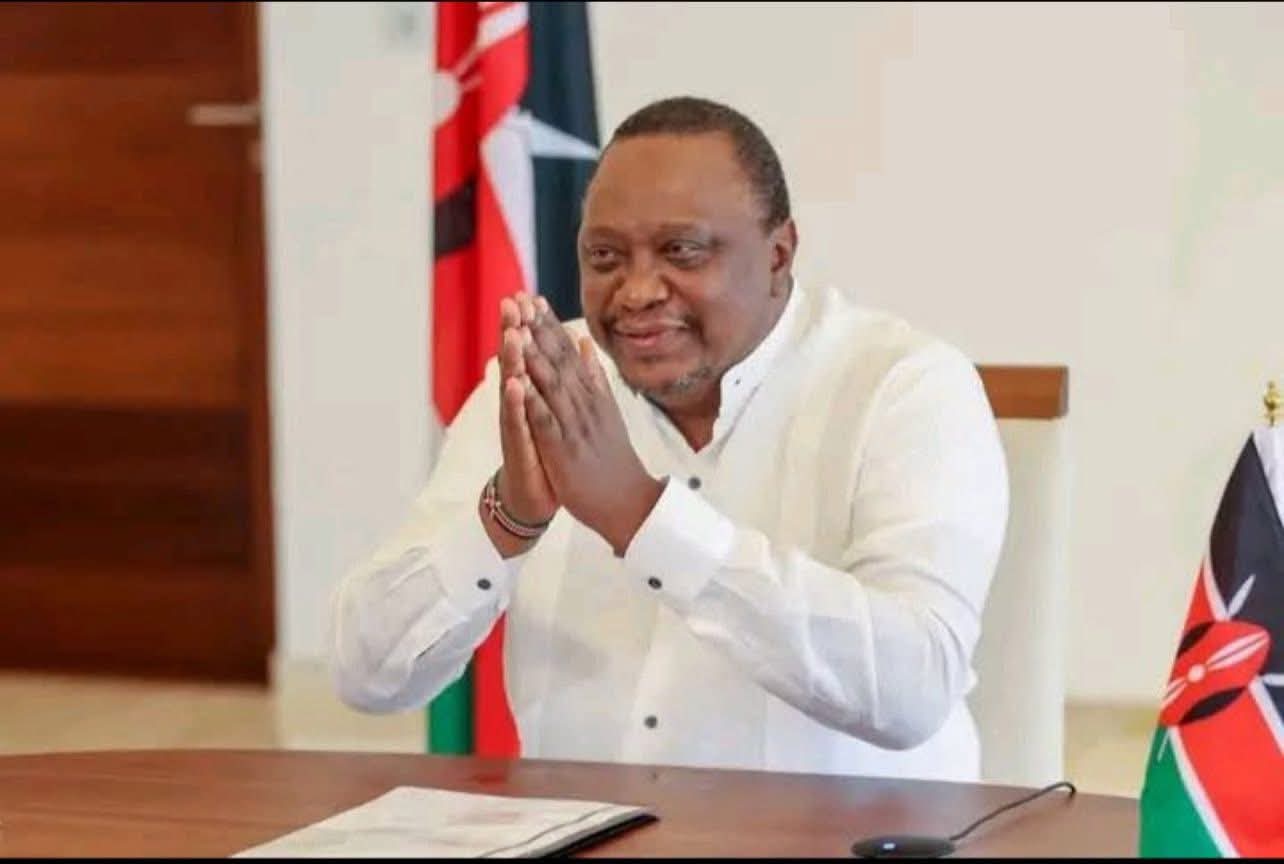
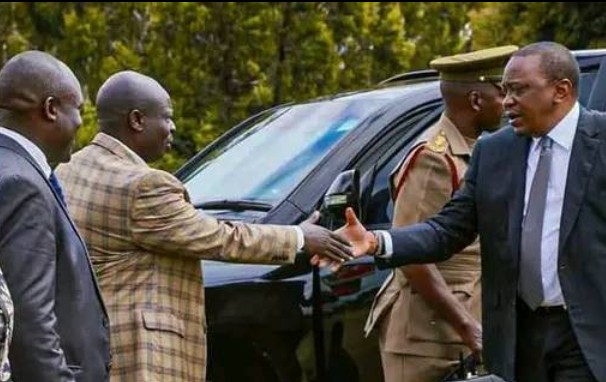
The idea that former President Uhuru Kenyatta and former Deputy President Rigathi
Gachagua could enter into a lasting political truce is, at best, superficial.
Even if such a ceasefire were to occur, it would neither be genuine nor
strategic. Kenyan politics does not sustain reconciliations that lack mutual
dependence, and in this case, that condition is absent.
Uhuru does not need
Gachagua in any material, organisational, or political sense, while Gachagua’s
interest in détente is driven largely by survival. Any truce between the two
would therefore amount to tactical optics rather than a meaningful realignment
of interests.
Uhuru exited the presidency diminished in
power—not erased from the political map but significantly weakened because he
miscalculated with a Raila
Odinga endorsement and support.
However, he retains Jubilee, a legally
intact party with national recognition, organisational memory and residual
loyalty across several regions. More importantly, he carries the intangible yet
potent currency of a former head
of state: access,
legitimacy and the ability to convene.
Gachagua, by contrast, is a politician
recently dethroned, stripped of office and in search of a new political home.
Their interests do not intersect symmetrically.
Their fallout was neither benign nor
forgettable. It was not a disagreement over ideology or policy; it was an
acrimonious rupture marked by personal attacks and political revisionism.
The DCP leader’s public
statements during the twilight of Uhuru’s presidency and in the aftermath are
well documented. He did not merely distance himself from Uhuru; he actively
repudiated him, questioned his leadership and framed his administration as
hostile to Mount Kenya interests.
In politics, such language carries
consequences. Memory is institutional, not emotional, and politicians rarely
forget who humiliated them publicly.
Against that background, expectations of
political harmony misunderstand the nature of power. Uhuru has no incentive to
rehabilitate a man who built his recent political brand on disavowing him.
Gachagua may seek accommodation for survival; Uhuru has the luxury of
selectivity.
If the former president is to play any meaningful role in shaping
the next political cycle—particularly within Mount Kenya—his most rational
engagement lies not with perennial opposition figures but with President
William Ruto.
This is not an endorsement of past antagonisms but an
acknowledgement of present realities.
Ruto defeated Uhuru’s preferred
succession plan not because Uhuru lacked influence but because Ruto
out-organised, out-mobilised and outlasted his opponents.
Since assuming office, Ruto has demonstrated
what Kenyan politics ultimately rewards: structure, discipline and momentum.
United Democratic Alliance is no longer a campaign vehicle; it is rapidly
becoming a dominant political machine.
Aspirants across the country are coalescing
around it ahead of 2027, not out of ideological affinity but out of strategic
calculation. Power attracts ambition, and ambition consolidates power. This is
how political hegemonies are built.
Comparisons between Ruto and Kalonzo Musyoka
expose a fundamental asymmetry. Kalonzo is experienced, courteous and measured,
but he lacks political fire. He does not animate crowds; he does not unsettle
opponents.
In an era of emotive politics, that restraint reads as coldness.
Ruto, by contrast, is kinetic. He thrives in confrontation, adapts
instinctively and speaks the language of political urgency. Kenyan politics has
never been kind to the lukewarm.
It is no coincidence that the only
contemporary figure comparable to Ruto’s political brilliance was the former ODM chief who died last
October. Both understood that politics is not merely about being right
but about being dominant.
Raila mastered the art of mobilisation, grievance
articulation and narrative framing. Ruto has mastered organisation, timing and
coalition management. Different styles, same instinct for power.
Wiper Democratic Movement’s limitations
further underline this reality. Since Kalonzo’s break with Raila in 2005-06, the party has remained essentially
regional, its influence concentrated in Ukambani.
Despite repeated rebranding
efforts, it has failed to establish durable national structures or a compelling
expansion narrative. Parties that cannot transcend geography do not shape
presidential outcomes; they negotiate relevance at the margins.
As the country adjusts to a post-Raila
political order, another phenomenon deserves scrutiny: the rise of politicians
who mistake proximity to power for possession of it. ODM secretary-general Edwin Sifuna exemplifies this
tendency.
Articulate, combative and media-savvy, Sifuna has positioned himself
as a national voice. Yet politics, at its core, is transactional. To sit at the
top table, one must bring something tangible—votes, structures, resources, or
regional leverage.
Sifuna brings none of these. He lacks a political
base he can command. In much of Luhyaland, he is scarcely known beyond urban
elites and social media audiences.
Without grassroots structures or regional
authority, he cannot dictate coalition terms. He cannot deliver blocs of votes,
nor can he credibly threaten withdrawal. In realpolitik, that renders one
ornamental rather than decisive.
In western Kenya, the enduring power brokers remain Musalia Mudavadi
and Moses Wetang’ula. Whatever their limitations, they command identifiable
constituencies and institutional networks. Coalitions are built around such
figures, not around eloquence or television presence.
There is also something unseemly—and
politically hollow—about the growing tendency among younger politicians to
trade on their association with Raila.
The former Prime Minister’s stature was not inherited; it was
earned through decades of sacrifice, detention, loss and relentless
mobilisation. To invoke his name as political capital without possessing his
organisational depth or moral authority is to misunderstand what made him
formidable.
As Mount Kenya reconfigures itself in the
aftermath of Gachagua’s fall, one truth stands out: political relevance will be
determined less by rhetoric and more by alignment with power, organisation and
credible pathways to 2027.
Uhuru, unencumbered by electoral ambition, will
choose pragmatism over sentiment. Ruto, already in motion, will continue to
consolidate. And those without structures, bases, or leverage will discover
that visibility is not the same as influence.
Kenyan politics is unsentimental. It rewards
preparation, not protestations. Those who forget this do so at their peril.



![[PHOTOS] The new Ngong –Naivasha Road viaduct](https://cdn.radioafrica.digital/image/2026/06/64d4f771-4432-4aee-ba3c-2f304c4436ec.jpg)










![[PHOTOS] 'Mr Speaker Sir' Gen Z protester in court](https://cdn.radioafrica.digital/image/2026/06/b3e62d8e-25c3-4780-90f9-4eb48b1ce8a7.jpg)