

General savings habit of working Kenyans
Other than pensions, how would you describe your general savings habit?
22d agoVincent OkeyoInfographics
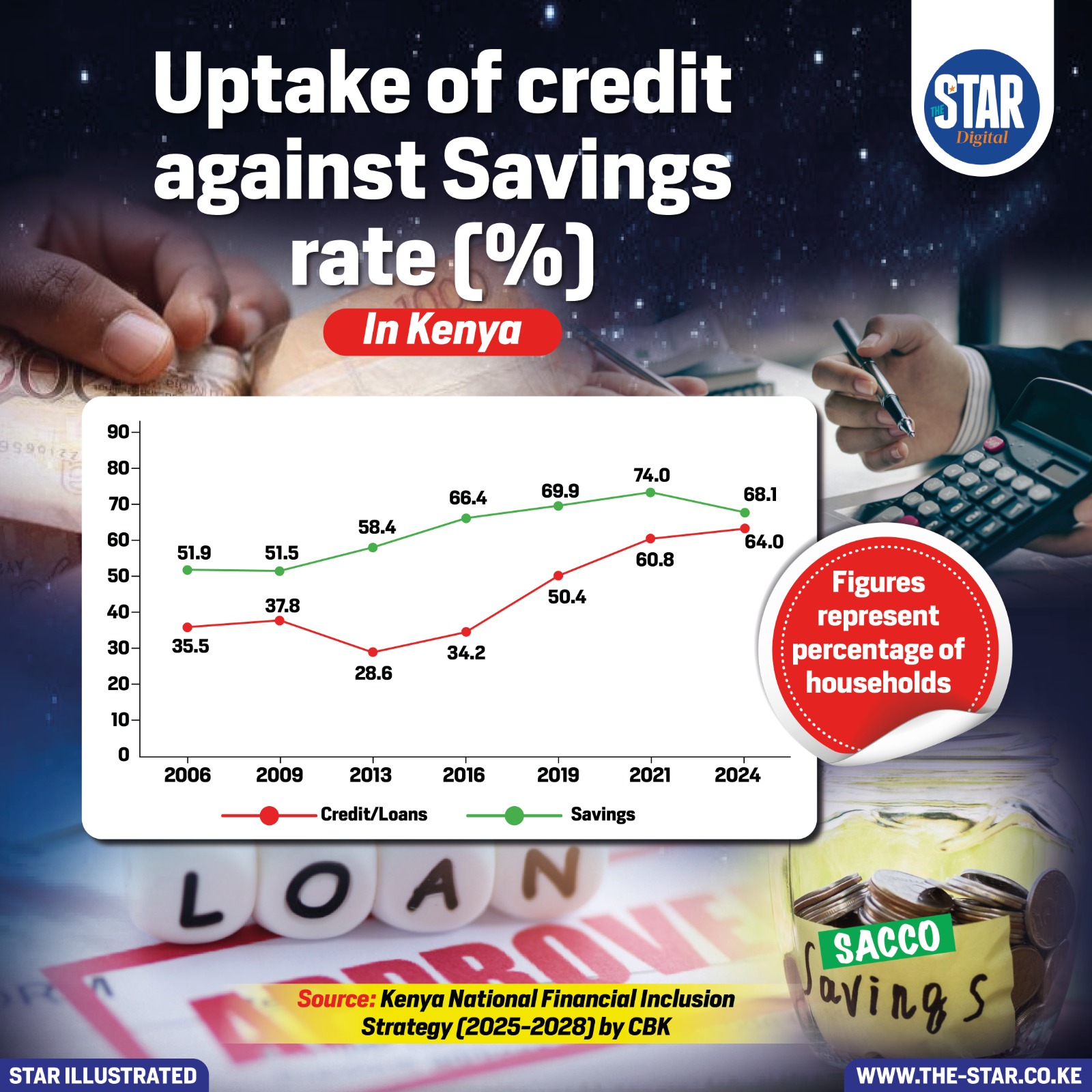
The Savings rate has seen a steady increase, rising from 51.9% in 2006 to its peak of 74.0% in 2021.
In Summary

Audio By Vocalize
The uptake of credit and savings rates among Kenyan households has shown dynamic trends over the years, with savings generally outpacing credit utilisation.
The Savings rate has seen a steady increase, rising from 51.9% in 2006 to its peak of 74.0% in 2021 before slightly dipping to 68.1% in 2024.
This consistent growth suggests a rising culture of financial prudence and the effectiveness of various savings platforms.
Conversely, the Credit/Loans uptake rate has been more volatile. Starting at 35.5% in 2006, it peaked slightly at 37.8% in 2009 before dropping significantly to its lowest point of 28.6% in 2013.
Since then, the rate has climbed substantially, reaching 64.0% in 2024. This steep rise in recent years indicates increased access to and demand for credit, likely driven by the proliferation of digital lending services.
By 2024, the gap between savings and credit uptake has narrowed considerably.
While the savings rate remains higher at 68.1% compared to the credit rate of 64.0%, the near convergence highlights that a large proportion of Kenyan households are actively engaging with both borrowing and saving instruments simultaneously.
Other than pensions, how would you describe your general savings habit?


What retirees in Kenya said in a survey.