A new analysis by The Institute for Social Accountability (TISA), released on December 8, 2025, has highlighted significant disparities between county pending bills and development budget absorption across Kenya.
The findings show that several counties continue to accumulate substantial unpaid obligations while failing to utilize allocated development funds efficiently, raising concerns about fiscal discipline and service delivery.
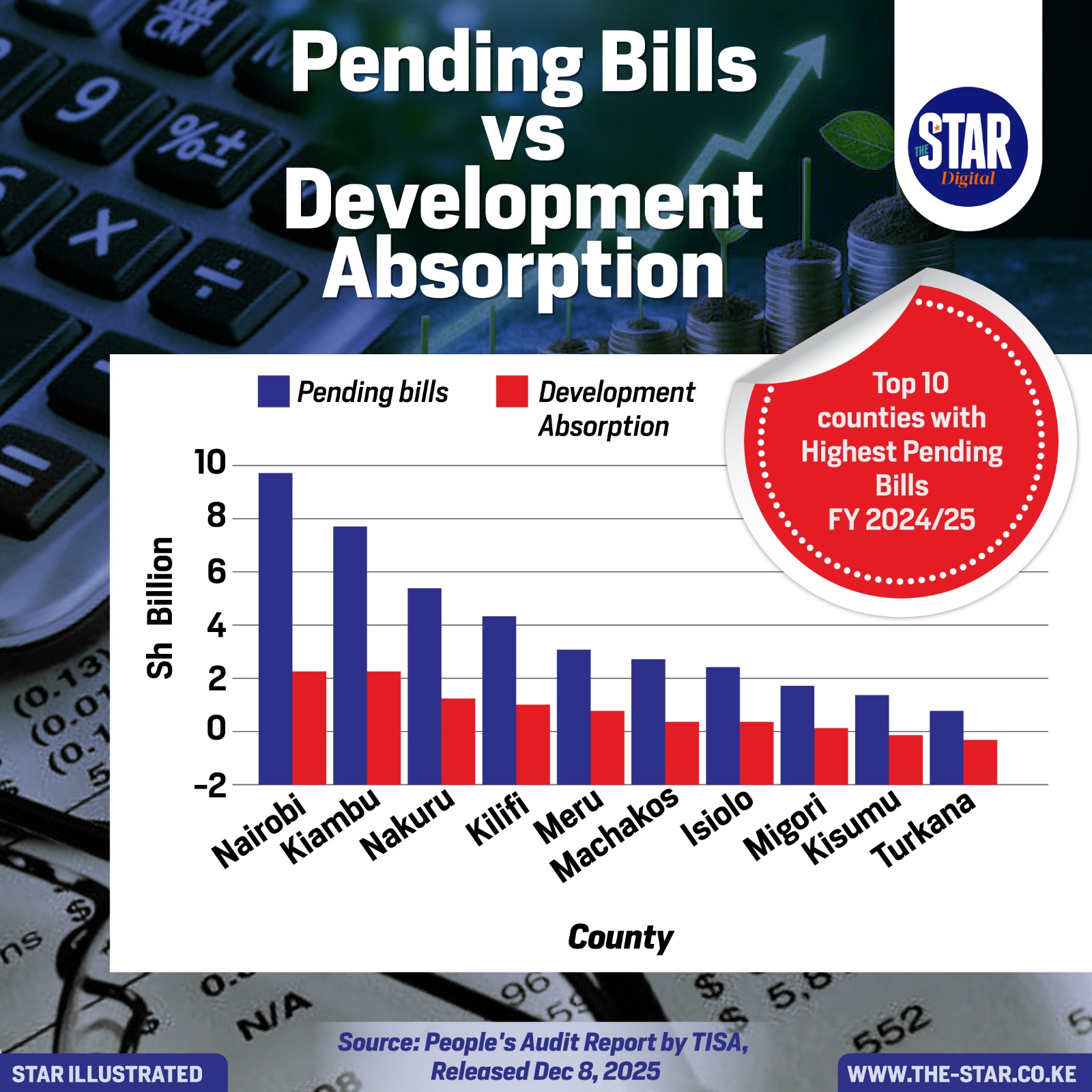
Nairobi tops the list with pending bills approaching Sh10 billion, despite recording relatively modest development absorption.
Kiambu follows with over Sh7 billion in unsettled bills, while Nakuru trails with more than Sh5 billion.
Other counties listed include Kilifi, Meru, Machakos, Isiolo, Migori, Kisumu, and Turkana, all exhibiting a consistent pattern: high pending bills and low capital expenditure absorption.
The mismatch between budget commitments and execution continues to strain county operations, delay payments to suppliers, and impede local economic activity.
TISA’s report suggests that the buildup of pending bills is driven by weak procurement oversight, stalled projects, and unrealistic budgeting that does not reflect actual revenue inflows.
At the same time, low development absorption indicates challenges in project implementation, bureaucratic bottlenecks, and capacity gaps within county administrations.
The situation raises critical governance questions, especially as counties request additional funds from the national government while failing to demonstrate prudent use of existing allocations.
The report calls for enhanced transparency, stricter enforcement of Public Finance Management (PFM) rules, and improved planning to ensure counties prioritize essential projects, reduce arrears, and deliver tangible development outcomes for citizens.