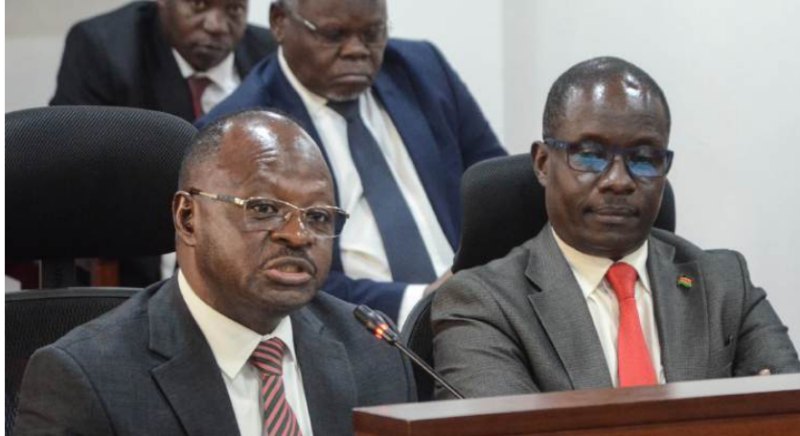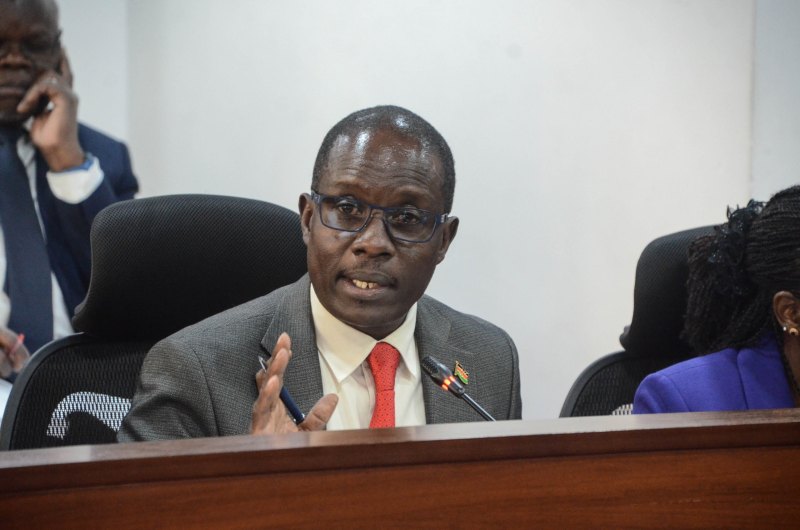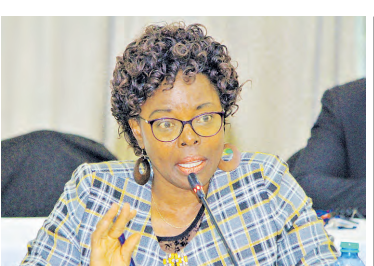
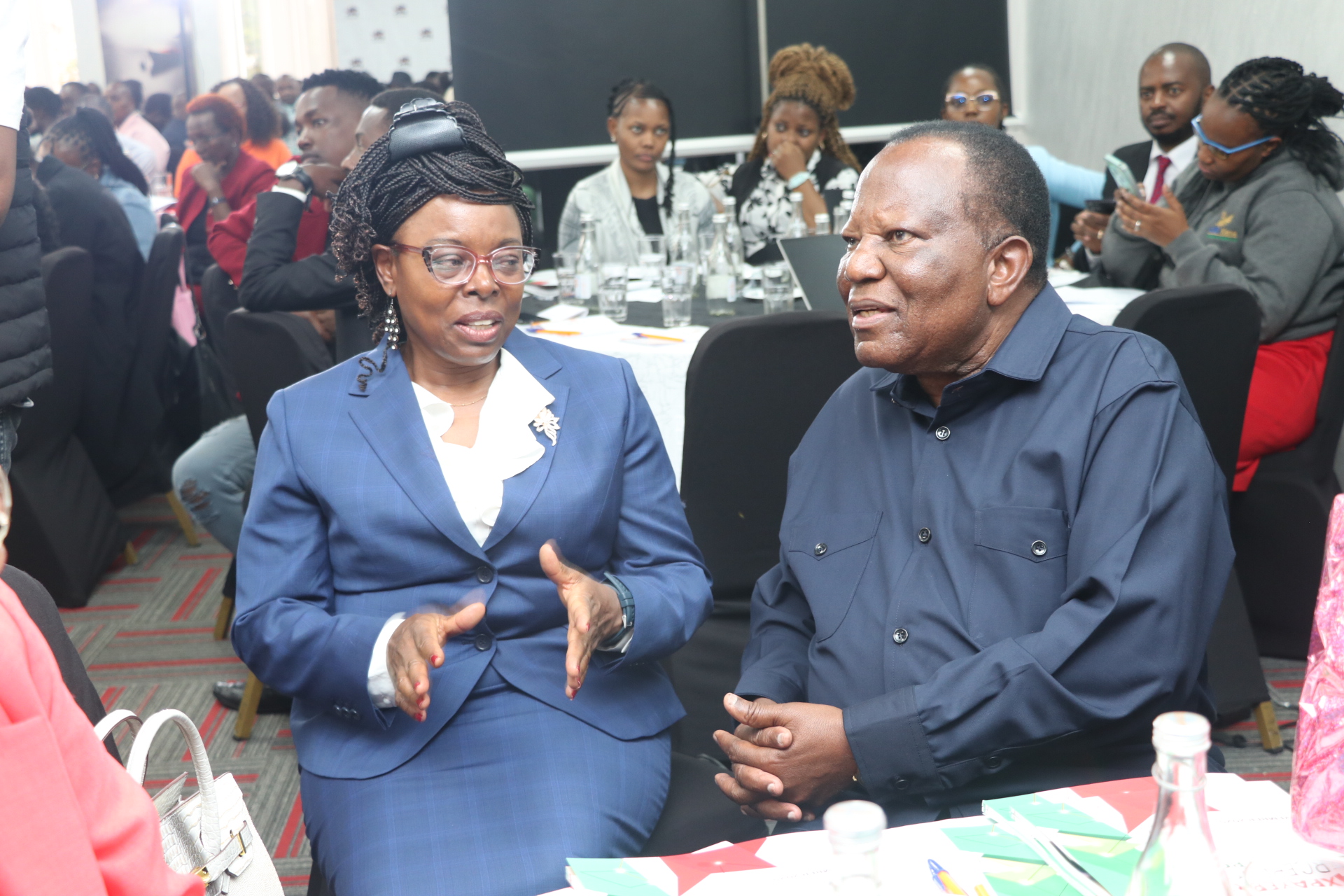
 Controller of budget Dr Margaret Nyakang'o and NTA board Chairman Peter Kubebea engage during the National Tax convention at Maa hotel and suites, Nairobi on November 27, 2025/LEAH MUKANGAI
The Controller of Budget (CoB), Margaret Nyakang’o, has sounded the alarm over a severe liquidity crisis in the country’s development spending after pending bills increased to 86 per cent of the country’s development budget.
The budget controller says pending bills owed by national government ministries, departments and agencies (MDAs) surged to Sh524.84 billion.
Nyakang’o is now cautioning that the government is “sinking in debt, in pending bills,” with dire implications for the economy.
According to the CoB’s latest report covering the period up to 30 June 2025, pending bills rose from Sh516.27 billion in the previous financial year to the current Sh524.84 billion, despite repeated directives to clear overdue payments.
The development budget for national government MDAs stands at Sh612.98 billion, meaning unpaid bills now nearly swallow the entire allocation.
“How do you have pending bills of 524.84 against a budget of 612.98 billion?” asked Nyankang’o during the release of National Taxpayers Association, perception survey.
The CoB stressed that these arrears amount to a hidden form of public debt—one that is increasingly choking small and medium-sized enterprises (SMEs) that rely on prompt government payment to stay afloat.
“This means that our hard-working Kenyans, who have invested in the provision of goods and services through the government, do not get their money to rejuvenate their businesses,” the CoB said.
“Ultimately, it reduces cases of business failure—but only if we pay. And there have been many.”
According to Nyakang’o, the growing stock of pending bills has had a cascading effect on the private sector, with SMEs and contractors who supplied goods and services often financed through commercial loans being forced to absorb the shock of delayed payments.
The CoB attributed the rise in pending bills partly to Kenya’s shrinking fiscal space, with 72 per cent of domestic revenue now swallowed by public debt servicing.
This leaves ministries with limited operating funds and intensifies cash rationing, delaying payments to suppliers even when contracts are complete.
County governments tell a similar story closer to home. The 2025 Budget Review and Outlook Paper show counties reported pending bills of Sh176.9 billion as of June 30, 2025, with Nairobi alone accounting for nearly half of that total.
For contractors who often operate on thin margins and rely on steady public works payments to service bank loans and payroll, delays of this magnitude translate into existential risk.
“Let us at least pay for what we have consumed. This will circulate money in the economy and increase the taxes we can collect,” said Nyakang’o
Nyakang’o further linked the plight of contractors to broader systemic issues, including illicit financial flows, which cost Kenya an estimated Sh253 billion annually, undermining domestic resource mobilisation and worsening inequality.
Despite Kenya’s strong revenue performance—KRA collected Sh2.571 trillion in 2024/25—most of the funds are absorbed by debt, leaving agencies unable to honour obligations to suppliers.
The Controller of Budget also noted persistent gaps in tax compliance, saying only 7.5 per cent of registered PIN holders declare taxable income, limiting the government’s ability to grow the tax base.
Rispar Simiyu, a tax advisor at the National Treasury, echoed Nyakang’o’s concerns, saying tax reforms must build trust and accountability to enhance compliance and reduce the state’s overreliance on debt.
She noted that a predictable and transparent tax system is crucial to improving public service delivery—including the timely payment of contractors who depend on government business.
“Taxation should not be viewed as a burden but a shared responsibility,” Simiyu said. “Citizens must see tangible results of their contributions. When taxpayers understand how and why decisions are made, trust grows—and so does voluntary compliance.”
Simiyu said the Treasury is investing in digitised revenue systems to reduce leakages, simplify procedures, and ensure taxpayers can track how their money is used.
She pushed for the need for inclusive policies that support MSMEs and informal sector actors—many of whom are involved in government contracting and are directly affected by delayed payments.
“Around the world, we are witnessing a growing emphasis on transparent, accountable, citizen-responsive tax systems, systems that not only raise revenue but also build trust. For Kenya to realise its development aspirations and to reduce excessive dependence on external financing, we must anchor our tax framework on these principles,” said Simiyu.
Pointing out that trust and accountability are no longer optional. They are central to the long-term sustainability of our fiscal landscape.
“The National Treasury remains committed to supporting both national development and the priorities of devolved governments, ensuring that tax revenue translates into tangible benefits for all Kenyans,” added Simiyu.
Economists and Tax payers lobby group warn that the accumulation of unpaid bills undermines confidence in the government as a reliable client, discourages investment, and constrains the very businesses needed to drive economic growth and tax mobilisation.
“Advancing accountability and rebuilding trust in our fiscal system requires very strong constructive collaboration between the citizens, government institutions, civil society, and the private sector that plays a very pivotal role towards the nation building,” said NTA CEO Patrick Nyangweso.