

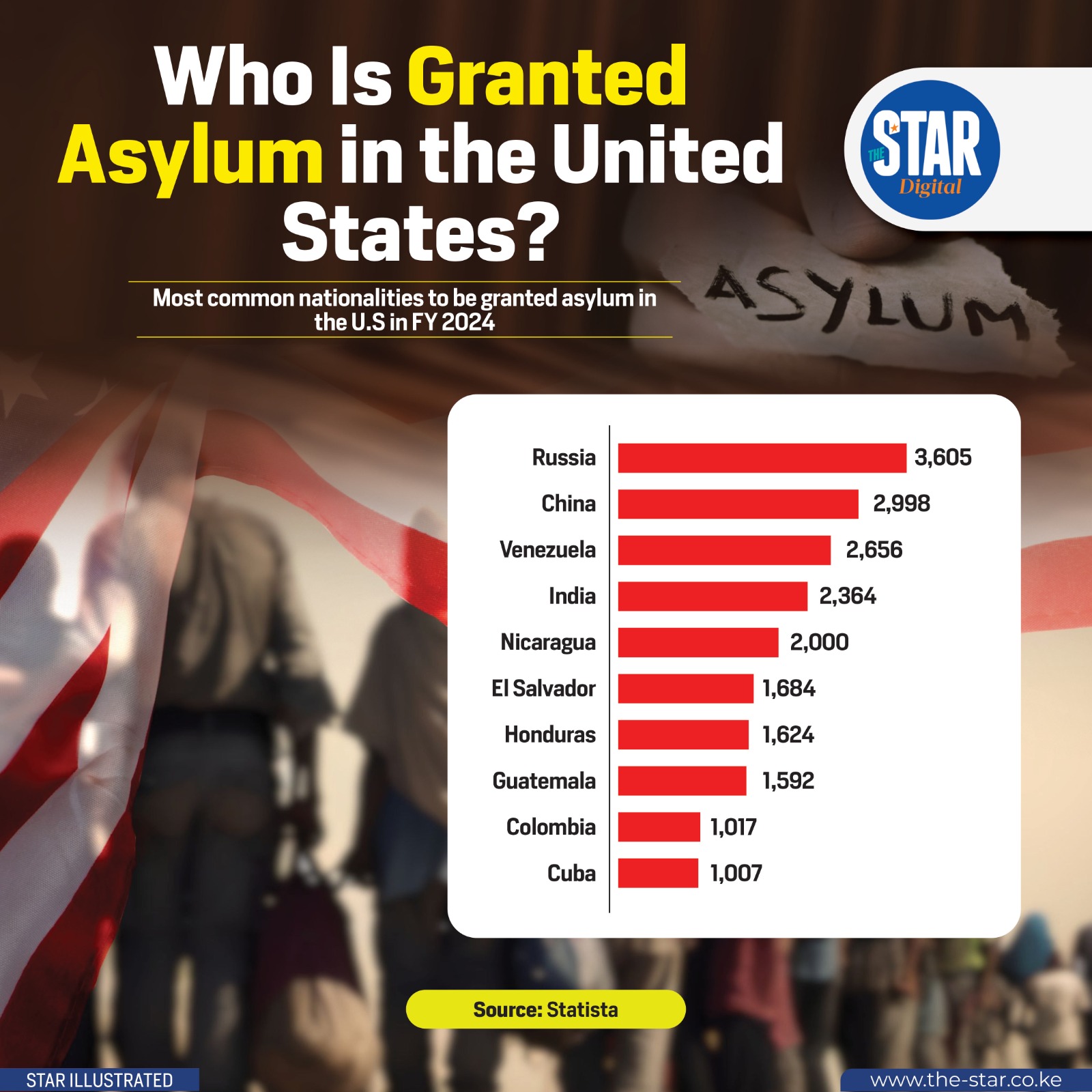
The United States continues to receive thousands of asylum seekers each year, with recent figures highlighting the nationalities most likely to be granted protection.
According to data from Statista for the 2024 fiscal year, individuals from a mix of politically unstable, economically strained and conflict-affected countries made up the largest share of successful asylum applicants.
Russia topped the list, with 3,605 people granted asylum. This reflects the growing number of Russian nationals who have fled political repression, restrictions on civil liberties and the impact of ongoing geopolitical tensions.
China followed closely with 2,998 asylum approvals, a trend linked to concerns over political persecution, religious freedom and human rights violations.
Venezuela ranked third, with 2,656 people granted asylum as the country continues to grapple with economic collapse, insecurity and a prolonged humanitarian crisis.
India and Nicaragua also featured prominently, with 2,364 and 2,000 successful applicants, respectively. For Indians, reasons often include political or religious persecution, while Nicaraguans continue to flee government crackdowns and instability.
El Salvador, Honduras and Guatemala—countries within the Northern Triangle of Central America—also appeared in the top ten. These nations face long-standing challenges including gang violence, insecurity and poverty, all of which drive people to seek refuge in the United States.
The data shows 1,684 Salvadorans, 1,624 Hondurans and 1,592 Guatemalans were granted asylum. Colombia and Cuba completed the list, with just over 1,000 asylum approvals each.
The figures underscore the United States' continued role as a destination for people fleeing persecution and hardship, and highlight the diverse global pressures prompting migration in 2024.