Former Deputy President Rigathi Gachagua’s growing list of political missteps has
triggered fresh unease within the United Opposition, with insiders warning that
his conduct risks fracturing a coalition barely months old.
While
the alliance has been seeking to project unity and present itself as a viable
alternative to President William Ruto ahead of the 2027 polls, it has been
roiled by internal turmoil.
With
the opposition smarting from a major by-elections defeat, Gachagua’s public
outbursts, perceived ethnic leaning, and escalating rivalry with former
Interior Cabinet Secretary Fred Matiang’i have ignited tensions that now
threaten internal cohesion.
For
weeks, Gachagua has maintained an aggressive posture—often in his trademark
combative tone—against Jubilee leaders and particularly against Matiang’i.
He sees the former CS as being used by former President Uhuru Kenyatta to cut down his influence in Mount Kenya.
The
conflict, which is now playing out both in public rallies and across
coordinated social media campaigns, has exposed simmering distrust within the
coalition and is raising questions about the coalition’s strategic
direction.
Gachagua’s
most recent controversy revolves around remarks made on Sunday, where he
claimed to have secured a deal with Kalonzo Musyoka’s Wiper party guaranteeing
his DCP control over almost all political seats in Nairobi.
The
claims—described by many coalition partners as reckless and
unilateral—instantly sparked political shock waves.
“We
have agreed with the Wiper leader … that the governor, senator, women
representative, and 16 out of 17 parliamentary seats in Nairobi will be taken
by DCP,” Gachagua declared at a church service in PCEA Kariobangi North.
He further claimed that out of Nairobi’s 85 MCA seats, 75 had been reserved for
his party.
These
declarations were met with swift rebuke from within the coalition.
Machakos
Deputy Governor Francis Mwangangi termed the remarks “premature and potentially
divisive,” warning that they had the capacity to rupture the delicate political
unity forged only months ago.
“That
would be the most undemocratic way,” Mwangangi said. “As a political leader, you
must think through what you say, where you say it, and to whom. As Wiper NEC,
we are not aware of such a deal."
The
push back highlighted the growing discomfort over what several insiders describe
as Gachagua’s “unilateralism”—a tendency to announce political positions
without broader consultation.
The
Nairobi controversy is unfolding alongside another source of tension:
Gachagua’s sustained attacks on former President Uhuru Kenyatta and
Matiang’i.
The
row intensified after Matiang’i opted to join Jubilee rather than align with
what Gachagua had envisioned as a “homegrown Kisii political formation.”
“I
don’t understand this Jubilee,” Gachagua said last week, visibly frustrated
after a Jubilee candidate withdrew in the Narok Town ward by-election to support
UDA. “Wiper withdrew their candidate to support us … Jubilee, I don’t
understand whether they are in government or opposition.”
He
added, “Sometimes Ruto even says he is working with Uhuru. There are Jubilee
MPs aligned with Ruto. I honestly don’t fully understand whether Jubilee is
with us. But I’m not bothered, we will defeat all of them.”
DCP-affiliated
bloggers and online surrogates have echoed his sentiments, launching aggressive
attacks against Matiang’i and insisting the coalition will never back him for
the presidency.
This
has further deepened suspicion within Jubilee, whose officials now accuse
Gachagua of using the coalition platform to settle personal political scores
and assert dominance in Mount Kenya politics.
Gachagua’s
conduct after the recent by-elections also raised eyebrows.
He
publicly congratulated only candidates from DCP and Wiper, pointedly excluding
the three Nyamira ward winners, areas associated with Matiang’i.
The
omission, viewed as a deliberate slight, angered several opposition leaders who
interpreted it as a sign of political bad faith.
In
Mbeere North, where the coalition lost, Gachagua further disowned the DP
candidate, saying DCP “had no candidate” and insisting he was merely helping.
“Don’t
be bothered by what people say,” he said. “DCP had no candidate in Mbeere … our
candidates were in Kariobangi North, Narok Town, and Kisa East.”
To
many coalition partners, these comments reflected an emerging pattern:
celebrating successes tied to his party while distancing himself from failures
that require collective accountability.
The
United Opposition coalition is made up of several parties, including Kalonzo
Musyoka’s Wiper, Eugene Wamalwa’s DAP-K, Martha Karua’s PLP, Justin Muturi’s
DP, and Uhuru Kenyatta’s Jubilee.
As
such, unity depends heavily on careful balance and inclusive decision-making.
Senior
insiders say Gachagua’s statements on Nairobi zoning and the Matiang’i rivalry
have unsettled the other partners, with some warning of a creeping perception
that the coalition is being hijacked by ethnic and personal interests.
Jubilee deputy organising secretary Pauline Njoroge cautioned against what she described
as “tribal boxing,” warning it could be politically disastrous.
“If
we insist on approaching 2027 with a single-tribe mindset simply because we
desire a Kikuyu at City Hall, we will be handing Ruto an easy through-pass,”
Njoroge said. “Winning Nairobi demands something far bigger, consultation,
sober reading of the city, and a coalition built not on tribes but on ideas.”
But not
everyone faulted Gachagua. Makueni Senator Dan Maanzo defended the embattled
former DP, saying his remarks had been “blown out of context.”
Maanzo said Gachagua’s statement simply underscored that Nairobi is now
politically leaning towards the opposition, not that a secret deal existed.
“There
is no secret deal between Wiper and DCP,” he insisted. “The United Opposition
is bigger than those two and is supported by all regions.”
He
added that any deal must involve all parties, describing the controversy as part
of the natural bargaining in politics.
Political
analysts argue that Gachagua’s conduct is increasingly becoming a liability to
the coalition.
University
don Prof Gitile Naituli described his remarks as “careless and unnecessary.”
“Gachagua
needs to be told to avoid language that annoys Kenyans,” Naituli said. “He is
not strategic; he should speak only when necessary.”
Kalonzo
himself has publicly distanced Wiper from the alleged Nairobi deal, dismissing
the claims as propaganda designed to sow division.
“Stop
this propaganda that Wiper has left all the seats in Nairobi for DCP,” he said
at a thanksgiving ceremony in Machakos. “They have to try everything to create
tension between us.”
Kalonzo
reiterated that the opposition remains united and focused on its mission to
take power from President Ruto in 2027.
The
unrest triggered by Gachagua comes at a critical moment as the United
Opposition seeks to consolidate its structures and project unity after a string
of by-election losses.
Analysts
warn that internal rifts, if not addressed, will make it impossible for a consensus
to get a single presidential candidate.
INSTANT ANALYSIS
Apart from Wiper and DCP, the United Opposition team also has Eugene Wamalwa’s
DAPK, Martha Karua’s PLP, Justin Muturi’s Democratic Party and Uhuru
Kenyatta’s Jubilee, among others.
Political
analysts argue that Gachagua’s conduct is increasingly becoming a liability to
the coalition.

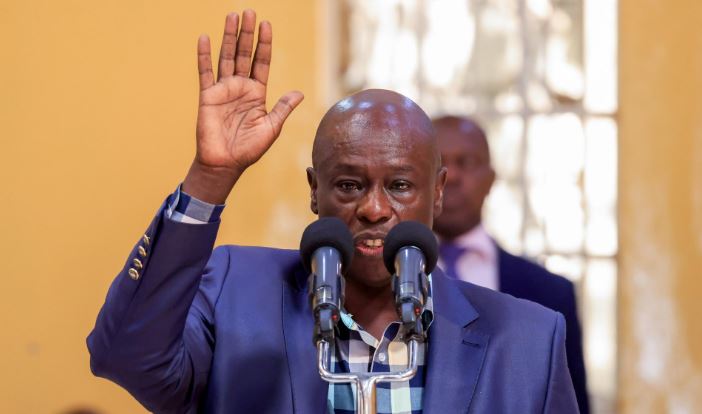
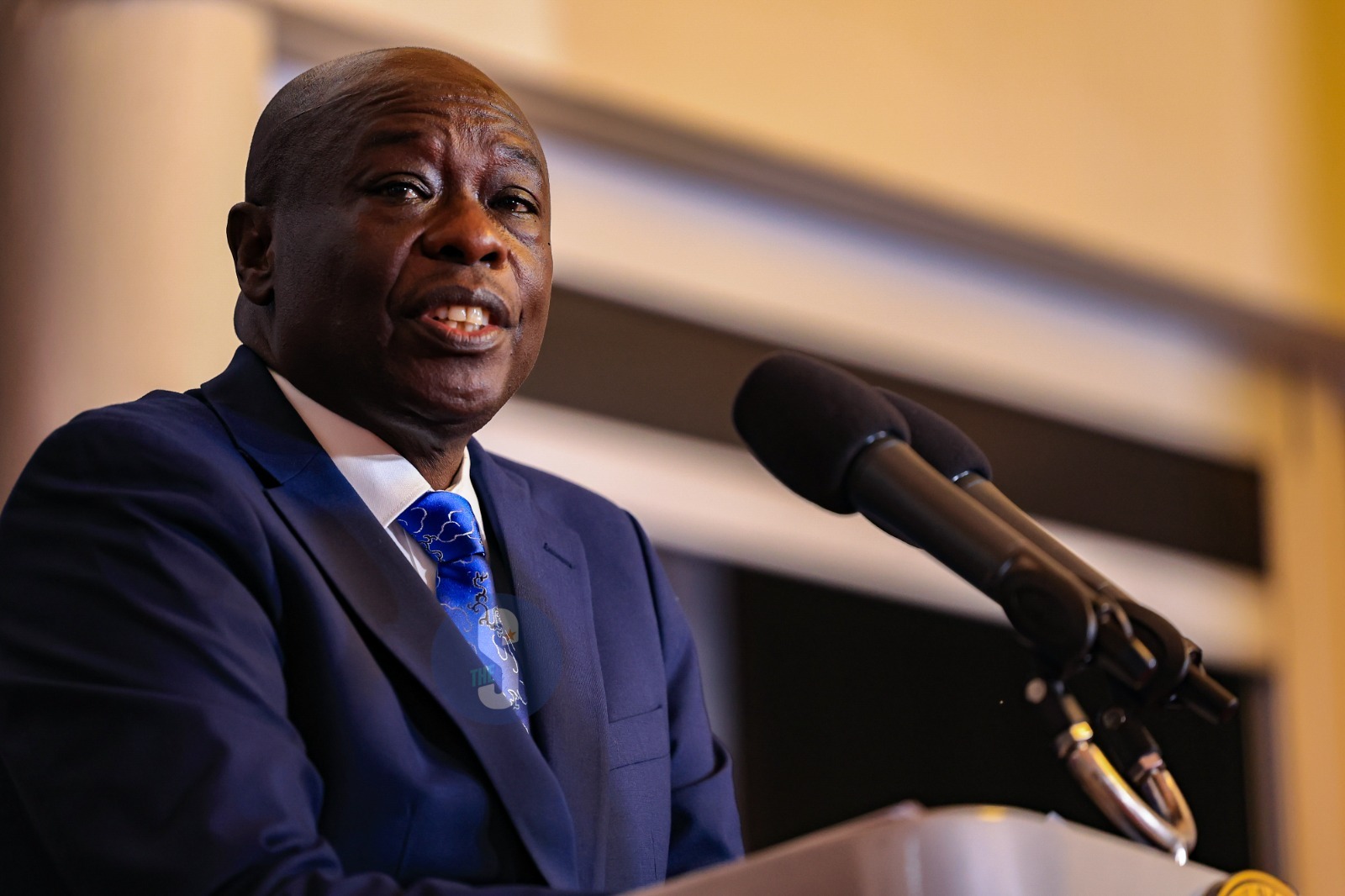 Former Deputy President Rigathi Gachagua/FILE