


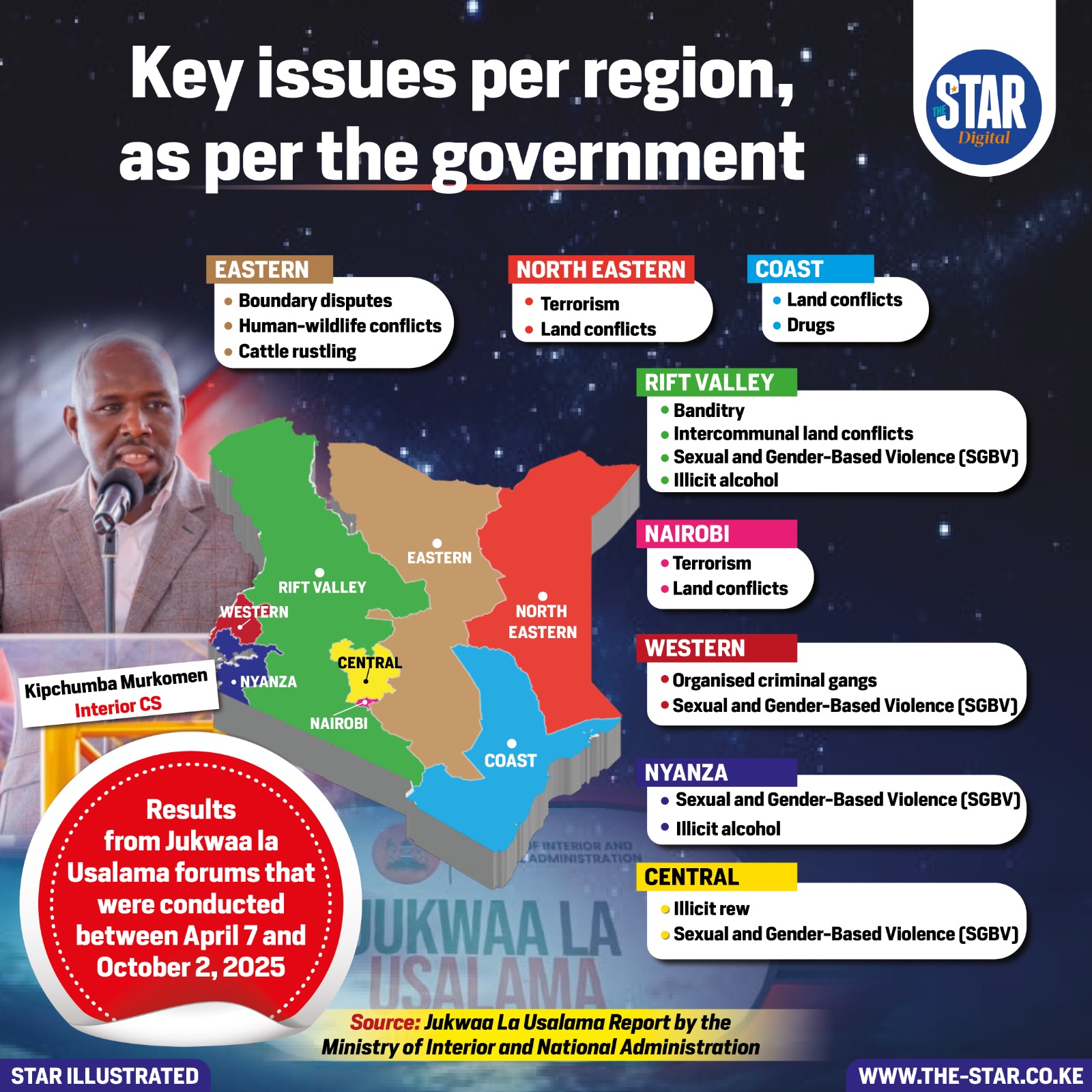
The government has outlined region-specific security and social challenges following nationwide consultations conducted through the Jukwaa la Usalama forums held between April 7 and October 2, 2025.
The findings, presented by Interior Cabinet Secretary Kipchumba Murkomen, reveal that different parts of the country continue to grapple with unique threats driven by geography, culture, and historical conflict patterns.
In the Eastern region, boundary disputes, human-wildlife conflicts, and persistent cattle rustling remain the top concerns. These issues have long strained intercommunal relations, especially in pastoralist zones.
North Eastern, on the other hand, continues to face the dual threats of terrorism and recurrent land conflicts, challenges that have shaped its security landscape for over a decade.
The Coast region struggles with land disputes, a long-standing source of tension, alongside drug abuse, which authorities say is fuelling crime among the youth.
In the Rift Valley, banditry remains a key issue, compounded by intercommunal land clashes, illicit alcohol consumption, and rising cases of Sexual and Gender-Based Violence (SGBV).
Nairobi faces terrorism-related threats and land conflicts, particularly in rapidly growing informal settlements.
Western Kenya battles organised criminal gangs and increasing cases of SGBV, while Nyanza is dealing with illicit alcohol and widespread SGBV. Central Kenya faces similar trends, reporting illicit brew challenges and SGBV incidents as major concerns.
The report underscores the need for region-specific interventions and a coordinated national approach, signalling the government’s readiness to revise security strategies in line with emerging realities.