The British government has fought
assertions by MPs that its military training unit in Kenya, Batuk, is out of
control.
In a statement, London pushed back
against what it sees as a one-sided parliamentary report that alleged a pattern
of atrocities and misconduct.
The response followed the recent
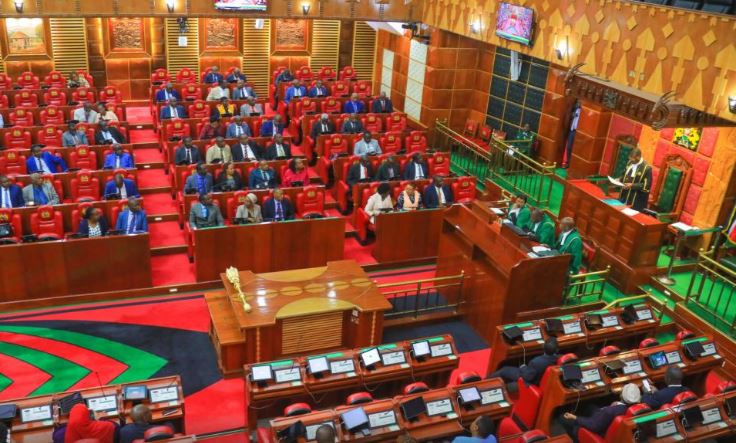
publication of a hard-hitting inquiry by the National Assembly Defence,
Intelligence, and Foreign Relations Committee, led by the Belgut MP Nelson
Koech.
The report documented decades of
grievances against the British Army Training Unit Kenya, citing unresolved
deaths, sexual violence, environmental damage, and economic exploitation.
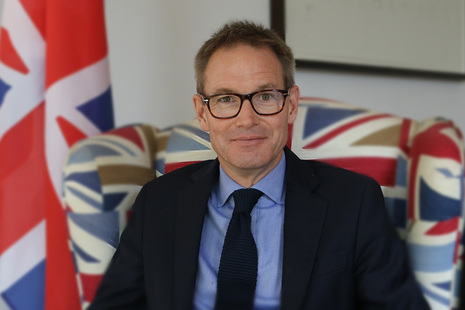
But the British High Commission
expressed disappointment that its own comprehensive written submission to the
inquiry was effectively sidelined.
"The UK notes the publication
of the National Assembly Defence, Intelligence, and Foreign Relations
Committee’s inquiry," a spokesperson said.
"In the spirit of cooperation
with the inquiry, the UK submitted a statement responding substantively to the
issues highlighted and outlining the actions taken to address the concerns
raised.”
“While we deeply regret the
challenges that have arisen in relation to our defence presence in Kenya, we
are disappointed that our submission to the committee was not incorporated into
the report's conclusions,” the spokesperson said.
For Britain, it is ready to
investigate those under its jurisdiction where new allegations have come to
light in the committee’s report once evidence is provided.
“The UK highly values its defence
relationship with Kenya, which delivers a broad programme of cooperation in
training, education, and capability development to counter shared security
threats together.”
The UK's 12-page written statement,
obtained by the Star, gives a point-by-point rebuttal to many of the
allegations.
It denies the existence of systemic
corruption or collusion, stating, "UK MOD is not aware of any evidence to
support any allegation of collusion with security forces to suppress or dismiss
complaints or intimidate, bribe, or coerce victims into silence."
On financial misconduct, it notes
that in the last four years, only one alleged fraud case has been raised at the
bilateral oversight committee level.
Regarding the high-profile case of
Agnes Wanjiru, whose 2012 murder has been linked to a British soldier, the UK
statement affirms its commitment to justice but underscores the legal
framework.
"As this crime is alleged to
have been committed while not in the course of official duties, Kenya holds
jurisdiction for this case in line with the DCA," it says, adding that UK
authorities have provided support to the Kenyan investigation "whenever
requested."
On the 2012 shooting of Tilam
Leresh, deemed to have occurred during official duty, the UK states the case
was investigated by British Service Police and twice reviewed by prosecutors
who found insufficient evidence to charge the soldier, citing lawful
self-defence.
“The UK is always prepared to
consider new evidence if it is presented to us,” the submission reads.
The UK has also defended Batuk's
environmental and safety record, citing annual audits by authorities like the
National Environmental Management Authority (Nema).
It references a 2024-25 audit
concluding, "Batuk has consistently enhanced its Environmental Health and
Safety management since 2015."
On the use of weapons containing
white phosphorus, which is a point of major controversy, the UK asserted that
such munitions have not been used since 2022.
It held that there is an ongoing
clearance operation to ensure no residual impact.
The UK's defence also addresses
allegations of sexual exploitation and abuse, citing the introduction of a Zero
Tolerance policy in July 2022, which it claims led to a ‘significant reduction
in incidents’.
The statement cites a 2025 British
Army Service Inquiry, which found transactional sex was still happening at a
‘low to moderate level’.
It said that the risk was being
managed through curfews, movement restrictions, and harsh sanctions.
"There is absolutely no place
for sexual exploitation and abuse by people in the British Army. It is at
complete odds with what it means to be a British soldier," the document says.
On the fatherless children, Britain
says it cannot open investigations unless there is an official report by the police
or the Ministry of Defence.
“Where there is no criminal
accusation of unlawful activity against UK service personnel, and no specific
concerns have been raised by local police, then the UK MOD would not
investigate.”
Economically, the UK frames Batuk as
a major benefactor, spending an estimated £50 million (Sh8.5 billion) annually
in Nanyuki and Nairobi and directly employing over 600 permanent and up to
3,000 temporary Kenyan staff.
It details extensive community
support through 72 projects last year in water, health, education and sports,
including building boreholes, refurbishing schools, and supporting medical
outreach that ‘saved 10 lives and the eyesight of 64 people’.
INSTANT ANALYSIS
The ensuing clash of narratives
sets the stage for a tense diplomatic dialogue. While Kenyan MPs demand
accountability for historical grievances, Britain is insisting its
contributions and recent reforms be recognised. It has framed the relationship
as mutually beneficial, rules-based, and essential for regional security. The
path forward likely depends on whether both sides can bridge the gap between
the quest for justice and the protocols of bilateral defence agreements.



![[PHOTOS] The new Ngong –Naivasha Road viaduct](https://cdn.radioafrica.digital/image/2026/06/64d4f771-4432-4aee-ba3c-2f304c4436ec.jpg)







![[PHOTOS] 'Mr Speaker Sir' Gen Z protester in court](https://cdn.radioafrica.digital/image/2026/06/b3e62d8e-25c3-4780-90f9-4eb48b1ce8a7.jpg)