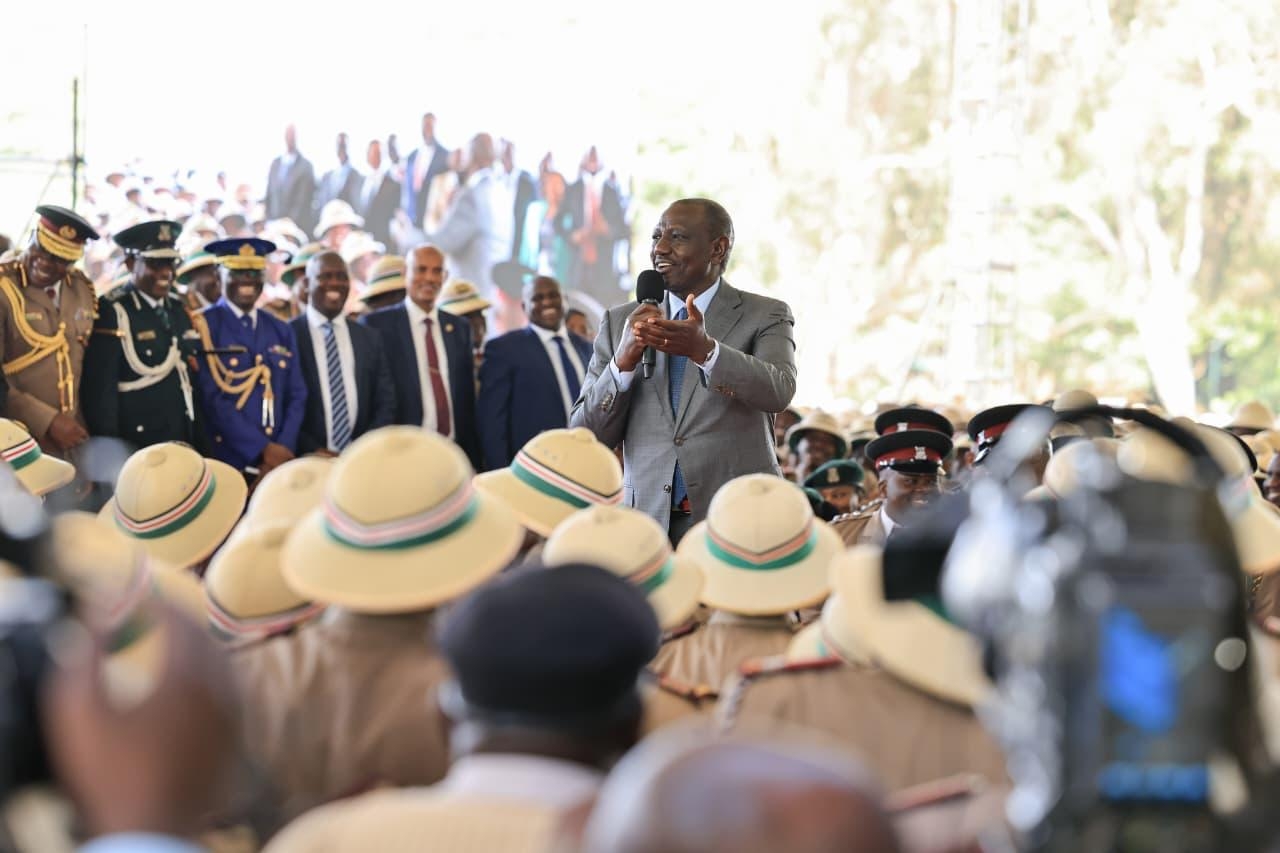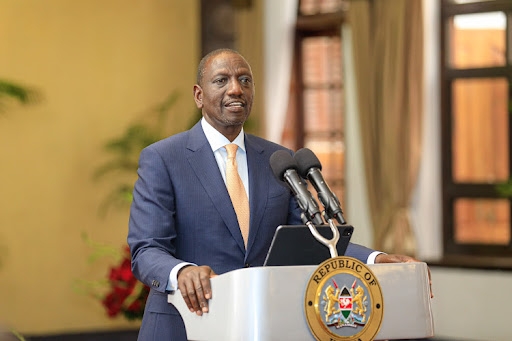


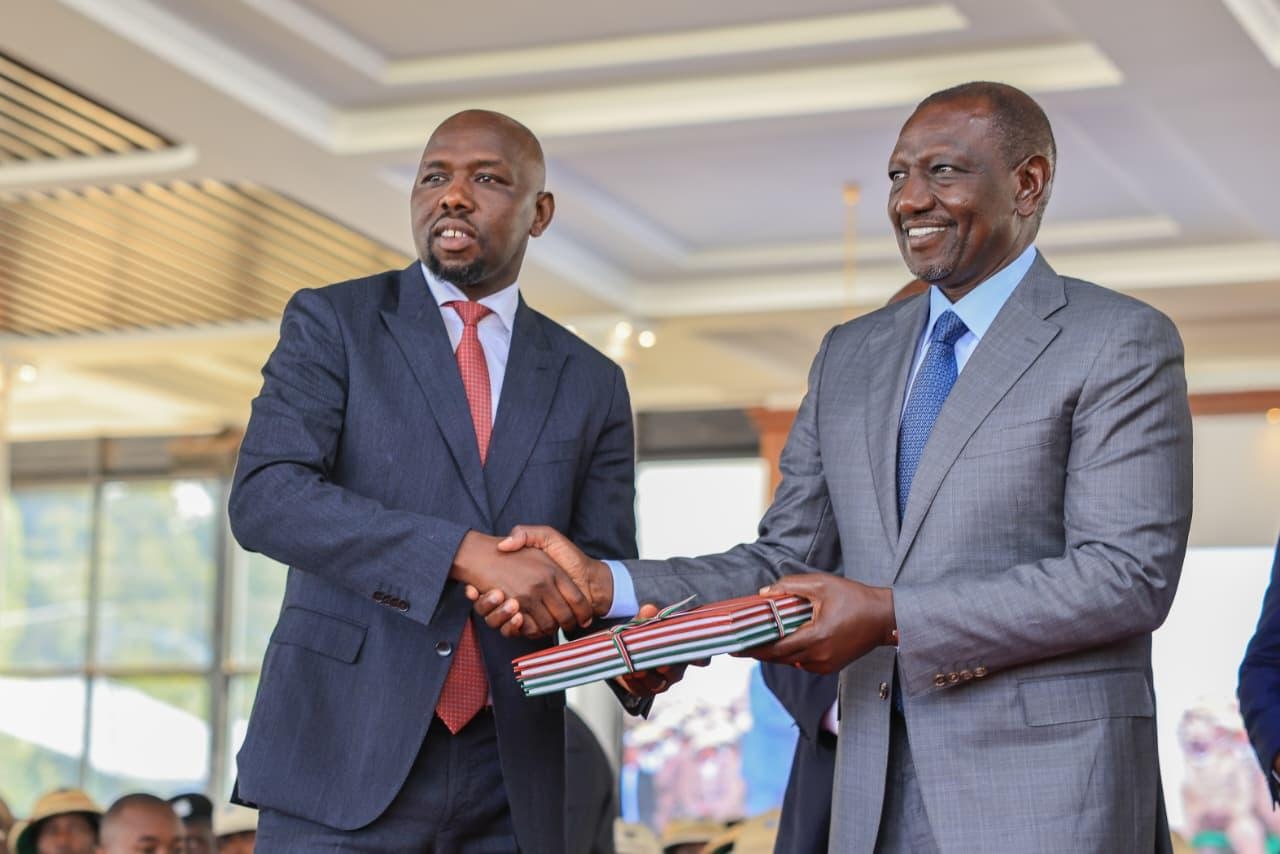
President William Ruto on Tuesday issued directives touching on policing, national administration, service delivery and welfare of security officers, following the release of the Jukwaa la Usalama Report at State House, Nairobi.
The report, compiled after a seven-month tour of all 47 counties by Interior Cabinet Secretary Kipchumba Murkomen, captured security challenges, gaps in service delivery and persistent welfare concerns raised by officers and local communities.
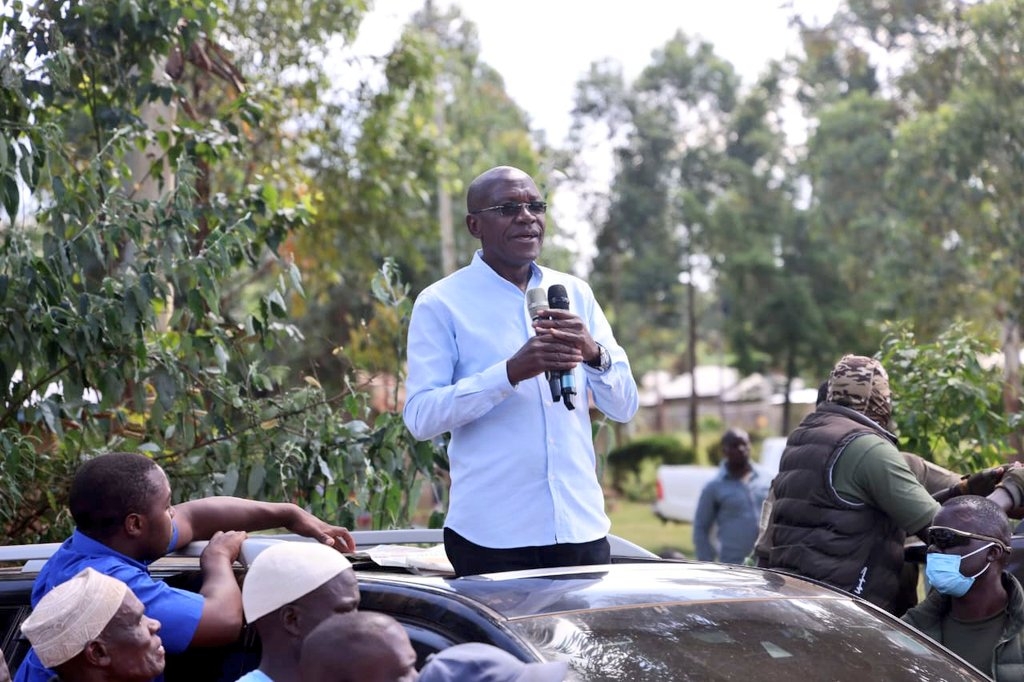
Murkomen said the President had directed him to listen to the concerns of Kenyans, and those serving them at the community level across the country and ensure officers understood government programmes to improve service delivery.
With the report now completed, Ruto announced a series of directives aimed at overhauling security management, modernising operations and improving working conditions for police, NGAO officers and prison warders.
The President’s directives include an aggressive restructuring of the Anti-Narcotics Unit, with officer numbers rising from 160 to 500 and the establishment of 34 offices nationwide.
He will also convene a meeting with governors to streamline liquor licensing, while each county will be required to establish at least one rehabilitation centre.
Ruto further ordered the digitisation of police, NPR and NGAO operations, including human resource systems for promotions, training and transfers.
The President said that every chief will receive a government-issued tablet within six months to ease digital reporting.
In one of the most ambitious infrastructure plans yet, the government will construct 900 police stations in two years, delivered jointly by the Interior Ministry, the National Government–CDF and the Affordable Housing Programme.
The President also approved the operationalisation of 24 subcounties, 88 divisions, 318 locations and 675 sub-locations within a year, expanding administrative presence across the country.
To address housing needs, Ruto directed the construction of 17,500 housing units for police and prison officers within the same period.
On promotions and welfare, the President ordered that all Chiefs and Assistant Chiefs trained this year be promoted by one rank effective June 1, 2026.
All police constables aged 50 and above will also be promoted, with the Inspector General expected to release guidelines for other ranks.
The directives also touch on transfer policies stating that no officer will be transferred within one year of a previous transfer, and no officer will serve in an operational area for more than three years.
The directive further noted that officers above 50 are to be posted closer to home.
To enhance mobility, the government will procure 3,000 motor vehicles, prioritising electric vehicles to cut fuel costs and reduce emissions.
Ruto also directed that the number of civil registration centres be increased from 174 to 400 within six months, ensuring every Sub-County has at least one registry.
In correctional services, the government will develop a Correctional Services Bill and Probation Services Bill within four months, and all inmates will be registered in the Social Health Authority (SHA).
The President further approved the formal recognition of Village Administrative Elders, who will receive a monthly stipend of Sh3,000 starting June 1, 2026.
The National Government Administration Police Unit (NGAPU) will be operationalised with 1,860 officers, with numbers increasing progressively.
Murkomen welcomed the directives, saying they reflect the President’s commitment to resourcing and implementing reforms required to boost security and service delivery.
“Our utmost appreciation to the President for supporting the process right from the beginning and for his commitment to resource the far-reaching reforms needed to boost security across the country and revamp service delivery to Kenyans,” he said.