
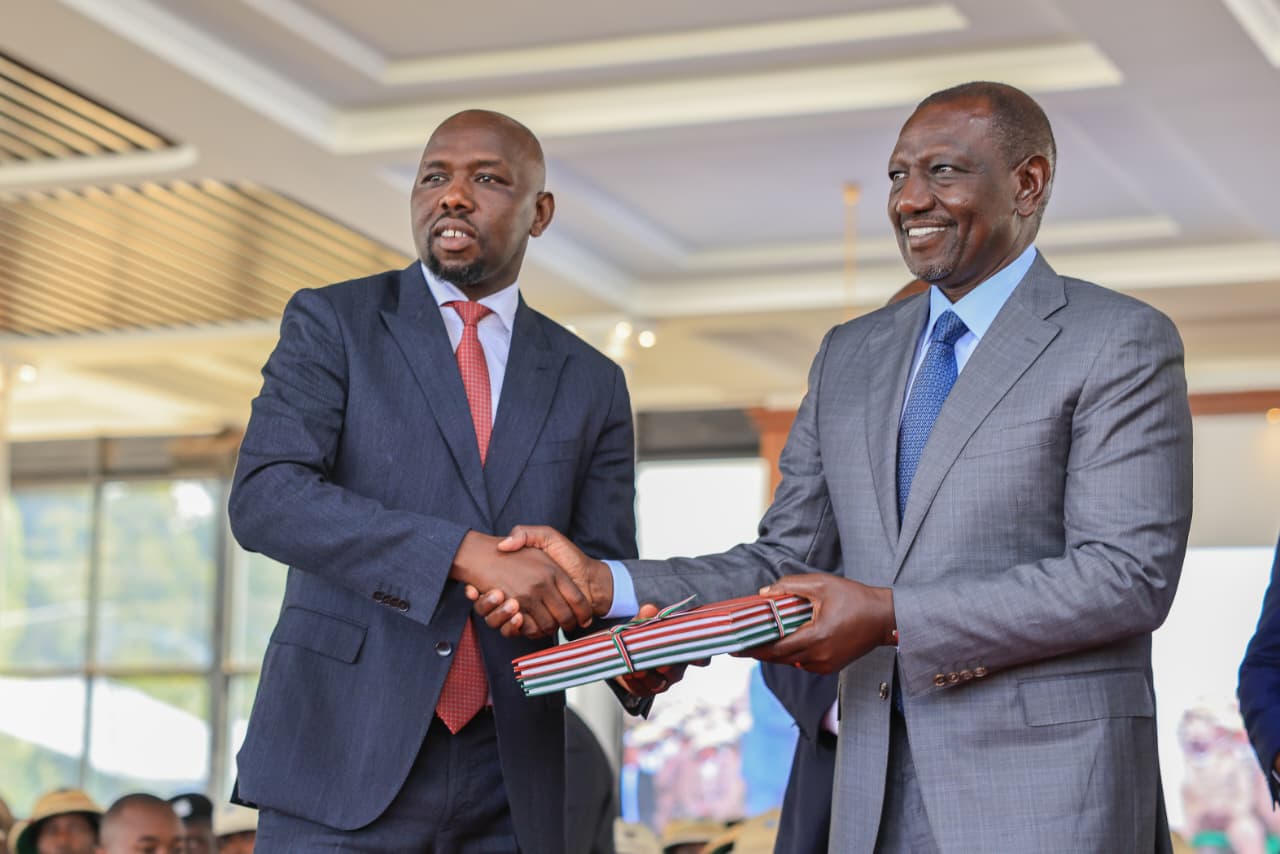
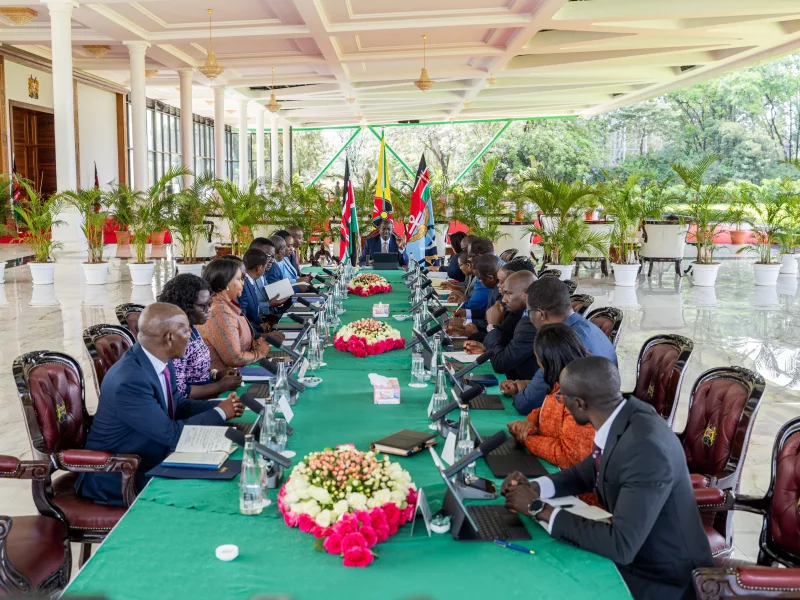
 President William receives the Jukwaa la Usalama from CS Kipchumba Murkomen at State House, Nairobi on December 2, 2025./PCS
Sexual and Gender-Based Violence has reached alarming levels across multiple counties, with new evidence showing rising attacks on minors, entrenched harmful cultural practices, and collapsing justice pathways, according to the latest Jukwaa la Usalama report.
The findings come at a time when countries around the world are marking the 16 Days of Activism Against Gender-Based Violence, a global campaign calling for stronger prevention and protection measures.
According to the report submitted to President William Ruto on Tuesday, it paints a grim picture of a nationwide emergency, highlighting defilement, rape, child marriage, female genital mutilation, domestic violence, and even killings as increasingly common across the Western, Nyanza, Coast, Rift Valley, and Central regions.
“This is no longer a hidden problem SGBV is tearing families apart, disrupting education, and trapping communities in cycles of poverty and trauma,” the report states.
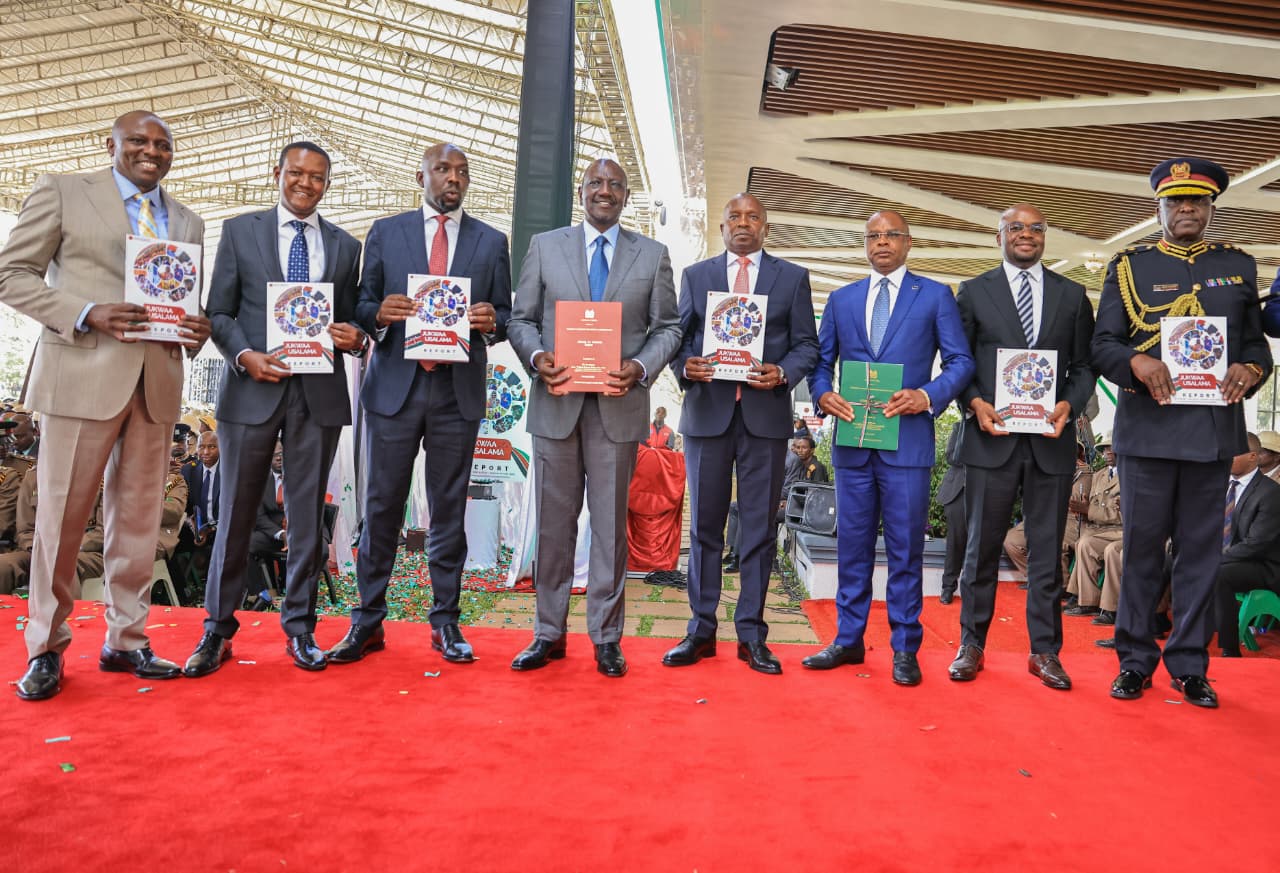 Front Left to Right: National Assembly Majority Leader Kimani Ichung'wah, Labour CS Alfred Mutua, Interior CS Kipchumba Murkomen, President William Ruto, DP Kithure Kindiki, Senate Speaker Amason Kingi, Interior PS Raymond Omolloa and Police IG Douglas Kanja during the release of the Jukwaa la usalama report at State House, Nairobi on December 2, 2025./PCS
In Trans Nzoia, local administrators warned that defilement is now among the most alarming crimes, noting that chiefs are reporting cases almost daily and most involve children.
They appealed for a government chemist laboratory in Kitale to speed up the processing of forensic evidence.
Counties such as Kisii, Nyamira, Kilifi, Taita Taveta, Narok, Vihiga, Bomet, and Kajiado emerged as some of the areas most affected.
Between June and August 2025 alone, Bungoma recorded 48 cases.
In Kisii, leaders expressed concern that child sexual abuse is increasingly hidden through family negotiations.
“Cases are being concealed through ‘amicable settlements’ instead of going through the justice system,” women’s leaders told the forum.
In Kajiado, early and forced marriages and sexual exploitation near livestock markets were flagged as rising threats.
Chiefs urged the government to establish rescue shelters, saying, “Cultural norms and poverty continue to expose our girls. We need safe spaces and stronger engagement with elders.”
The situation is similarly dire in Kilifi and Kwale, where defilement and early pregnancies among schoolgirls are rising, especially in rural and coastal areas.
Security committees warned that weak deterrence has emboldened repeat offenders.
In parts of Nyanza, exploitative “fish-for-sex” exchanges persist in areas such as Mageta, Rigiti, and Sori, while Siaya continues to record cases tied to deeply rooted cultural practices.
Domestic violence is also surging in urban and peri-urban counties, including Kisumu, Kiambu, Machakos, and Makueni, driven by economic stress, alcoholism, and infidelity.
Police and administrators reported increases in spousal assault, emotional abuse, and child neglect, with women and children being the primary victims.
In northeastern counties, violence is often perpetrated by relatives, teachers, administrators and other authority figures.
Women who participated in the forums complained that the traditional maslaha system is being misused to settle SGBV cases outside the legal process.
“When SGBV is resolved outside the courts, victims walk away with no support while perpetrators continue unchecked,” they said.
Across the country, cultural interference and non-judicial settlements continue to hinder justice.
Elders in some communities still mediate defilement cases through compensation, a practice the report says is collapsing cases before they reach court.
Systemic weaknesses also remain a major challenge, including a lack of forensic capacity, delays in government chemist results, insufficient gender desks and female officers, inadequate psychosocial support, and limited safe houses for survivors.
Poor coordination between police, medical officers, and prosecutors further contributes to cases stalling or collapsing.
Community reports highlighted hotspots, including illicit brew dens, unregulated entertainment venues, and beach tourism zones where young girls are exposed to sexual exploitation disguised as employment or gifts.
Along the coast, chiefs said tourism and beach trade continue to expose vulnerable girls to predatory behaviour.
The report also warns that the “triple threat” of teenage pregnancy, new HIV infections, and SGBV is increasingly affecting young people.
In Siaya, Kisumu, Homa Bay, Migori, Kilifi, and other parts of Nyanza and Western Kenya, disco matangas, unsupervised night gatherings during funerals, were identified as major drivers of exploitation and rising teenage pregnancies.
“These events have become hotspots for SGBV,” community members told the forum.
Despite the grim findings, the report notes some community-led progress.
Kilifi and Makueni have formed Girls Rescue Committees; Kisii has operationalized gender desks and partnered with churches; elders in Turkana and Samburu have publicly denounced early marriages; and Taita Taveta has launched joint community dialogues to combat defilement and early pregnancies.
The report concludes with a warning that without urgent security reforms and a whole-of-society approach, SGBV will continue to devastate communities and destroy futures.








![[PHOTOS] Linda Mwananchi takes Trans Nzoia by storm](https://cdn.radioafrica.digital/image/2026/07/0d132395-ad4b-4671-867e-880c9f8144f5.webp)