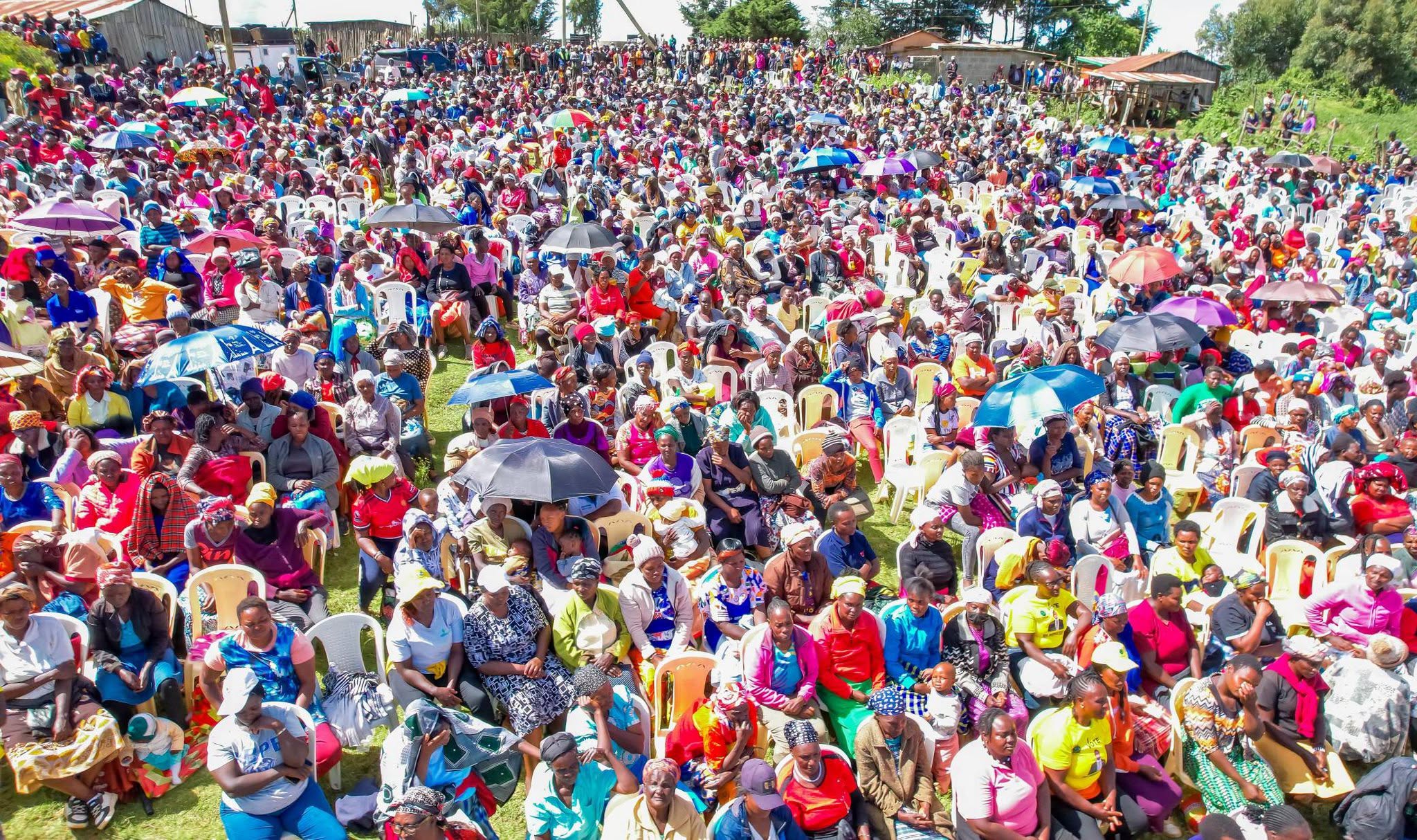
How the headscarf became a ‘symbol of pride’ for women
It is a timeless accessory in the customs and dress of African women
by The Star
Audio By Vocalize
Awa Seck (in a yellow headscarf) with participants during a workshop at the Dakar's Biennale of art in June
An exhibit at this year's Biennale of Contemporary African Art is titled "GifaarT". It's an ode to the headscarf (GifaarT means headscarf in Senegal's Balante language) and examines the many uses of the timeless accessory in the customs and dress of African women.
Just how important is the headscarf to African dress? To answer this, consider that the finale of the month-long 13th edition of the Biennale of Contemporary African Art, held in Dakar, saw the spotlight switch to a very colourful, very African and, it would appear, timeless, "personality". Hosted by Maguette Guèye and Bineta Seck, the special show was branded ‘Gifaart' — 'headscarf' in Senegal's Balante language.
The show revisited the traditional dress of several African ethnic groups, including the Lebou, Signares, Balantes, Bédiks, Coniaguis and Bassaris, with the headscarf the star of the show. The event, which took place at the newly opened Federation of Wallonia-Brussels, featured the screening of a documentary film by Oumy Ndour — filmmaker, journalist and co-founder of Ladies Club, an online community and networking platform for women — on this wearable's heritage.
Awa Seck, a Senegalese designer based in Belgium, founder of the brand 'Les Moussors d’Awa (Awa’s Moussors)' and a famous ambassador of the 'Moussor (headscarf in Wolof)', also took the stage.
Seck came to share her passion and experience with an audience keen to hear original ways to upgrade their colourful arsenal.
"It is an opportunity to give them tips, to let their creativity shine, and to gain more and more followers through teaching the art of tying scarves and designing ready-made scarves to save up on time," Seck said.
Surrounded by a wide range of fabrics with shimmering colours, Seck carefully took the time to adorn several guests, aesthetic value combining with education in the sharing of headscarf secrets.
"I live in Brussels and I am delighted to have been invited to the Dakar Biennial by the Wallonia-Brussels delegation, which knows the scope of my work. The scarf is a whole art,” she said.
Awa Seck ties a headscarf on a lady's head during a workshop at the Dakar's Biennale of art in June
It is improvisation, an ephemeral work of art. It is good that the scarf has volumes, shapes, flights and that it encompasses the face with refinement
WARDROBE ESSENTIAL
Born in Diourbel, a city in the centre of Senegal, 160km from Dakar, Seck had an atypical upbringing, one that did not necessarily predestine her to fashion design.
After graduating from the University of Saint-Louis, she continued her studies in Bordeaux and obtained two master's degrees in human resources management, labour law and social security.
After her marriage, she moved to Brussels, where she worked in customer relations before returning to Senegal in 2012.
Back home, she obtained a new master's, this time in marketing and communication.
However, Seck had always enjoyed sewing and believes that intellectual pursuit, art and craft can be brought together in the considered design of traditionally influenced headscarves.
"I am a lawyer basically; I am specialised in labour law, I worked in human resources, customer relations, I worked in marketing for years, which helps me in my work now," Seck said.
"When people ask me what I do for a living and I answer 'scarves', they are intrigued. But with rigour, attention to detail and good communication, we can move forward."
In many parts of West Africa, the headscarf is part of the non-negotiable outfit of women attending important occasions, be it weddings, funerals or other festivities. Seck switched her career to concentrate on scarves in 2016.
“I started in 2016 with tutorials broadcast on YouTube. This allowed me to immortalise the models and allow others to learn at home. One thing led to another. In 2017, I organised my first workshop, where women paid to come and learn to tie the scarf,” she said.
She got the chance to go international two years later.
"In 2018, for family motives, I moved to Belgium. There I opened my store, where I make ready-to-wear scarves. European women, African women, Asian women buy them, and I have established collaborations with private individuals or companies," the designer said.
“Contrary to what we may think, not all Senegalese women can tie the scarf or alternate between the numerous ways of tying it."
While Seck often travels the globe to promote her work (a recent trip included visits to pop-up stores in New York, Atlanta and Boston), among her customers is Senegal-based TV host Sokhna Mbackè, who often wears an imposing scarf during her appearances
Mbackè believes this accessory enhances the woman's hairstyle and gives her confidence and boldness.
"The scarf is an integral part of my identity. I like to wear it with traditional outfits. The more imposing it is, the more satisfied I am. Sometimes I tie scarves 10 meters long, and I am very comfortable wearing them," she said.
Senagalese women in headscarves during the workshop
Radiant, visible from afar, ebony black and large-sized, Mbackè has become the local muse of the scarf. Like the famous Senegalese fashion designer, Diouma Diakhaté, who first immortalised the headscarf, Mbackè believes it is necessary to preserve this heritage.
For designer Khady Diop, tying the scarf also gives free rein to inspiration.
"It is improvisation, an ephemeral work of art. It is good that the scarf has volumes, shapes, flights and that it encompasses the face with refinement," she said.
Seck's goal is to perpetuate the wearing of the scarf beyond a simple fashion effect, especially by working women of African descent everywhere.
"Our heritage and culture fit with everything, and we must reclaim them. The idea is that women, regardless of their age, wear it relaxedly with an openness to the world. That's why I also make less voluminous scarves that can be worn daily and that go with traditional and western outfits,” she said.
“It's a fashion element that has come back to the forefront in the last few years, but you must try to keep it timeless. Now, depending on the occasion, I give ways to wear them, advice to women to harmonise their clothing style, guide them and tips so that in everyday life, these women can wear scarves."
Melanie Goudiaby, curator of the GifaarT exhibition, said, "Awa Seck, during her workshops, highlights very practical ways to wear the scarf, with variations in ready-to-wear because women today do not have much time."
Pascal Montoisy, the general delegate of Walonnie Brussels in Senegal, said, “We wanted to have a very visual exhibition. The headscarf is an accessory that has been used since the beginning of time."
Help us continue bringing you unbiased news, in-depth investigations, and diverse perspectives. Your subscription keeps our mission alive and empowers us to provide high-quality, trustworthy journalism. Join us today to make a difference!