Three continents, six hosts: Inside the historic 2030 World Cup
The 2030 edition will break new ground by spreading across three continents; Europe, Africa and South America.
by Tony Mballa
Audio By Vocalize
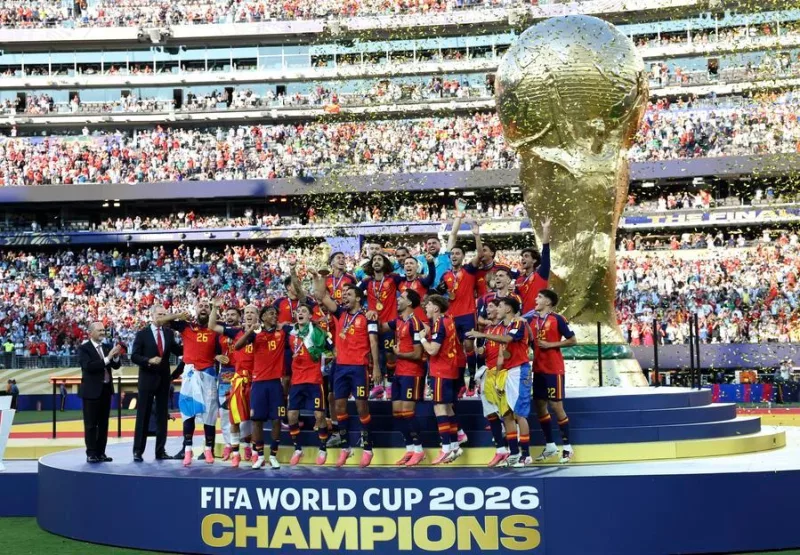
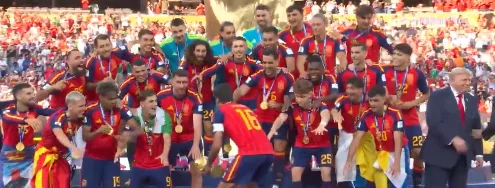
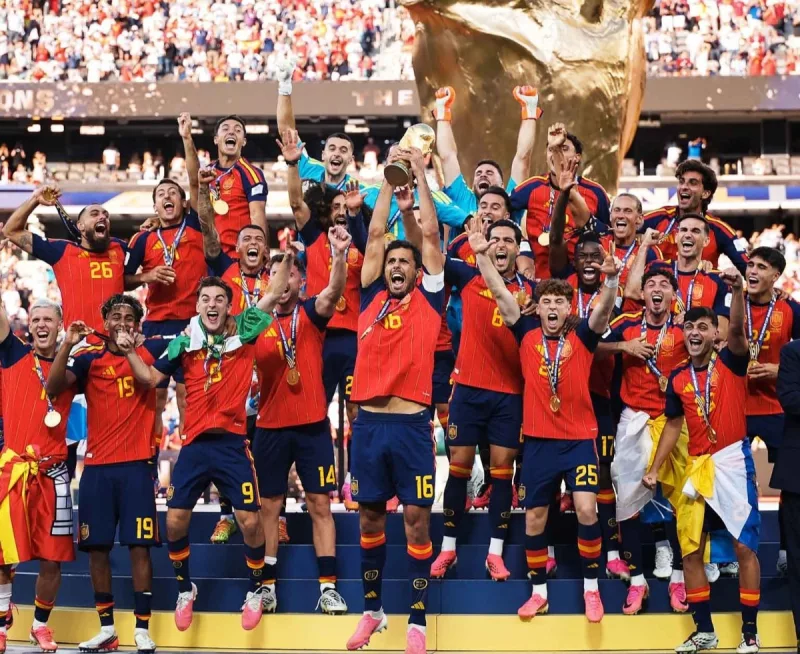
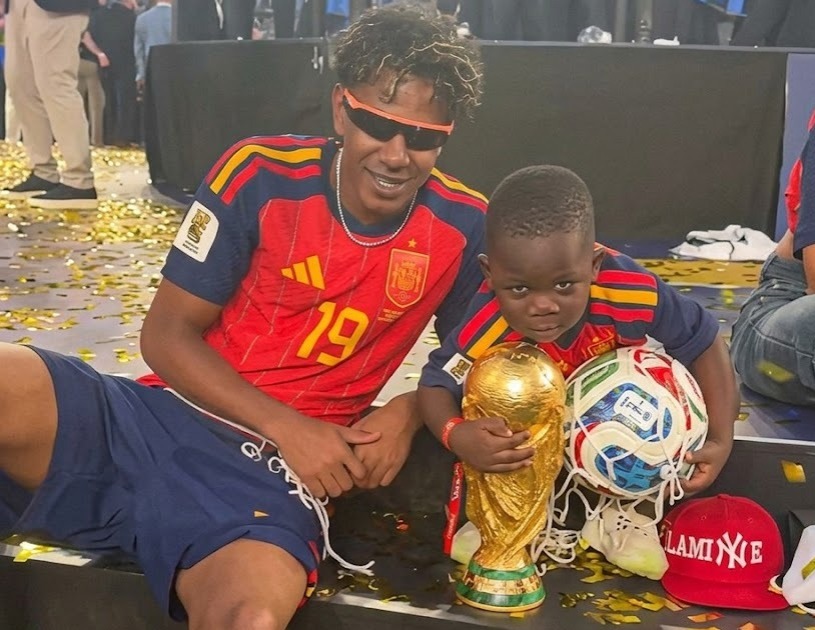
Spain players celebrate after winning the 2026 FIFA World Cup final against Argentina at the New York New Jersey Stadium, United States, July 19, 2026. (Xinhua/Li Ming)
The world’s biggest football show is preparing for its most ambitious chapter yet as the 2030 FIFA World Cup promises a historic celebration of a century of passion, rivalry and unforgettable moments.
Marking 100 years since the inaugural tournament in Uruguay, the centenary edition will break new ground by spreading across three continents — Europe, Africa and South America — in a first-of-its-kind global football festival.
Spain, Portugal and Morocco will serve as the main hosts, while Uruguay, Argentina and Paraguay have been handed a special role in opening the tournament as a tribute to the origins of the World Cup.
The tournament will run for 44 days, beginning on June 8, 2030, in South America before shifting to the main host nations. The final will be played on July 21, bringing down the curtain on what is expected to be one of the most watched sporting events in history.
Uruguay will take centre stage when the centenary celebrations begin at the historic Estadio Centenario in Montevideo — the stadium that hosted the first World Cup final in 1930.
The iconic venue, regarded as one of football’s sacred grounds, will undergo major renovations ahead of the tournament while maintaining the memories and heritage that have made it a global landmark.
Argentina will also play a central role through Buenos Aires’ Estadio Monumental, home of River Plate, which is being expanded beyond the 100,000-seat mark.
Paraguay’s involvement completes South America’s historic trio, with Asunción included in recognition of its importance as the home of CONMEBOL, the continent’s football governing body.
Attention will then turn to Morocco, which is preparing to showcase Africa’s growing influence on the world stage.
The North African nation will host matches in six cities, led by the spectacular Grand Stade Hassan II in Casablanca.
The proposed 115,000-capacity stadium is set to become one of the most iconic football arenas on the planet, combining modern design with Morocco’s rich cultural identity.
Spain will provide some of football’s most famous venues, including Real Madrid’s Santiago Bernabéu and Barcelona’s renovated Spotify Camp Nou.
The battle to host the World Cup final has already become one of the biggest talking points, with Spain pushing for Madrid’s Bernabéu while Morocco hopes Casablanca’s new mega-stadium will stage the tournament’s biggest match.
The 2030 edition will also introduce a new era of qualification after FIFA expanded the competition to 48 teams.
The six host nations — Spain, Portugal, Morocco, Uruguay, Argentina and Paraguay — qualify automatically, while the remaining teams will compete for the available slots.
Africa will receive nine places, Europe 16, Asia eight, South America six, CONCACAF six and Oceania one.
However, the expansion has sparked debate, with FIFA president Gianni Infantino confirming that a proposal to increase the tournament to 64 teams is being considered.
Supporters believe the larger format would create a simpler knockout structure, with 16 groups of four teams allowing the top two nations to advance directly to a round of 32.
Under the current 48-team plan, the tournament will feature 12 groups of four, with the best third-placed teams joining the group winners and runners-up in the knockout stage.
The 2030 World Cup will be more than a football tournament. It will be a celebration of a sport that has crossed borders, united cultures and created memories for generations.
This is premium content
Subscribe to Continue Reading
Help us continue bringing you unbiased news, in-depth investigations, and diverse perspectives. Your subscription keeps our mission alive and empowers us to provide high-quality, trustworthy journalism. Join us today to make a difference!