Inside UDA's blame game as Ol Kalou loss shakes Ruto succession battle
Party insiders say the contest had evolved into much more than a race for a parliamentary seat.
by MOSES OGADA
Audio By Vocalize
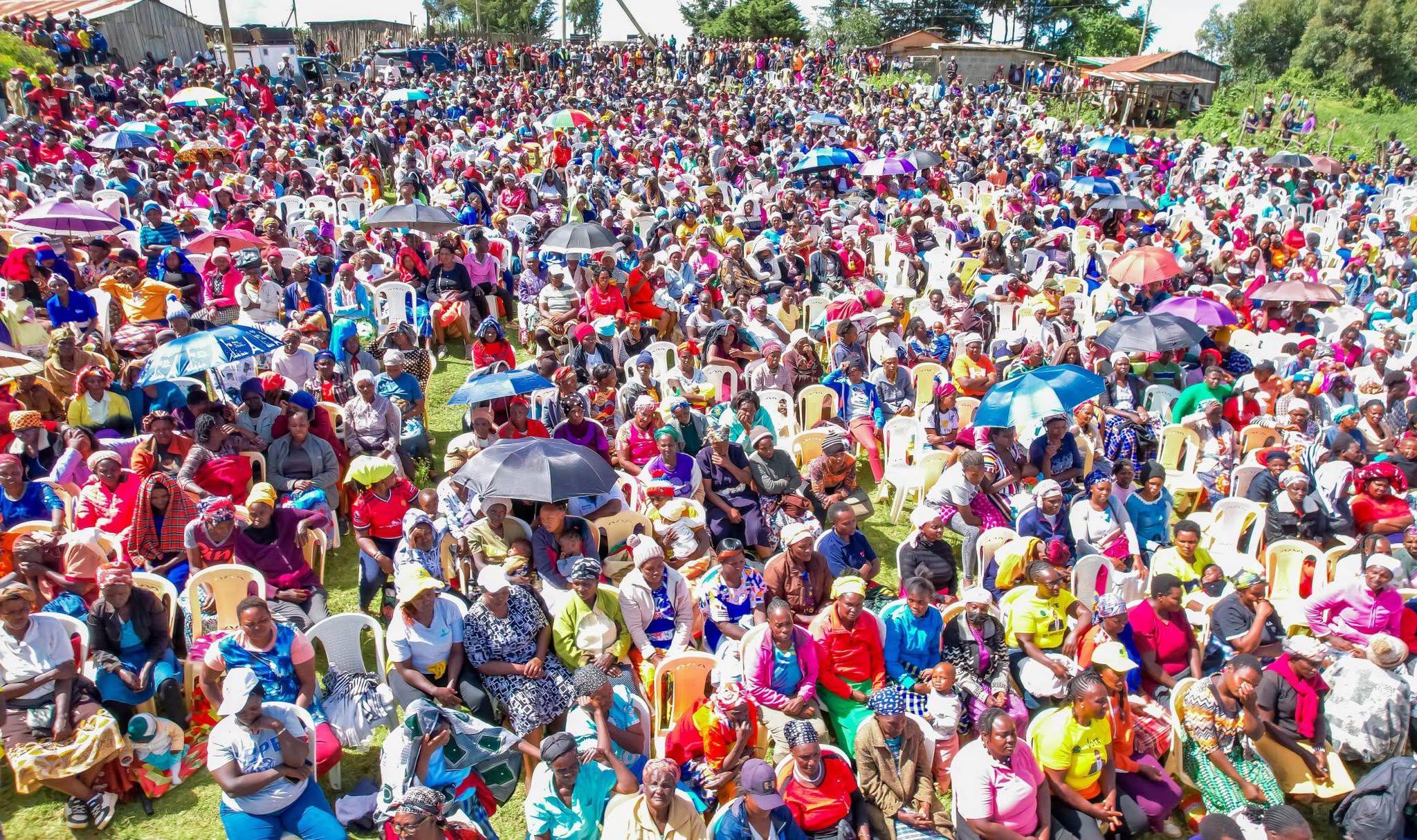
Residents of Ol Kalou at a UDA rally ahead of the July 16 by-election which DCP won.
President William Ruto's defeat in the Ol Kalou parliamentary by-election has triggered a fierce blame game within UDA.
The vote outcome has exposed an intensifying struggle among senior leaders seeking to position themselves as his running mate in next year's general election.
Party insiders who spoke to the Star said the contest had evolved into much more than a race for a parliamentary seat.
Behind the public rallies, they said, the by-election became an unofficial test of which leader could convince the President they possess the political machinery to deliver the Mt Kenya region.
Instead of demonstrating that UDA remained resilient in one of its traditional strongholds despite Ruto's bitter fallout with former Deputy President Rigathi Gachagua, the election ended in a crushing defeat.
Senior party figures are now questioning the campaign strategy, leadership and the influence of those who took charge on the ground.
"The expectation was simple. It was to prove that UDA can still win in Mt Kenya without Gachagua. That did not happen," one senior party official involved in the campaigns said.
Several insiders pointed to what they described as competing political interests within the ruling party, saying individual ambitions increasingly overshadowed the campaign itself.
Kirinyaga Governor Anne Waiguru emerged as one of the most prominent faces of the UDA campaign.
She was joined by former Trade CS Moses Kuria, Tourism CS Rebecca Miano, Lands CS Alice Wahome and several principal secretaries, who campaigned extensively in the constituency.
Some party strategists believe the by-election became an opportunity for a number of leaders to showcase their ability to mobilise Mt Kenya voters.
According to the sources, sections of the party believed that a convincing victory would strengthen Waiguru's credentials in the growing debate over Ruto's running mate for 2027.
Although there is no public evidence the campaign was officially framed around the Deputy President succession debate, insiders insist the political calculations were impossible to ignore.
"It stopped being just about Ol Kalou. Everyone understood what was at stake politically," a campaign insider said.
The comparison frequently made within UDA, according to multiple sources, was Deputy President Kithure Kindiki's handling of the Mbeere North parliamentary by-election in November last year.
That contest has since acquired almost legendary status within Kenya Kwanza.
Kindiki spent weeks leading campaigns that culminated in victory over Gachagua's preferred candidate, Newton Karish.
Within government circles, the result was interpreted as proof that the Deputy President could withstand Gachagua's political influence in the Mt Kenya region.
The victory significantly strengthened Kindiki's standing within Kenya Kwanza and was followed by opinion polls that reinforced perceptions that he remains Ruto's strongest option for the running mate position.
Party insiders now say Ol Kalou presented the first major opportunity for another senior leader to demonstrate similar political weight.
Unlike in Mbeere North, however, Kindiki largely stayed away from the campaign trail.
In Mbeere North, he had personally led back-to-back meetings and rallies that helped UDA candidate Leo Wamuthende defeat Gachagua-backed rival Karish.
In Ol Kalou, the campaign was instead spearheaded by a different team and the outcome was dramatically different.
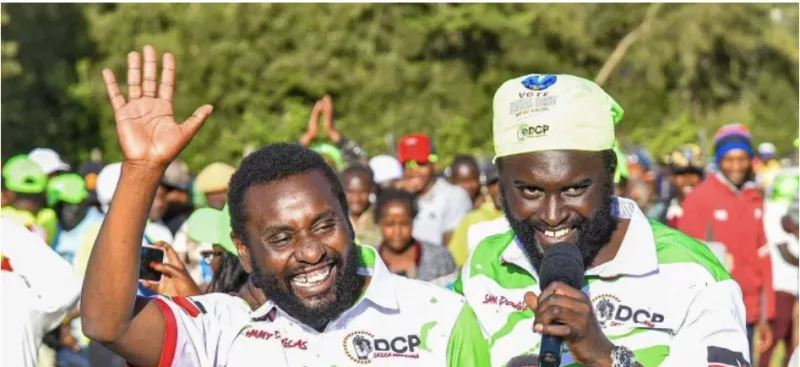
The Democracy for the Citizens Party (DCP) swept to a commanding victory, handing Gachagua one of his biggest political wins since his fallout with Ruto.
The scale of the defeat, which saw Sammy Ngotho garnering 85 per cent of the vote, has triggered intense internal soul-searching in the ruling party.
Sources familiar with post-election discussions say some leaders have questioned whether the campaign lacked a clear command structure, with different political camps pursuing parallel strategies instead of a coordinated operation.
Others argue the party underestimated the depth of anti-government sentiment in the constituency while overestimating the influence of local leaders campaigning for UDA.
"The result has forced difficult conversations. Everyone is asking what went wrong because this was supposed to send a message that UDA remains competitive in Mt Kenya," another official said.
Party insiders say the discussions have increasingly shifted from Ol Kalou itself to the broader political implications for the 2027 race.
For months, several leaders allied to Ruto have publicly argued that Gachagua no longer commands significant influence in Mt Kenya following his exit from government.
Ol Kalou has complicated that narrative.
The by-election has instead strengthened arguments that Gachagua remains a formidable political force capable of influencing electoral outcomes in the region.
Political analysts say the result is likely to embolden the DCP leader while piling pressure on UDA politicians who have claimed they can fill the political vacuum he left behind.
The fallout has also revived the unresolved succession battle that has simmered within Kenya Kwanza since Gachagua's departure from government.
It has also reignited the long-running political rivalry between Mt Kenya East and Mt Kenya West.
The regional tensions spilled into the open over the weekend as leaders exchanged sharp public statements over the meaning of the Ol Kalou result.
Public Service CS Geoffrey Ruku, one of the leading voices from Mt Kenya East, interpreted the outcome as a betrayal of the region's own DP.
He argued that leaders from Mt Kenya West could not continue accusing Ruto's administration of sidelining the region when Kindiki, who comes from Mt Kenya East, occupies the country's second-highest office.
"This is historical. We were involved in the Mau Mau struggle but after independence our brothers from the West shortchanged us. How can it be that the government is bad when our son is Deputy President?" Ruku asked.
"We have waited since 1963 for this to happen. We had generals who fought for independence but the West has had more roads than us. Are we children of a lesser Mau Mau? It cannot be that when the President has decided to develop this region that we are told about one term."
His remarks reflected a growing narrative among leaders from Mt Kenya East, who argue that political loyalty should shift towards protecting Kindiki's position rather than rallying behind Gachagua.
A section of Mt Kenya leaders are now preparing a major political statement aimed at responding to the changing political dynamics after the by-election.
The statement as announced by Mathira MP Eric Wamumbi is expected to address the future of the region within Kenya Kwanza and the growing succession debate.
Inside UDA, however, attention remains fixed on the lessons from Ol Kalou.
The defeat has exposed divisions over strategy, leadership and political messaging, while raising uncomfortable questions about who can truly mobilise Mt Kenya for Ruto in 2027.
President has repeatedly expressed confidence in Deputy President Kindiki but the debate over who commands the greatest political influence in the mountain has continued to simmer beneath the surface.
This is premium content
Subscribe to Continue Reading
Help us continue bringing you unbiased news, in-depth investigations, and diverse perspectives. Your subscription keeps our mission alive and empowers us to provide high-quality, trustworthy journalism. Join us today to make a difference!