I wanted the noise to stop on Sunday.
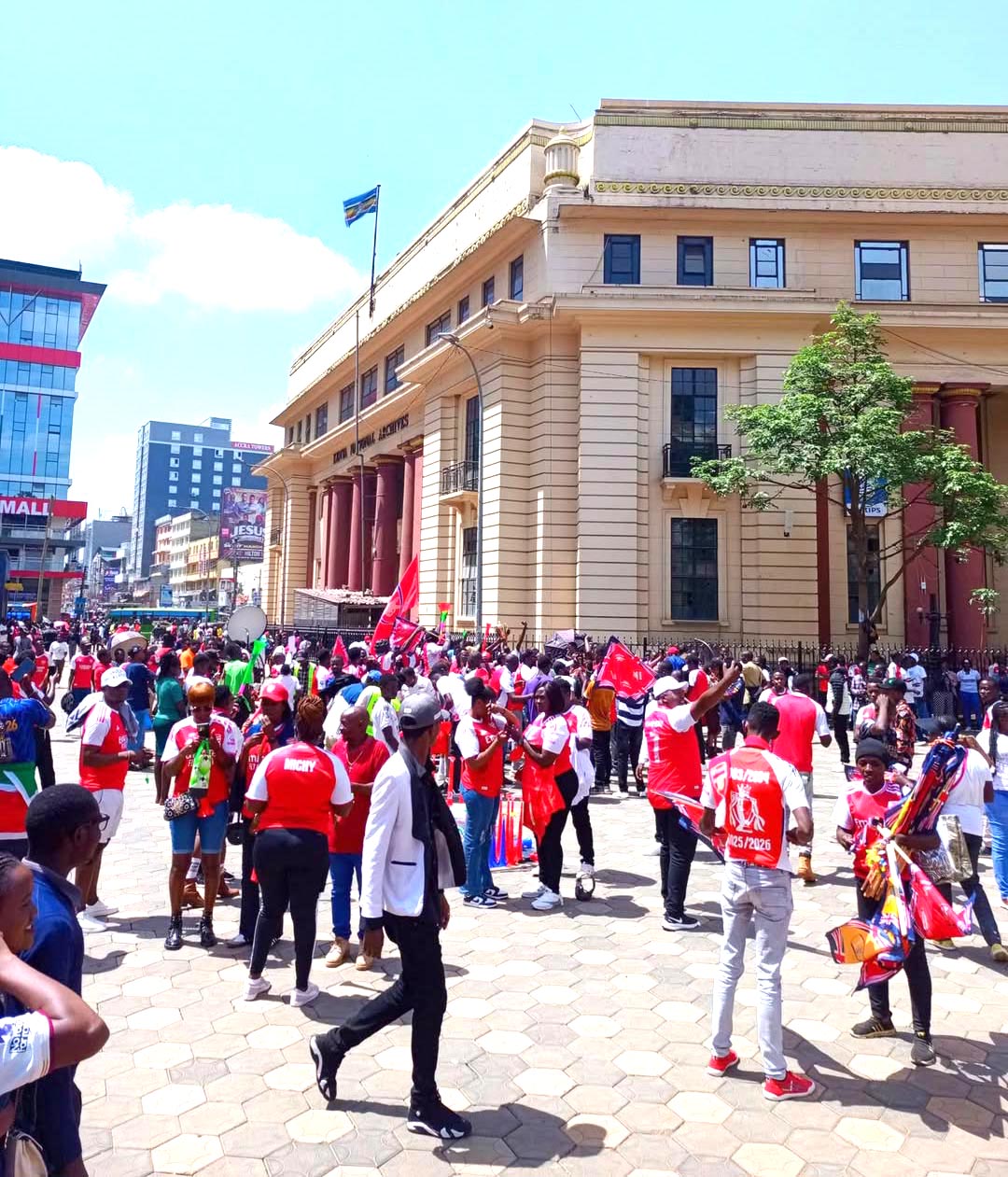
On Sunday, Nairobi moved for Arsenal.
Jerseys on matatus. TVs outside kiosks. Men arguing in sheng like Parliament
was in session. The city held its breath until the final whistle, and when it
was over, the streets did not empty. They erupted.
That is the paradox. The same city that can
fill pubs for Arsenal will not fill Kasarani for Shabana. The same fans who
will spend Sh5,000 to watch a foreign club will not spend Sh200 to watch a
local one.
We have no shares in that club. It is not our league. It is not our
players, our coaches, our communities. Yet we shut down commerce, drain
disposable income and invest our collective emotion in a result that changes
nothing in our lives.
And this is not new. In May 2024, after
Arsenal failed to clinch the English Premier League title on the final day, a
video circulated online showing a Kenyan man in an Arsenal jersey taking his
own life.
The claim spread: that he did it because Arsenal lost the title to
Manchester City. Fact-checkers noted the only source was a Kenyan X account,
and no major Kenyan news outlet published or confirmed the incident.
The verdict was “unproven”. But whether
that specific case is verified or not, the pattern is documented. Fact-checkers
themselves said it “seems to align with a 2009 story of an Arsenal fan
committing suicide after the club lost to Manchester United”. The fact that we
must fact-check this at all tells you something: our devotion to foreign
football has, in places, crossed from passion into pathology.
Meanwhile, our own Kenyan Premier League plays
in silence.
So let us study what we are not doing.
England did not arrive at a £6.7 billion domestic TV deal for 2025-29 by
accident. That’s £1.67 billion per season from UK broadcasters alone.
Add
overseas rights and the Premier League generates £3.84 billion every season.
Even the club that finishes 20th receives £122 million. But the money does not
terminate at the Emirates. It circulates.
EY’s 2023-24 report shows the Premier
League and its clubs contributed £4.4 billion in tax to HM Treasury, with £2.1
billion from players and staff alone. That is income tax, PAYE, National Insurance
Contributions. It pays for hospitals, teachers, infrastructure.
The broadcast
revenue you send to London is part of a chain that employs a nurse in
Manchester. The league also generated £9.8 billion in gross value added to the
UK economy and supports more than 100,000 full-time jobs. Kit manufacturers,
broadcast crews, data analysts, stadium staff. Football became an industry, not
a pastime.
Then there is the pyramid. A total £343.9
million was distributed last year to wider football: Football Foundation,
Stadia Fund, EFL Solidarity, youth development, community projects. Another £146.8
million went directly to lower league clubs.
A total £1.6 billion was committed
2022-25 into grassroots, academies and women’s football. That is why a
12-year-old in Birmingham trains on a proper pitch, with proper balls, under a
qualified coach. Because the revenue from Arsenal vs Man City on TV built that
field.
Now, Kenya. Walk into most estates in
Nairobi, Kisumu, Eldoret, or Garissa and ask: where is the nearest public field
with goals, nets and balls? Most children will point to dust.
A bare patch
behind a school. If there is a ball, it is half-deflated and shared by 30 boys.
If there is a coach, he is unpaid. Our grassroots clubs are suffocating.
No
sponsors. No kits. No transport. So, our boys have no careers to pursue. The
ones who make it leave. The rest quit at 17. Yet the fan base we command is
more than sufficient to sustain the KPL – if we redirected that same energy
inward.
Consider the counterfactual: what if we
treated the KPL like we treat the EPL? Imagine 500,000 Kenyans purchasing a KPL
season pass. Imagine Kasarani, Bukhungu and Kipchoge Keino stadiums half full
every weekend at Sh200 a ticket. Imagine county governments ring-fencing that
revenue for sport.
Ticket revenue is predictable. A club
averaging 5,000 fans at Sh200 makes Sh1 million a matchday. In 15 home games,
that is Sh15 million. That procures nets. It procures balls. It grades a pitch.
It installs floodlights on a community field so children can train at 6 pm
after school. EPL Stadia Fund exists because clubs had revenue to reinvest. We
can replicate that model.
With steady income, clubs can hire youth
coaches, run U13, U15, U17 sides and scout beyond Nairobi. Today, talent is
buried in villages because there is no structure to identify it. The EPL’s
£146.8 million EFL Solidarity payment exists to keep that pipeline alive.
We
need a Kenyan equivalent funded by Kenyan supporters. When clubs pay salaries,
physios, analysts and kit managers, football ceases to be a “hobby.” It becomes
employment. A boy in Vihiga can say, “I want to be a left-back for Kakamega
Homeboyz,” and know there is a pathway. Right now, the pathway ends at the
chief’s field.
More jobs mean more PAYE. More matchdays
mean more income for vendors, boda operators and small businesses. The
diagnosis is clear: we export our energy and import our identity.
We will spend
Sh5,000 to watch Arsenal in a pub, but will not spend Sh200 to watch Gor Mahia
at Kasarani. We will mourn when a foreign team loses, but shrug when our local
league is suspended for lack of funds. Television and sensationalism have
reconditioned our minds to venerate what is distant.
I am not arguing for the abandonment of
Arsenal. Affection is not the issue. Misallocation of affection is. The UK
converted affection into infrastructure. We can do the same. But only if we
accept that the energy, we expend on Sundays belongs, first, to our own fields.
So, the next time Nairobi erupts for
Arsenal, ask yourself: when did we last erupt like this for Bandari? For
Shabana? For Nzoia Sugar? Because the day Kenyans purchase the KPL rights the
way we purchase EPL rights, that is the day we will have fields with grass,
balls that are not flat and academies in every county. That is the day a boy
will not have to break his heart – or his life – over a team that does not know
his name.
The energy exists. We must simply spend it
at home.




![[PHOTOS] Red carpet in Pretoria as Ruto begins South Africa visit](https://cdn.radioafrica.digital/image/2026/06/abe3e750-6e5a-4394-a45c-899768be6240.jpeg)