Convictions related to trafficking offences rose from just three in 2023 to 21 in 2024, pointing to progress in efforts to combat the crime.
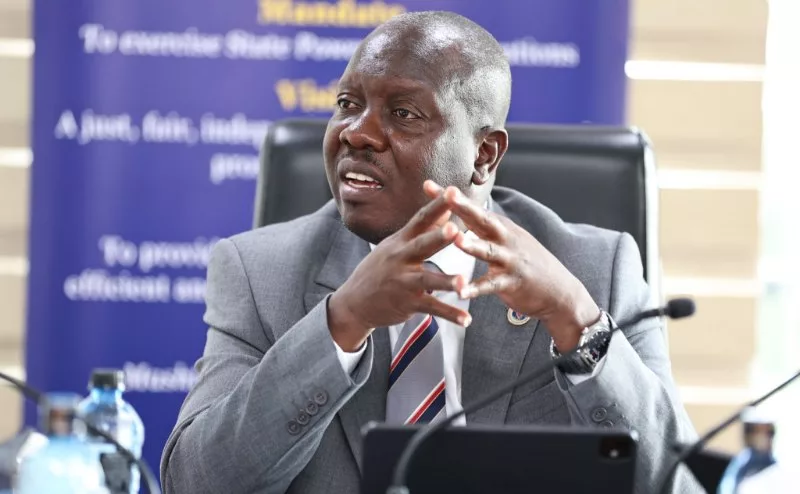
However, Director of Public Prosecutions Renson Ingonga warned that prosecutorial success alone cannot defeat a crime that is increasingly enabled by digital deception and public ignorance.
Ingonga said community empowerment must match judicial efforts to stem human trafficking.
“The fight against trafficking in persons cannot be won through prosecutions alone. We must empower communities with the knowledge to recognise the warning signs, understand the tactics used by traffickers and know where to seek help,” he said.
He spoke during a meeting with Marco Bufo, the regional coordinator for CIVIPOL, the French Interior Ministry's technical cooperation agency, on Wednesday.
The 2025 US Trafficking in Persons (TIP) Report placed Kenya on Tier 2, acknowledging what it described as "significant efforts" while concluding that the country had not yet met the minimum standards for eliminating trafficking.
According to the report, authorities investigated 42 new cases in 2024, nearly double the 22 recorded in 2023, and identified 195 victims, including 154 Kenyans exploited abroad whose repatriation was funded by the state.
The report also said a partially government-run shelter opened for survivors, while partnerships with non-governmental organisations assisted 321 victims, almost twice the number reached in the previous year.
However, it highlighted what it described as persistent gaps.
According to the report, protection services for adults remain limited, shelters are scarce and survivors frequently decline to testify for fear of reprisals or because of inadequate long-term support.
The report further said no law enforcement action was taken against allegedly complicit officials in 2024, despite what it described as evidence implicating police officers, magistrates and embassy staff in aiding traffickers or extorting victims.
It also said fraudulent recruitment agencies continue to target Kenyans seeking jobs abroad, particularly in the Middle East, where 274 Kenyan workers, most of them women, have died in Saudi Arabia over the past five years.
Ingonga identified technology as a key factor in the changing nature of trafficking, saying criminal syndicates are now using generative AI to target vulnerable populations.
“As technology advances, so do the methods employed by traffickers. This calls for innovative responses, stronger partnerships and sustained public education to ensure our communities are not left vulnerable," he said.
Bufo said the transnational nature of trafficking requires coordinated international action.
“Trafficking in persons and the smuggling of migrants are complex crimes that transcend national borders. Addressing them effectively requires strong institutions, well-trained prosecutors, coordinated regional action and informed communities.”
According to the report, Kenya serves as a source, transit and destination country for trafficking victims. It says children are exploited in sex trafficking, farm labour, mining and cattle herding, while women and underage girls are trafficked for sexual exploitation or domestic servitude.
The report also says non-governmental organisations estimate that more than 2,000 children in Kilifi and Kwale counties are trapped in sex trafficking.
It further says migrants from Ethiopia, Burundi and Tanzania are exploited locally or trafficked southwards, while others are lured to Southeast Asia with false promises of employment before ending up in forced labour or cyber scams.
Through its partnership with the Office of the Director of Public Prosecutions, CIVIPOL has supported prosecutor training, cross-border simulation exercises, standard operating procedures, regional cooperation forums and public education materials.
Ingonga commended the agency's support in strengthening the capacity of Kenyan prosecutors and promoting regional collaboration.
The TIP Report also says stronger victim support, enforcement against officials found to be complicit and tighter oversight of labour migration remain necessary to strengthen Kenya's anti-trafficking efforts.
According to the report, proposed amendments intended to close legal loopholes that allow fines instead of jail terms for sex trafficking offences have remained pending for a fourth consecutive year.
The meeting highlighted the progress made through prosecutions while underscoring the need for stronger prevention measures, victim protection and public awareness.