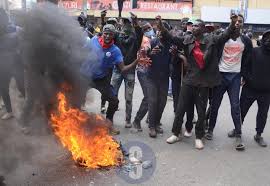
What started as protests against fuel prices is now spiralling into a national threat even as the country heads to the June 24 anniversary of
the anti-tax protests.
The protests, initially sparked by rising fuel prices and
the high cost of living, have persisted in parts of the Central region even
after the government moved to address some of the contested measures.
Transport sector stakeholders last week called off their
suspended strike after talks with President William Ruto.
However, transport operators, especially in Embu, Thika and
Nyahururu, have continued sporadic demonstrations, causing paralysis days after
the truce with matatu operators.
Before calling off their strike, the operators brought the
country to a standstill for two straight days, resulting in huge economic
losses.
The growing unrest now presents a fresh headache for the
Kenya Kwanza administration, which has been struggling to contain public anger
over taxes, unemployment and rising commodity prices.
Already, the opposition has called for total rejection of
the Finance Bill 2026 and are whipping up public emotions against the revenue-raising measures proposed by the government.
On Sunday, Wiper leader Kalonzo Musyoka, citing a provision not contained in
the Finance Bill 2026, claimed the Bill will affect Kenyans who inherited land
from their forefathers as well as communities holding ancestral land.
“So, now your grandchildren will be paying rent because leasehold means you
pay rent. This is what this administration is trying to introduce; so we are
saying reject, reject, reject,” Kalonzo said.
Treasury Cabinet Secretary John Mbadi
has disowned the clause cited by Kalonzo, accusing the opposition of knowingly
advancing falsehoods to incite Kenyans against the administration.
“To me, it’s irresponsible for a leader of such a stature to propagate
propaganda because I know he knows that is lying. That is irresponsible
politics,” Mbadi said.
The political temperature is further expected to rise in
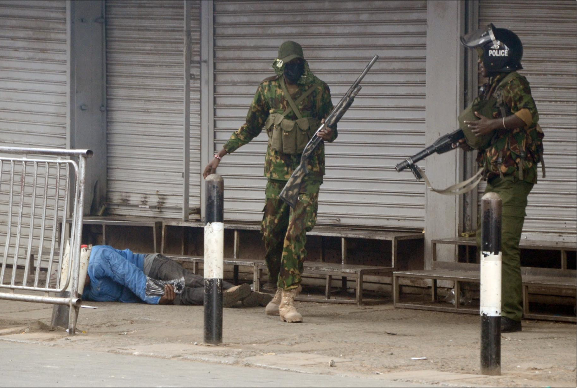
the coming weeks as opposition leaders prepare nationwide events to commemorate
young Kenyans, popularly referred to as Gen Z protesters, who lost their lives
during last year’s anti-tax demonstrations.
“Next month, we shall have the anniversary of over 100 brave youths who were
killed by this administration,” Musyoka stated
on Sunday,
The planned events are likely to pile more pressure on the
government at a time when the country is already witnessing heightened
political tension.
What is emerging, observers say, is a slow but expanding
anti-Ruto wave driven less by traditional opposition politics and more by the
everyday economic struggles facing ordinary Kenyans.
“The economic situation will give him a lot of problems. If
the anger is not managed, it will give him a difficult time in his reelection
bid,” political analyst Martin Andati said.
“There is a lot of hostility. People are being extreme because they have been pushed to the wall. He (President) needs to address the
issues in a way that convinces people,” he added.
For the pundit, the anger stems from perceived lopsided
priorities.
“You can’t speak to people about houses when they are
hungry. He needs to listen more and get out of the rooftop of vehicles,” Andati
explained.
Maseno University don Charles Nyambuga observed that, “The
feeling among the populace is that they are neglected. The President has to
really reinvent himself as far as his messaging is concerned. He has to
repackage himself as the candidate of tomorrow.”
The danger for the President is that many of the issues now
threatening his political standing are the same ones he successfully used
against former President Uhuru Kenyatta during the 2022 campaigns.
Fuel prices, which formed a major pillar of Ruto’s campaign
messaging against the previous administration, have now become one of the
biggest pressure points for his government.
The recent fuel crisis exposed the administration’s
vulnerability, triggering public outrage from households, transport operators
and businesses already grappling with the high cost of living.
With fuel prices affecting transport, food distribution,
electricity generation and production costs, economists warn the impact is
likely to spread across the economy in the coming months.
Kitui Central MP Makali Mulu warned that the ripple effects
of the increases could worsen economic pain for millions of Kenyans.
“The entire economy will be affected by these fuel price
hikes. Fuel prices affect every sector of the economy. The effects must be
looked at in entirety,” Mulu said.
The sensitivity of the matter stems from the fact that Ruto
heavily campaigned on promises to lower the cost of living and ease pressure on
struggling households.
“He promised that there would be no borrowing in three
years, but now the budget deficit is almost 70 per cent. People will chase him
away in 2027, just as much as he can survive now,” Embakasi Central MP Benjamin
Gathiru alias Mejjadonk said.
At the height of the 2022 campaigns, Kenya Kwanza repeatedly
accused the Uhuru administration of overtaxing Kenyans and presiding over
runaway fuel costs.
Now, with his government caught between stabilising prices
and meeting revenue targets, Ruto is facing the same political heat he once
weaponised against his predecessor.
“The shoe is on the left foot,” PNU leader and former Meru
Governor Peter Munya said.
Political analysts say the administration’s room for
manoeuvre is being narrowed by the country’s worsening debt burden and
shrinking fiscal space.
Treasury estimates show that nearly Sh2.3 trillion will be
spent on debt repayment in the next financial year, almost half of the
projected Sh4.8 trillion budget.
The heavy debt obligations have left the government with
limited options to cushion citizens from economic shocks without increasing
taxes or borrowing further.
But after months of public resistance to new levies and
taxes, the political environment has become increasingly hostile to additional
taxation measures.
That pressure is likely to intensify as Parliament considers
the Finance Bill, 2026, amid mounting public frustration over the cost of
living.
Makueni MP Daniel Maanzo said the government was
increasingly appearing disconnected from the realities facing ordinary
citizens.
“Ruto has messed himself up. Kenyans are not happy,
especially with the show of a lack of concern. The government is living large,
yet the citizens are suffering,” Maanzo said.
“They have to cut the budget for his office and that of his
deputy’s,” the Senator told the Star on the phone.
For many Kenyans, perceptions of government extravagance
have compounded frustrations over economic hardship.
The challenge for Ruto is further complicated by growing
fears over possible climate disruptions later this year.
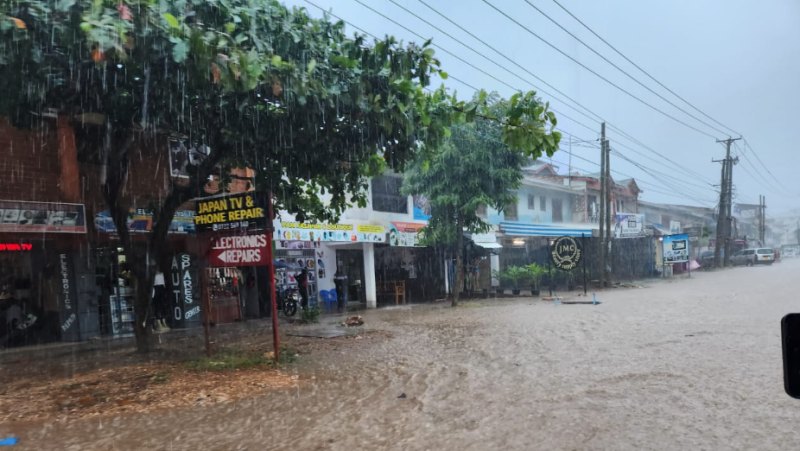
Climate experts have warned that the country could
experience the El Niño phenomenon towards the end of the year.
The situation has raised concerns over potential crop
destruction, flooding and poor harvests.
Should food production decline significantly, the country
could face rising prices of basic commodities heading into the politically
sensitive pre-election period.
Combined with high fuel prices and tax fatigue, any major
increase in the cost of food could deepen anti-government sentiment across both
urban and rural areas.
INSTANT ANALYSIS
What started as protests against fuel prices is now spiralling
into a national threat, even as the country heads to the June 24 anniversary of
the anti-tax protests.





![[PHOTOS] The new Ngong –Naivasha Road viaduct](https://cdn.radioafrica.digital/image/2026/06/64d4f771-4432-4aee-ba3c-2f304c4436ec.jpg)








![[PHOTOS] 'Mr Speaker Sir' Gen Z protester in court](https://cdn.radioafrica.digital/image/2026/06/b3e62d8e-25c3-4780-90f9-4eb48b1ce8a7.jpg)