Part of the spending plan is an additional Sh9.3 billion for
the purchase of new Kenya Integrated Election Management System (Kiems) kits,
pushing the election technology budget to more than Sh10 billion.
The Independent Electoral and Boundaries Commission (IEBC) has been
battling concerns from lawmakers and auditors over the repeated replacement of
election technology every election cycle.
The Kiems budget is part of the additional Sh33 billion JLAC
approved for the IEBC, bridging a major funding gap that had threatened the
commission’s preparations.
The Treasury had initially allocated Sh41.3 billion, leaving
the electoral agency with a shortfall of more than Sh33 billion against its
projected Sh74.8 billion budget.
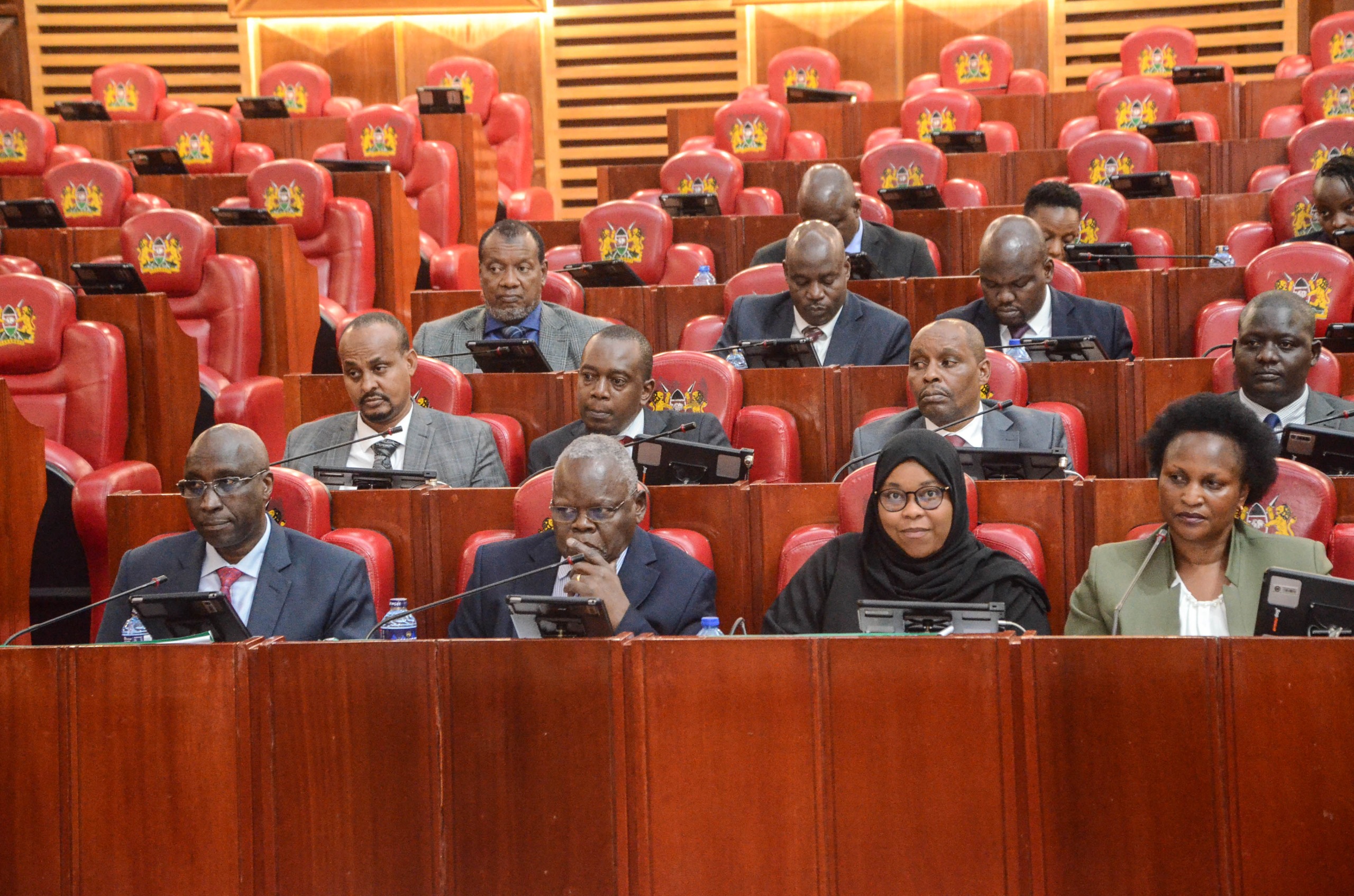
The Tharaka MP Gitonga Murugara-led committee has approved
the entire additional amounts, breaking down the spending heads. The budget is
to be funded in two financial years, starting July 1.
“Increase the allocation for the Programme of Management of
Electoral processes by Sh33.0 billion,” the JLAC report obtained by the Star reads
in part.
Kenya’s election budget has risen sharply over the past
three general elections as the poll agency seeks to build trust among the
voters.
The 2013 election, the first under the Constitution of Kenya
2010, cost taxpayers about Sh25 billion, following the purchase of Biometric
Voter Registration and election kits.
In 2017, the figure nearly doubled to about Sh49.9
billion as the country introduced expanded biometric systems and electronic
results transmission. Even so, the presidential poll was nullified.
In the 2022 election, the cost came down to about Sh44.6
billion despite the reuse of some election infrastructure and technology.
With the IEBC now projecting Sh74.8 billion, the 2027 polls
are shaping up as the country’s most expensive election cycle yet, driven by
fresh technology procurement and rising operational costs.
The commission plans to undertake the total replacement of
45,353 kits that had been purchased in 2017, with the 14,000 purchased in 2022 to
be reused in the 2027 general elections.
IEBC told MPs the total required Kiems kits are 59,352,
being 55,393 for polling stations and 3,959 for training.
The approval means the IEBC can now proceed with plans to
retire the old kits that it says will be obsolete by the time the country heads
to the ballot.
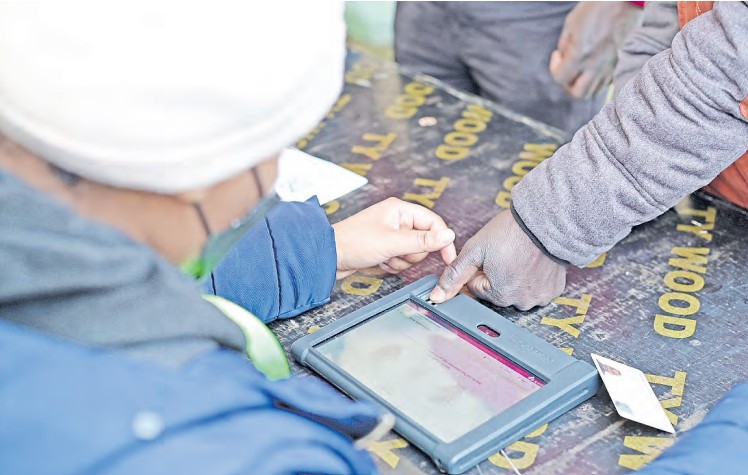
The handheld Kiems devices are used for voter identification
and electronic transmission of election results.
According to the IEBC, the ageing devices face battery
degradation, expired manufacturer support and outdated software systems that
could compromise the integrity of the elections.
But the decision by MPs to approve the billions for fresh
procurement marks a grand shift from their earlier tough stance against the
electoral agency over the cost of election technology.
Only days earlier, lawmakers had questioned why Kenya
continues to spend billions replacing Kiems kits after every election cycle,
even when thousands of devices were previously declared functional.
Ahead of the 2022 election, the IEBC spent Sh4.2 billion on
election technology, including 14,100 new kits supplied by election technology
firm Smartmatic.
At the time, the commission maintained that more than 41,000
older Kiems kits were still operational. Now, the IEBC says up to 45,352 kits
require replacement.
IEBC commissioner Francis Aduol had warned MPs there
were enormous risks in relying on ageing technology in a politically sensitive
election.
“Any single failure can cause problems,” Aduol told the
Justice and Legal Affairs Committee during budget hearings.
He disclosed that the old kits experienced integration
challenges with older systems, complicating efforts to maintain a mixed
inventory of election technology.
“We are not sure we are going to use Smartmatic. We are
going to open this for tender, and we foresee a challenge of integrating the
new and old systems,” Aduol said.
“If we find we cannot use them with the new vendor, we can
use them for voter registration. The challenge is how we integrate the two.
Hence, we want a full new set.”
Despite the explanations, lawmakers had initially demanded
an independent audit of the existing Kiems kits before approving any fresh
spending.
They questioned how the commission could conclude that the
devices were obsolete before tabling the promised technical assessment report.
Lawmakers also raised concerns over what he described as
shifting budget estimates, after the election budget jumped from Sh61 billion
to Sh74.8 billion within weeks.
They further questioned the projected cost of the Kiems kits, noting that estimates put the cost per kit at Sh100,000 higher than the
projected budget.
The additional funding approved by JLAC will also cater to other critical election operations.
Besides the Sh9.3 billion for Kiems kits, the committee
approved Sh2.7 billion for ballot papers and statutory forms.
MPs also okayed additional Sh2.7 billion for voter
registration and biometric verification, and Sh5.2 billion for hiring temporary
poll officials – clerks, presiding officers, and other poll officials.
Transport and field mobility received Sh1.5 billion, while
public communication and citizen engagement was allocated Sh1.7 billion more.
Even with the approval, concerns persist over the ever-rising
cost of elections in Kenya, which remains among the highest in Africa on a
per-voter basis.
Since 2017, Kenya has spent more than Sh10 billion on
election technology alone, yet the IEBC continues to seek billions for fresh
devices every election cycle.
Treasury CS John Mbadi recently warned that
the cost of elections had become unsustainably high, raising the question of whether the Budget committee will okay the budget.
The Alego Usonga MP Sam Atandi-led budget committee works
closely with Treasury in efforts to balance the fiscal framework. An additional
Sh33 billion is significant, hence likely to draw scrutiny.
The debate over election technology has also been fuelled by
audit concerns surrounding Kiems kits purchased using public funds.
A 2024 report by Auditor General Nancy Gathungu revealed
that more than 3,400 kits were faulty, while hundreds went missing after
the 2017 and 2022 elections.
Some devices were reportedly lost, others damaged during
unrest, while several kits lacked hard disks or essential components.
The audit findings intensified concerns about inventory
management and accountability within the electoral commission.
Critics argue that the repeated replacement of election
technology has created a costly cycle that benefits suppliers while burdening
taxpayers.
Elections Observation Group national coordinator Mule Musau
has previously warned that opaque procurement processes continue to inflate
election costs.
“My issue is always with the cost and transparency of the
process,” Musau said recently, “We can get good, long-lasting and scalable
equipment when there is openness.”
Still, MPs ultimately backed the IEBC request, saying the
country could not afford to gamble with election preparedness.
Justice and Legal Affairs Committee chairman Gitonga
Murugara said Parliament would continue scrutinising how the commission spends
the funds.
“We can’t take public money and just approve without
checks,” the MP said.
But with the country now preparing for what could become its
costliest election ever, the debate over whether the country is getting value
for money from its election technology is far from over.




![[PHOTOS] The new Ngong –Naivasha Road viaduct](https://cdn.radioafrica.digital/image/2026/06/64d4f771-4432-4aee-ba3c-2f304c4436ec.jpg)






![[PHOTOS] 'Mr Speaker Sir' Gen Z protester in court](https://cdn.radioafrica.digital/image/2026/06/b3e62d8e-25c3-4780-90f9-4eb48b1ce8a7.jpg)