
Abdullahi urges tax relief to ease pain at the pump
Says higher fuel prices were affecting multiple sectors
1mon agoSTEPHEN ASTARIKONorth-eastern
The union wants PAYE relief for anyone earning up to Sh60,000 per month


Audio By Vocalize
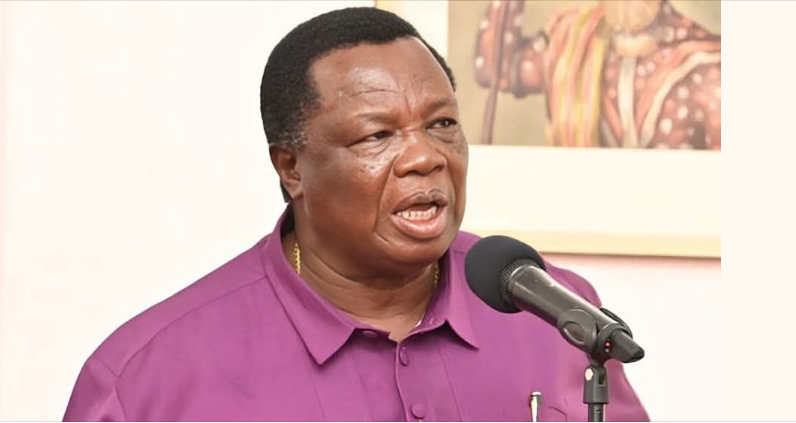
The Central Organisation of Trade Unions (COTU-Kenya) has criticised the government over its failure to implement long-awaited Pay As You Earn (PAYE) reliefs in the newly tabled Finance Bill, 2026.
In his submission on the Finance Bill 2026, Secretary General Francis Atwoli expressed deep concern over the state’s inaction, noting that despite public acknowledgements by both the Executive and the National Treasury that workers' disposable incomes have been severely eroded, nothing has been done to offer relief.
According to Atwoli, the government’s delay in enacting these much-needed reforms highlights an urgent need for Parliament to thoroughly reconsider the broader taxation burden currently imposed on salaried Kenyans.
“The state can no longer rely on an exhausted workforce to sustain the economy through aggressive taxation,” Atwoli said in his submission on the Bill.
Atwoli emphasised that Kenyan workers cannot continue financing national development at the expense of their own survival, welfare, and economic dignity, urging lawmakers to strike a realistic balance between revenue mobilisation and the protection of households.
He presented a comprehensive proposal targeting tax relief for low- and middle-income earners.
The union wants the government to overhaul the PAYE structure for anyone earning up to Sh60,000 per month.
Data compiled by COTU’s Economic and Education Department
reveals that this specific income bracket represents the core of Kenya's
productive workforce and consumer economy, yet they bear the heaviest brunt of
inflationary pressures.
The union's research projects that implementing this targeted PAYE relief would immediately release over Sh31 billion back into the economy as usable household income.
Rather than looking at tax relief as a mere social intervention, Atwoli argued that it should be utilised as an aggressive economic growth strategy.
He noted that when workers have more money in their pockets, consumption increases, production expands, and employment opportunities grow.
“Ultimately, the government will indirectly recover this revenue through heightened economic activity and increased domestic spending,” he said.
To achieve this, COTU is demanding a complete revision of PAYE bands for workers earning up to Sh60,000, an upward adjustment of the tax-free threshold, a significant reduction of excessive payroll taxation on middle- and lower-income earners, and an automatic annual inflation adjustment of PAYE bands to prevent bracket creep, which ensures workers are not pushed into higher tax brackets purely by inflation
While COTU (K) expressed its support for several progressive provisions within the Finance Bill, 2026, including measures aimed at strengthening retirement protection, promoting local manufacturing, reducing pressure on fuel pricing, and encouraging infrastructure development, it drew a firm line against several consumer-facing taxes.
Most notably, COTU (K) is strongly opposing the newly proposed 25 per cent excise duty on mobile phones, alongside the expansion of indirect taxes and new levies targeted at digital platforms.
The union notes that these measures, alongside changes affecting manufacturing and production, will further drive up consumer prices.
The union has vowed to fight any proposals that suppress workers' purchasing power, undermine digital inclusion, or threaten job creation without a corresponding growth in wages.
Says higher fuel prices were affecting multiple sectors

![[PHOTOS] The new Ngong –Naivasha Road viaduct](https://cdn.radioafrica.digital/image/2026/06/64d4f771-4432-4aee-ba3c-2f304c4436ec.jpg)









![[PHOTOS] 'Mr Speaker Sir' Gen Z protester in court](https://cdn.radioafrica.digital/image/2026/06/b3e62d8e-25c3-4780-90f9-4eb48b1ce8a7.jpg)