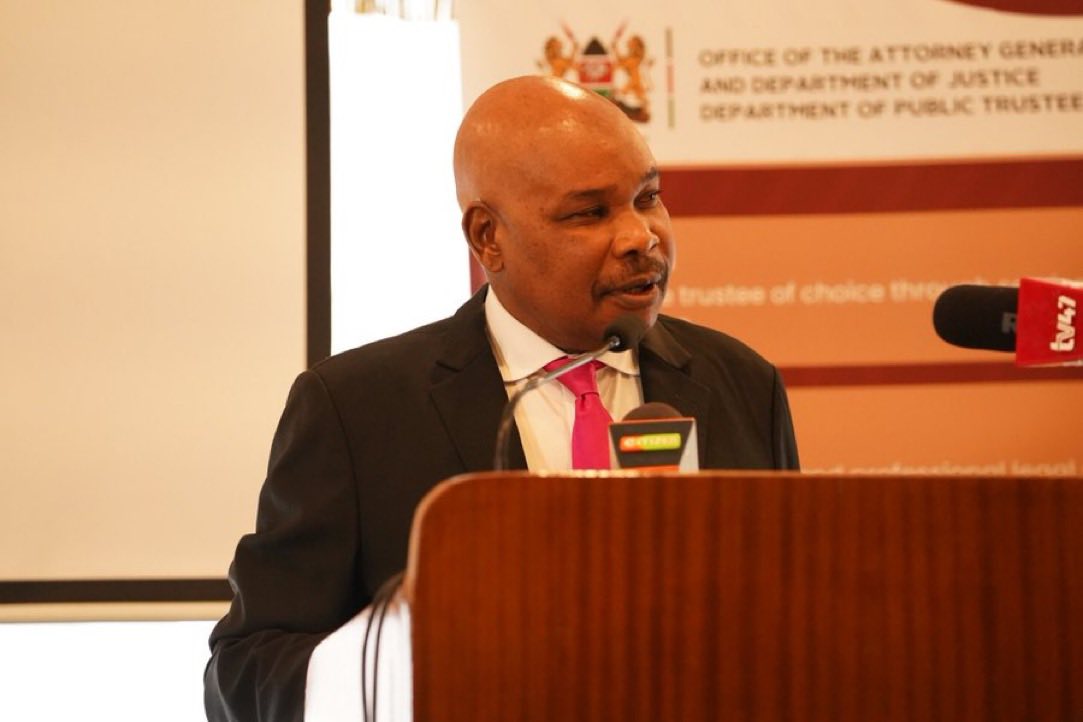
With the struggle with a bloated public wage bill taking a
new turn, SRC warns that the growing wage burden is eating into funds meant for
development and essential public services.
Latest SRC data shows that the total public wage bill hit
Sh1.25 trillion as December 2025, up from Sh1.17 trillion reported in 2024.
The SRC in the bulletin for October-December 2025 revealed that
the total public service employment crossed the one million mark in 2024, reaching
1.023 million employees.
The Teachers Service Commission remains the single
largest employer, accounting for 410,700 employees (5.2 per cent growth) and
consuming over one-third of the entire public wage bill.
The education sector alone dominates the wage landscape,
followed by health, security and uniformed services, which are critical
sectors.
Despite some progress, the wage-bill-to-ordinary-revenue
ratio remains above the statutory threshold set under the Public Finance
Management (PFM) Act, 2012.
The bulletin indicates that while the national government
kept its ratio below the 35 per cent ceiling (projected at 28.56 per cent for
Q2 2025-/2026), county governments continue to struggle.
During the nine-month period of 2025, only six counties,
namely Nyandarua, Nakuru, Migori, Kilifi, Siaya, and Tana River, managed to
stay below the 35 per cent threshold.
On average, the county wage-bill-to-revenue ratios have
remained persistently above the legal limit.
As such, SRC, alongside local and international partners,
are preparing to host the inaugural National Productivity and Performance
Conference, 2026.
The meeting to be presided over by President William Ruto is
themed “Productivity for Fiscal Sustainability and Efficient Service Delivery.”
According to a media advisory SRC issued ahead of the
conference, Kenya is facing a worrying economic trajectory characterised by
declining productivity, rising operational costs and mounting pressure on
fiscal sustainability.
The commission says the trends are threatening economic
growth, investor confidence, job creation and delivery of public services.
“Without timely, coordinated interventions, Kenya risks
further inefficiencies, reduced output, rising labour costs and weakened
competitiveness,” SRC said in the advisory.
The conference, which will also be attended by senior
government officials, comes against the backdrop of a policy shift within
government circles.
It is emerging that attention is increasingly turning to
efficiency and accountability rather than purely expanding payrolls.
The wage bill has remained one of the country’s most
persistent fiscal headaches for years.
Successive regimes have been struggling to balance pressure
for higher salaries against dwindling revenues and rising debt obligations.
The wage bill-to-revenue ratio, though improved, still
remains above the statutory threshold set under the Public Finance Management
framework.
The ratio has dropped from 55 per cent in 2020 to 41 per
cent in 2025, but still exceeds the recommended ceiling of 35 per cent.
Economists warn that such a trend limits the government’s
ability to finance infrastructure projects, healthcare, education and other
social programmes.
The concern is compounded by the country’s poor productivity
rankings globally.
The International Labour Organisation’s 2025 Productivity
Data Report ranked Kenya 142nd out of 182 countries worldwide, exposing a major
productivity gap compared to both global and African peers.
The ranking has intensified concerns among policymakers that
the country risks becoming increasingly uncompetitive if labour productivity
does not improve.
For years, public debate around the wage bill has largely
revolved around salary cuts, allowances and hiring freezes.
However, analysts now say the deeper issue is whether the
public sector is delivering value relative to the resources it is consuming.
SRC Chairperson Sammy Chepkwony is expected to spearhead
discussions on linking compensation to performance and institutional
productivity.
The conference will bring together players from across
government, including the Public Service Commission, Council of Governors,
Intergovernmental Relations Technical Committee, State Corporations Advisory
Council and Constitutional Commissions and Independent Offices.
Officials say the objective is to craft a long-term framework
that aligns public spending with measurable service delivery outcomes.
The move comes at a time when the government is under
pressure to contain expenditure amid heavy debt servicing obligations and
growing public resistance to new taxes.
President Ruto’s administration has repeatedly defended
fiscal reforms and austerity measures as necessary to stabilise the economy.
Even so, critics argue that ordinary Kenyans are bearing the
burden through higher taxes and rising living costs.
Analysts say improving productivity may offer the government a
politically safer route to fiscal stability than relying solely on taxation or
salary suppression.
There is also growing recognition that the country’s
productivity challenge extends beyond the public sector.
Private sector players have increasingly complained about
high operational costs, low efficiency and bureaucratic delays that hurt
competitiveness and discourage investment.
Business leaders argue that unless productivity improves
across institutions, Kenya could struggle to attract investment and create
sufficient jobs for its youthful population.
The conference is therefore expected to focus not only on
public sector reforms but also on institutional efficiency, innovation and
performance management systems.
Among the issues likely to dominate discussions are
digitisation of government services, performance contracting, reduction of
wastage, and strengthening accountability mechanisms.
Treasury in 2026-27 estimates says salaries and debt
repayments are projected to continue consuming a significant share of national
revenue, leaving limited room for development spending.








![[PHOTOS] The new Ngong –Naivasha Road viaduct](https://cdn.radioafrica.digital/image/2026/06/64d4f771-4432-4aee-ba3c-2f304c4436ec.jpg)