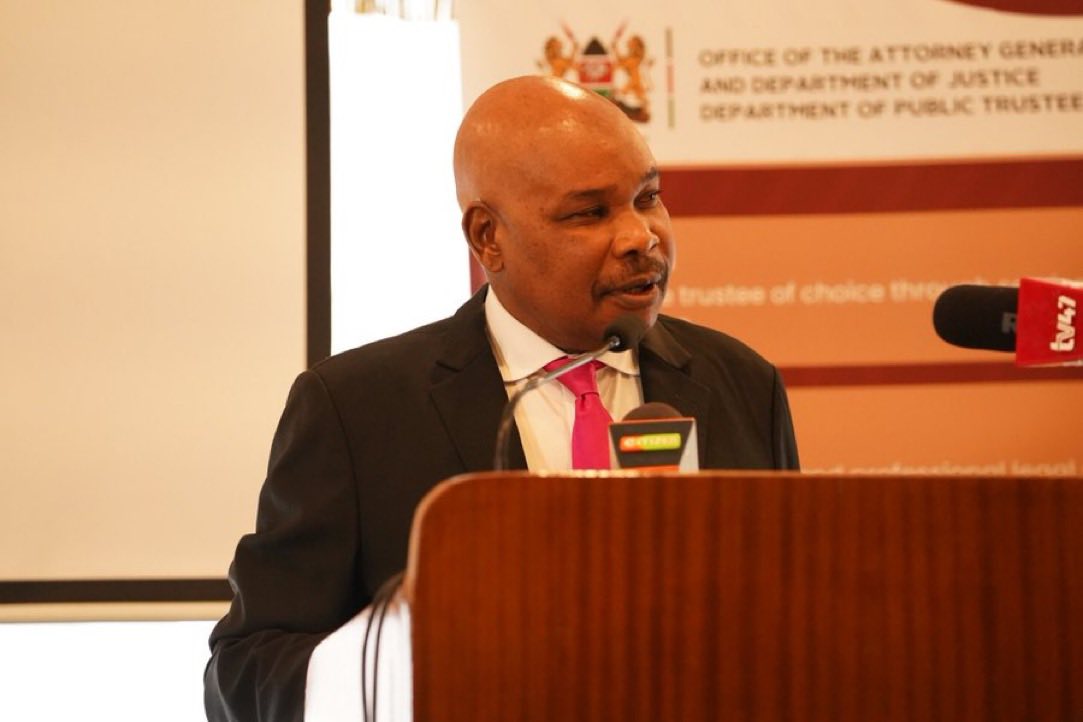
In the changes, MPs have moved to block the Sammy
Chepkwony-led salaries agency from having an absolute say on key aspects of
public sector pay.
The committee has deleted and amended key provisions in
the rules, which would have seen SRC exercise control over pay set by the Teachers
Service Commission and the Public Service Commission.
The House team has stripped the commission of three
provisions that they argued would have given SRC excessive control over how public
bodies manage their staff.
A provision that sought to give SRC the mandate to
"keep under review all matters relating to salaries and remuneration of
other public officers" has been amended.
The committee chaired by Ainabkoi MP Samuel Chepkonga has ruled the
regulation as ultra vires, that is, as one that is outside the commission’s
legal authority.
"Regulation 3(1)(iii) seeks to accord the Salaries
and Remuneration Commission the mandate of keeping under review all matters
relating to salaries and remuneration of other public officers. This is ultra
vires to the Act,” the report reads.
The decision effectively blocks SRC from continuously
monitoring the employment terms of public officers who are not state officers.
MPs argued that such oversight belongs to the respective
employers, including the Public Service Commission, the Teachers Service
Commission, and county governments.
The committee’s report further recalled the original
intent of the constitution, noting that during the drafting process, "the
power to set salaries for general public officers was deliberately removed from
the SRC’s ambit.”
In the regulations, SRC sought a say on approval of
Collective Bargaining Agreements (CBAs), but MPs declined, holding that “such matters
are closely linked to government policy and collective bargaining."
In a second major move, Parliament has curtailed SRC’s
power to conduct job evaluations on its own initiative.
The original draft required the salaries commission to
undertake a job evaluation where roles had not been assessed under its framework.
Critics argued that the provision would have opened the
door to intrusive audits and bureaucratic overreach.
The committee recommended amending the regulation to
provide that an evaluation "may be done upon the request of the public
body."
The change prevents SRC from forcing its way into the
organisational structures of state corporations, ministries, and counties
without invitation.
This means ministries, state corporations, and county
governments will now retain control over when and how their job structures are
reviewed.
Employers will no longer be compelled to submit to
SRC-led evaluations unless they deem it necessary.
The third amendment removed a clause that would have
compelled public bodies to seek SRC’s advice before giving financial rewards
for productivity and performance.
The committee found that such matters are already
governed by other legal frameworks and fall outside SRC’s core mandate.
“The stated area is regulated under other relevant
applicable statutes and is not in the purview of the commission,” the report
states.
The deletion effectively returns the management of
performance-based incentives to individual institutions.
As such, it strips SRC of a gatekeeping role that
critics said would have created unnecessary bureaucracy.
Critics argued it would have turned SRC into a
gatekeeper for even routine human resource decisions, potentially slowing down
operations.
The amendments confine SRC more strictly to its advisory
role, particularly on matters relating to state officers, while leaving
day-to-day human resource decisions to employing entities.
The regulatory battle has been long in the making.
SRC first submitted draft regulations in 2022, but the
committee rejected them, citing inadequate public participation.
MPs at that time cited, particularly, the failure to
consult key stakeholders like the Teachers Service Commission, the
Parliamentary Service Commission, and the Public Service Commission.
In its latest submission, SRC provided evidence that
those bodies had indeed submitted written memoranda.
The committee acknowledged that "SRC made
appropriate consultations with persons who are likely to be affected by the draft regulations.”
The regulations will now proceed to publication, but
with SRC’s authority over oversight, job evaluation, and performance rewards
significantly clipped.






![[PHOTOS] The new Ngong –Naivasha Road viaduct](https://cdn.radioafrica.digital/image/2026/06/64d4f771-4432-4aee-ba3c-2f304c4436ec.jpg)