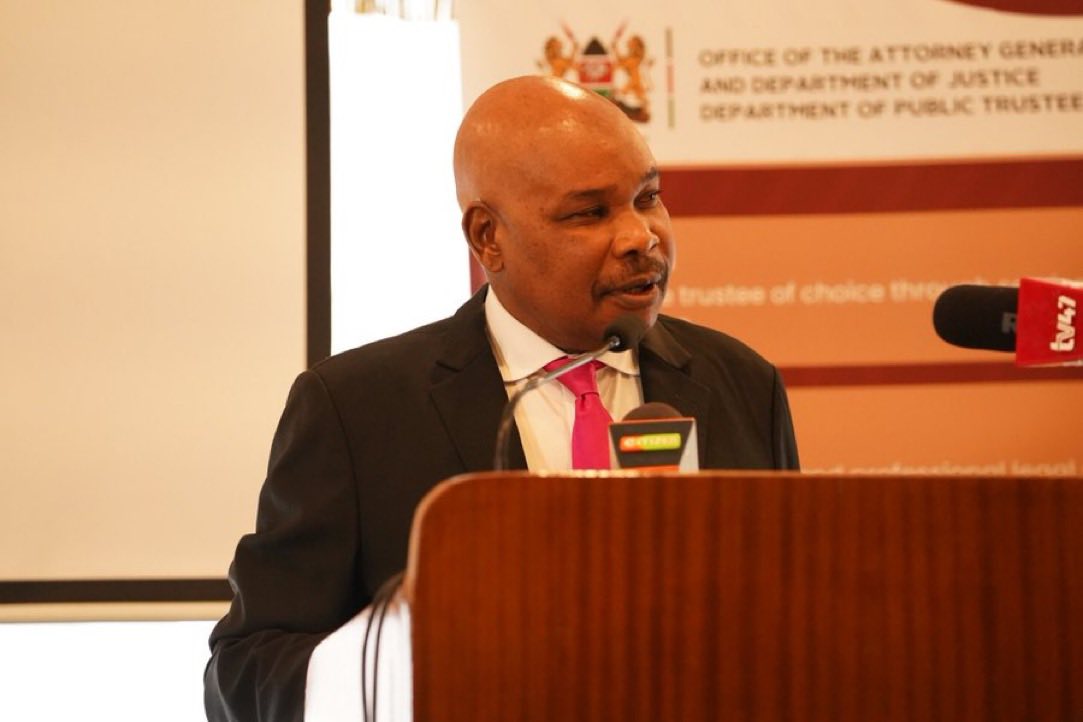
 National Police Service (NPS) Spokesperson Muchiri Nyaga/HANDOUT
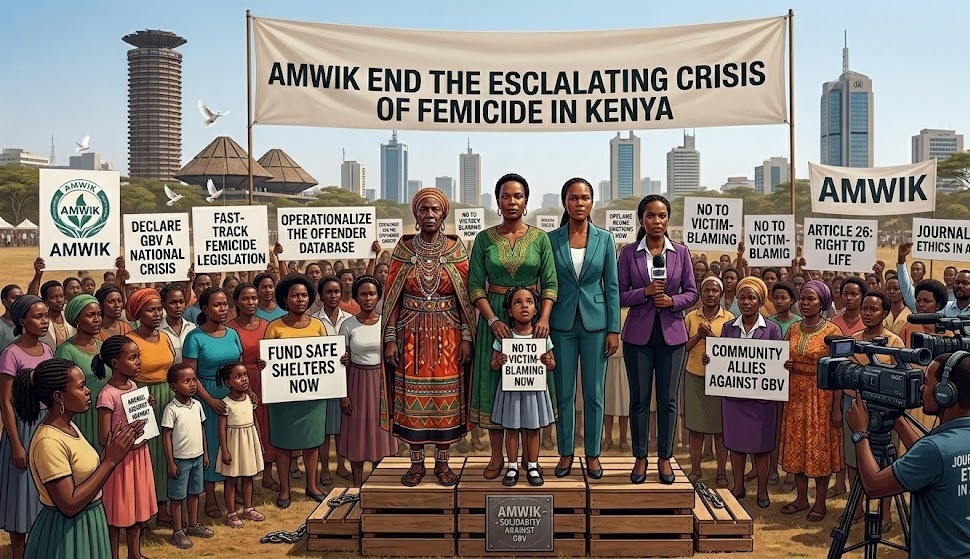
The National Police Service (NPS) has expressed concern over the rising cases of Sexual and Gender-Based Violence (SGBV), including femicide, which continue to affect the safety, dignity and well-being of women and girls across the country.
The Service says Kenya has, in recent years, recorded a worrying trend of violence against women and girls, describing it as a serious violation of fundamental human rights that requires collective national attention and coordinated action across all sectors.
“The National Police Service (NPS) remains deeply concerned by the rising cases of Sexual and Gender-Based Violence (SGBV), including femicide, which continue to pose a serious threat to the safety, dignity, and well-being of women and girls across the country.”
In response, the NPS says it has strengthened its operational and investigative capacity to deal with femicide-related crimes. The Service has introduced enhanced investigations, operational reforms and closer collaboration with key stakeholders to improve the prevention and prosecution of offenders.
A specialised unit has been established at the Directorate of Criminal Investigations (DCI) Headquarters. It brings together criminal intelligence analysts, forensic experts, homicide investigators and other specialists.
According to Director of Corporate Communication and Spokesperson Muchiri Nyaga, the unit has already recorded progress in handling reported cases, with several matters before courts and others still under active investigation.
The NPS says preliminary findings show that most SGBV and femicide cases are linked to domestic disputes, intimate partner violence, sexual offences, assault and unresolved family conflicts. The Service notes that these findings point to the need for stronger prevention strategies, community engagement and public awareness.
“The National Police Service reaffirms its unwavering commitment to protecting all persons, upholding the rule of law, and ensuring that perpetrators of such heinous crimes are brought to justice without fear or favour.”
The Service said it is also working with government agencies, civil society organisations, religious leaders and development partners to strengthen victim support systems and improve sensitisation programmes. It says collaboration remains key in addressing the root causes of gender-based violence.
According to the service, several cases have already been concluded through prosecution. These include the murder case of Monica Nyawira Kimani, where Joseph Irungu, also known as “Jowie”, was convicted and sentenced to death in 2024.
In another case in Imenti North, Meru County, Benson Kimathi Marangu was sentenced to 40 years’ imprisonment for the murder of Marybell Amankor Kapolong.
In Nyeri County, Billington Mwathi was sentenced to 30 years for the murder of Sheila Adhiambo Lumumba in Karatina. In another matter, Mathew Wabwire was sentenced to 25 years for the murder of Jackline Naliaka. Douglas Bushuru Angatia was also sentenced to 15 years for the murder of Mercy Kiliswa.
The NPS says several other cases remain active in court. These include the murder of Deka Abdinoor Gorone, where Hashim Dagane Muhumed was arrested in November 2024 following investigations. The case is ongoing in court. In another matter, suspect Ken Kimathi Gacunuku was arrested after a year on the run in connection with the murder of student Seth Nyakio Njeri in Thika’s Biafra Estate. He is currently facing murder charges.
Other ongoing cases include the killing of Rachel Muthoni Wandeto, the murder of Mercy Nyambura Muriithi, a Grade Six pupil in Njoro Sub-County, the stabbing of Anita Mugweru in Nakuru where Edwin Kaunga Muthomi was arrested and arraigned, and the murder of Davine Kwamboka in Migori County, where suspects have been arrested and arraigned.
According to NPS data, femicide-related cases are spread across the country. Central Region has 31 cases, Western 30, Nairobi 17, Rift Valley 16, Eastern 16, Coast 9, Nyanza 4 and North Eastern 2. In total, 125 cases have been reported. Of these, 98 cases, representing 78.4 per cent, are before courts while 27 cases, representing 21.6 per cent, remain under investigation.
The Service says it has strengthened its institutional response through the Directorate of Gender and the expansion of Gender Desks and Child Protection Units across police stations. These structures are aimed at improving survivor-centred responses and ensuring confidentiality and dignity for victims.
Training programmes for officers have also been enhanced, focusing on handling SGBV cases, trauma-informed investigations and victim support. The NPS is also expanding POLICARE Centres, which provide integrated services including police assistance, medical care, counselling, legal aid and psychosocial support.
The Service says it continues to work with the State Department for Gender and Affirmative Action, criminal justice agencies, civil society and development partners in implementing recommendations from the Presidential Working Group on Femicide.
“The Service further appeals for continued public support and encourages any person with information relating to femicide cases, Gender-Based Violence, or any other criminal activities to report promptly to the nearest police station”
“As a Service, our commitment to public protection, safety, and the rule of law remains steadfast and non-negotiable.”
![[PHOTOS] Mombasa women stage demos over femicide](https://cdn.radioafrica.digital/image/2026/05/9a5d01de-5d60-4d7f-b695-197f560c4727.jfif)

![[PHOTOS] The new Ngong –Naivasha Road viaduct](https://cdn.radioafrica.digital/image/2026/06/64d4f771-4432-4aee-ba3c-2f304c4436ec.jpg)







![[PHOTOS] 'Mr Speaker Sir' Gen Z protester in court](https://cdn.radioafrica.digital/image/2026/06/b3e62d8e-25c3-4780-90f9-4eb48b1ce8a7.jpg)